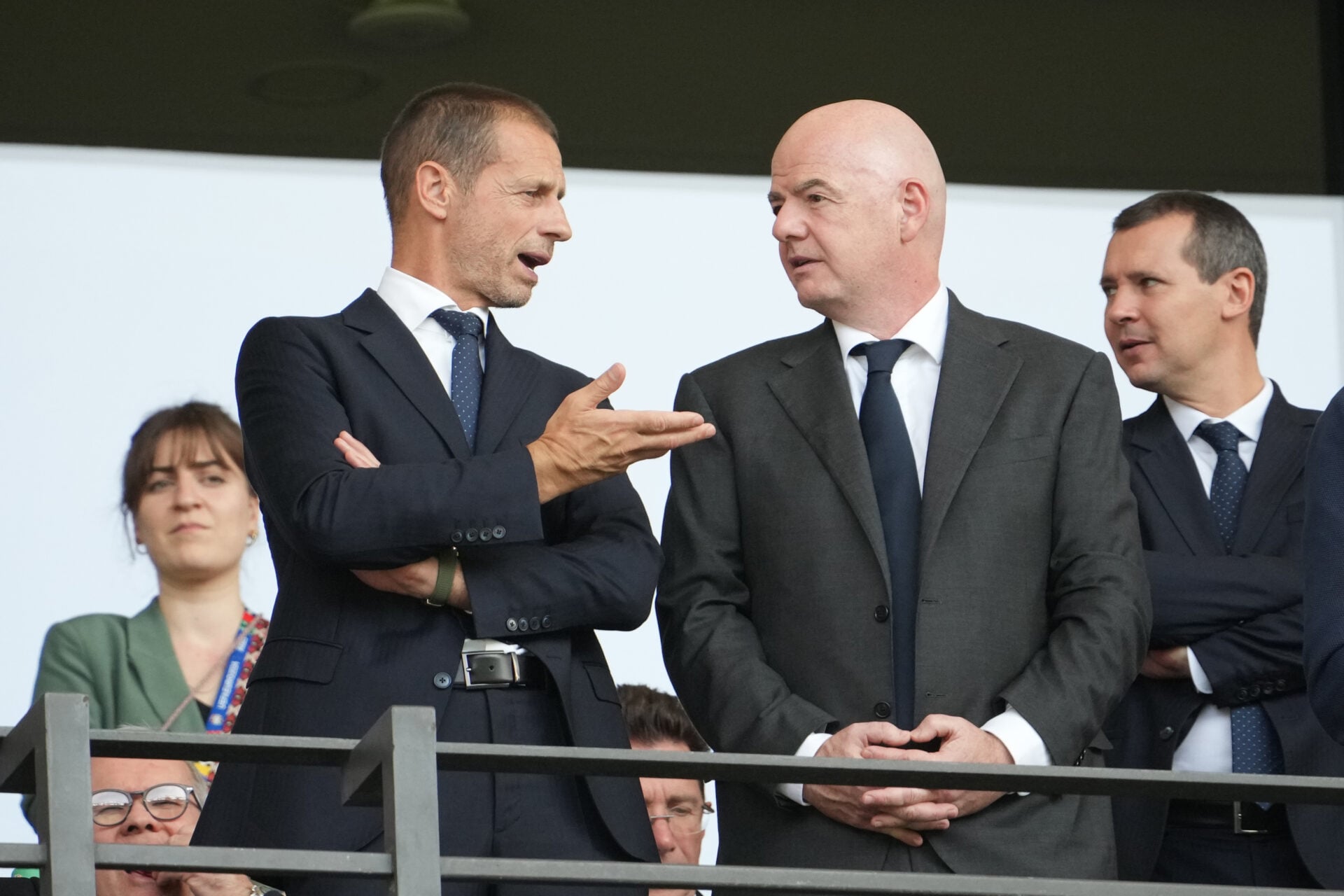

Unlike the big four American sports leagues, soccer’s governance is a patchwork of competing and overlapping institutions.
At the World Cup, FIFA and Gianni Infantino are in charge. And it is FIFA who, on paper, regulate the global transfer market, distribute development funds and, through IFAB, oversee the laws of the game.
But in terms of their financial oversight and commercial influence, they are arguably not as powerful as UEFA, who run the game in Europe.
UEFA’s annual revenue from the sale of the TV rights for its annual club competitions – the biggest being the Champions League, followed by the Europa and Conference Leagues – is over $5bn. For the one-month international European Championships, they expect to earn $2-3bn next time around.
It is the growing power and scale of UEFA that has driven Infantino’s expansionism in recent years.
FIFA have enlarged the Club World Cup, which used to be a glorified friendly tournament. In 2025, it was a 32-team festival of football with a $1bn prize purse. Infantino has also increased the size of the World Cup to 48 teams and wants to go to 64 from 2030 onwards. And it is a dream of his for the tournament to be held every two years, not four.
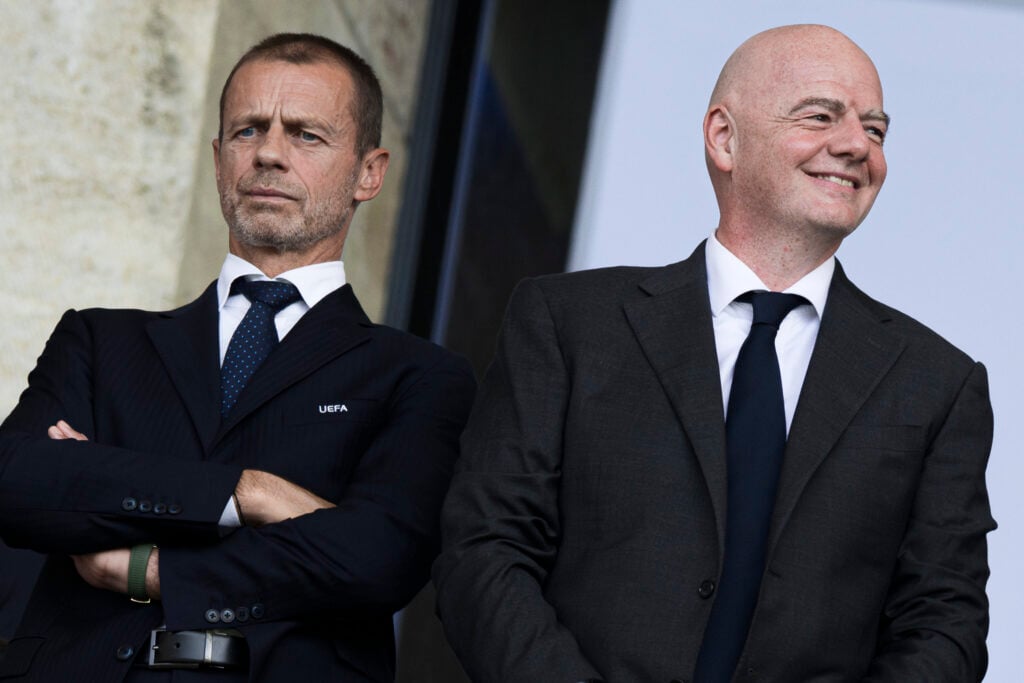
As far as UEFA are concerned, Infantino’s relentless campaign to swallow up more of football is an act of aggression. And UEFA boss Alexander Ceferin has not wasted an opportunity to point score against Infantino in the PR war between the two organisations.
The latest development was Ceferin boycotting yesterday’s World Cup final between Spain and Argentina because of Infantino’s handling of US president Donald Trump and FIFA’s decision to overturn USMNT striker Folarin Balogun’s red card earlier in the tournament.
The schism may be widening at the top of football – but for fans who were concerned by the naked commercialisation of the World Cup this time around, that might actually be a good omen.
It is increasingly clear that UEFA are positioning themselves as the anti-FIFA.
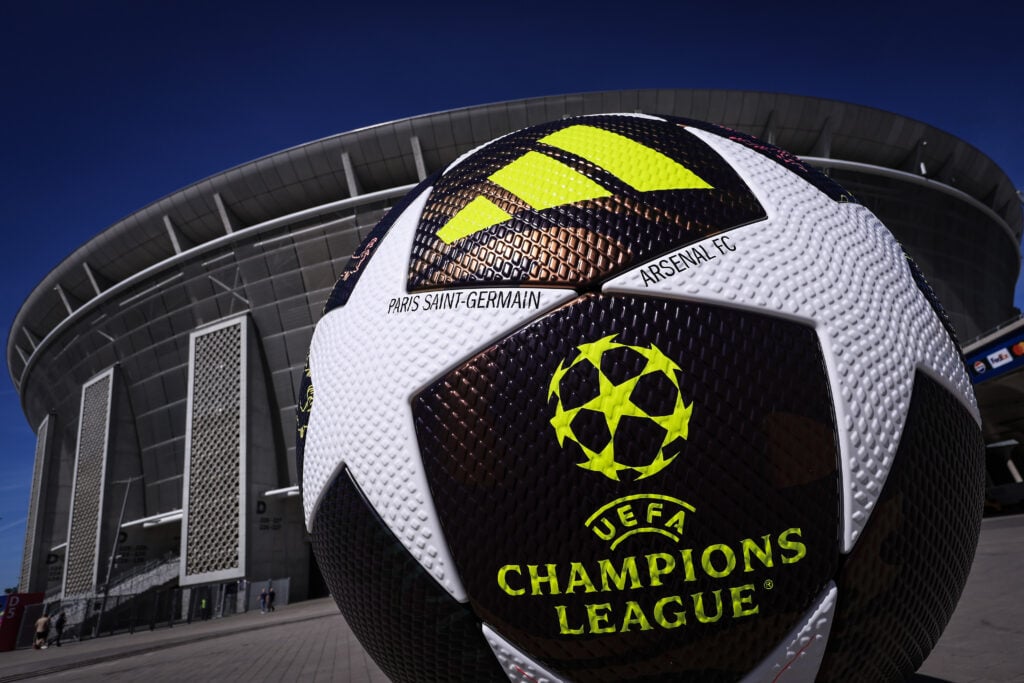
Because FIFA insisted on hydration breaks at this summer’s World Cup, you can bet that UEFA will resist any attempts to move in that direction at club level. And if European fans are worried about FIFA’s decision to get into bed with the ticket scalping industry, they needn’t be. UEFA won’t want to be seen to be following in FIFA’s footsteps there.
UEFA have expanded their own footprint significantly in recent years too, of course. The enlarged Champions League format introduced in 2024-25 is the most visible example. But they are now likely to take a harder line against clubs who push for an ever larger sporting calendar, again in response to FIFA’s determination to go down that route at a global level.
Hopefully, UEFA positioning themselves as the anti-FIFA can protect the interests of so-called legacy fans.
Receive exclusive football transfer news and updates twice a week to your mailbox