

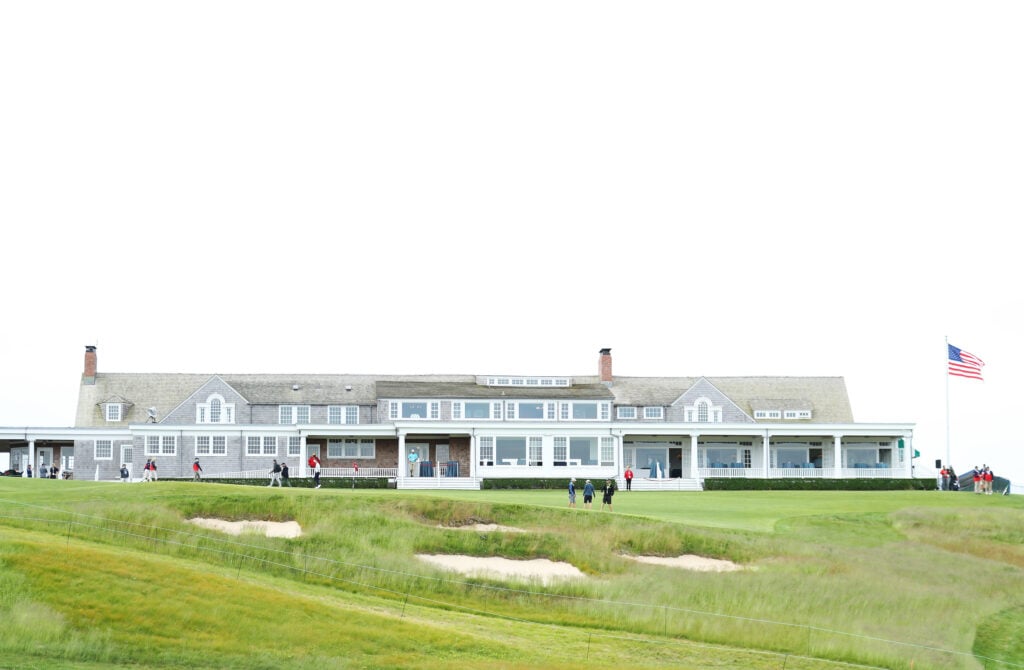
The US Open at Shinnecock Hills this week has all the makings of being one of the most exciting major championships for quite some time.
Shinnecock Hills has been notoriously difficult for the best golfers in the world throughout the years.
Over the past 100 years, only three players have finished under-par at Shinnecock in the US Open.
And with high winds expected at Shinnecock Hills this week, there will undoubtedly be plenty of players who struggle at the US Open.
Rory McIlroy has predicted that under-par will win the US Open this week.
While that may be unlikely, given the conditions, the USGA have made an adjustment to make things slightly easier for those competing this week.
USGA make change at Shinnecock not seen at a US Open for 31 years
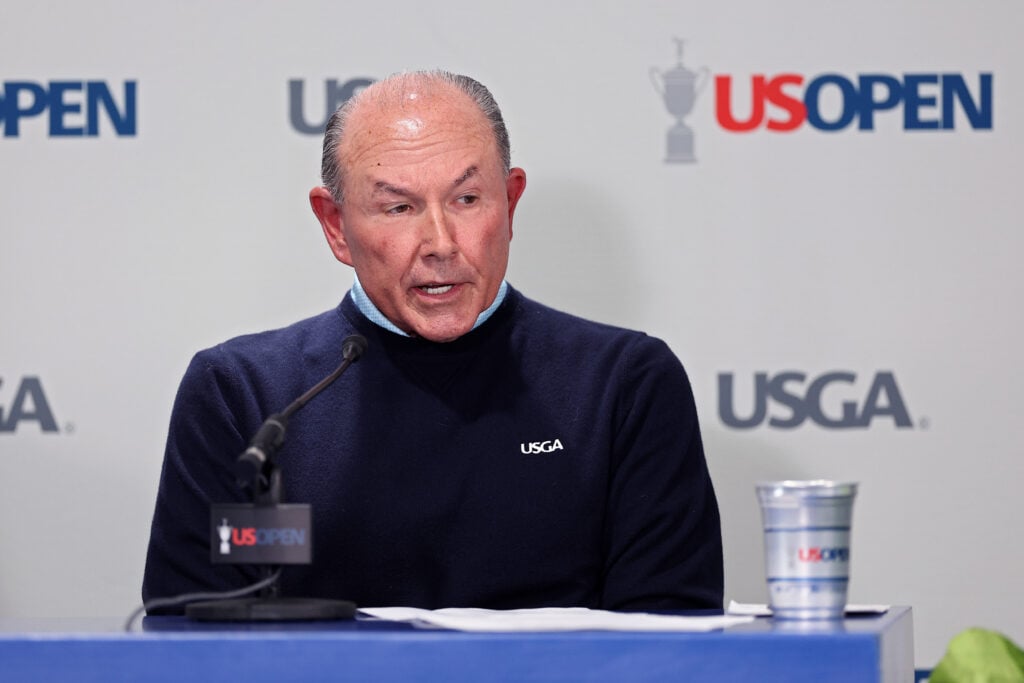
USGA chief John Bodenhamer addressed the media on Wednesday at Shinnecock Hills.
He responded when asked about rolling back green speeds.
“It’s an interesting question, I guess I would say, yes, I would make that argument. But I think every venue has its own culture. It’s different,“ he said.
“I’ve never seen Poa annua putting greens like you see at Oakmont. They’re naturally 15. They just are. It feels — it might feel something much different somewhere else.
“So every place is different, but I do think that when you go to America’s greatest venues, when we’re so fast, you can’t use some of the hole locations that maybe Bob Jones made a putt or Walter Hagen or some of those great champions. That’s really what we were endeavoring to do here.
“For us it’s a comprehensive test. It’s not what happens just on the putting greens with uber-slick greens and some of those things.
“We want to stay with what the architect intended. I think in some places — yes, I would make the argument, not just at a U.S. Open, but across the country to be able to do that, dialing back the green speed is part of that.“
He was then asked when was the last time when greens at a US Open were around the 10 mark on the Stimpmeter.
“To my knowledge, let me think about that for a minute. Well, 1995, because I read the course prep memo from 1995. I read them all. I know it’s crazy. I’ve watched all the coverage in every U.S. Open here. It’s just something I do every year.
“I can tell you exactly what fairway widths were, green speeds, 1995 when Corey Pavin won. He was here at our amateur dinner Monday night. He talked about it. It was magnificent. That’s the last time I can remember.“
Smoothness over speed for the USGA
Bodenhamer highlighted how smoothness of surfaces is much more important to golfers than speed.
“I would say this, too, I really believe this, I don’t think speed is the number one consideration for a player, an amateur player, at any level,“ Bodenhamer said.
“I think smoothness is. You just want a smooth putt.
“They don’t necessarily have to be the fastest, and this race to green speed is probably something that the game would benefit, pace would benefit, the experience would benefit if we curb back a little bit.
“I would agree with that.“
Receive exclusive football transfer news and updates twice a week to your mailbox