
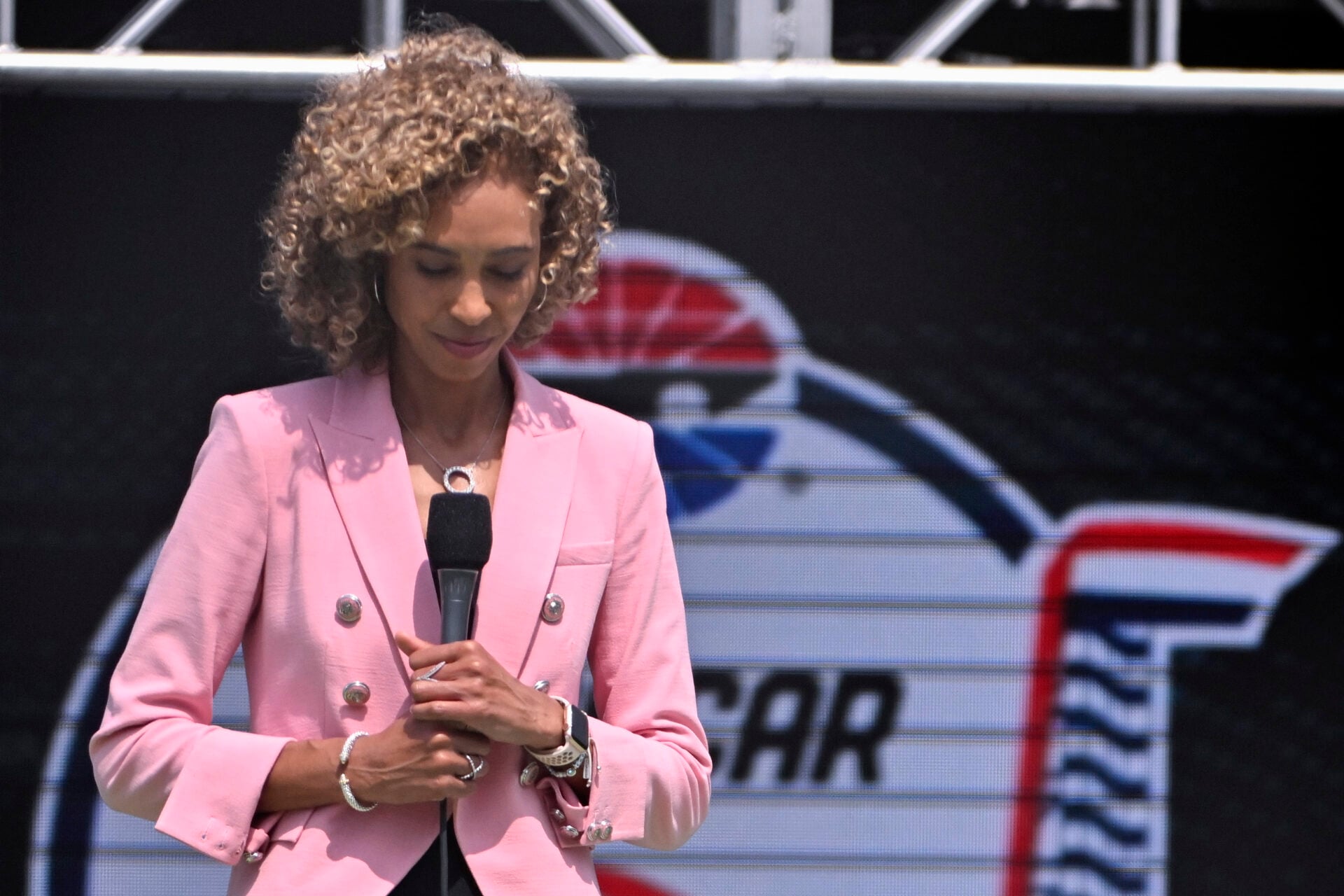

Sage Steele has added her voice to the growing backlash surrounding the NFL’s Super Bowl 60 halftime decision.
The former ESPN anchor did not hold back when reacting to the league’s choice of Bad Bunny, framing the booking as deeply disappointing.
Sage Steele criticises the NFL for Bad Bunny selection

Steele’s comments surfaced in a clip shared by Jason Journo DC on X, where she directly addressed the NFL’s halftime show call.
She said, “I’m just sad and disappointed that they chose someone who is so full of hate, who spews hate, and he is basically anti-American. And I think that’s the part that bothers me.”
The criticism was pointed and emotional. Steele framed her reaction as disappointment rather than outrage, but her language made clear how strongly she feels about the issue.
Her remarks quickly circulated, tapping into an already heated conversation about the cultural and political dimensions of the Super Bowl halftime show.
For Steele, the concern was not about entertainment value or musical appeal. It was about what she believes the selection represents on a national stage.
Sage Steele clarifies that criticism was not about heritage
Steele also took care to draw a distinction between her critique of Bad Bunny and his background.
She added: “It’s nothing against where he comes from, Puerto Rico, you know?”
The clarification appeared aimed at pre-empting accusations that her comments were rooted in identity rather than ideology.
Critics counter that the halftime show has long reflected a wide range of voices and expressions, many of which challenge mainstream narratives.
As Super Bowl 60 approaches, the focus is no longer just on the performance itself. Instead, the halftime show has become another flashpoint in a broader discussion about representation, patriotism, and the role of sport in cultural debate.
Steele’s comments ensure that the conversation is unlikely to quiet anytime soon.
Receive exclusive football transfer news and updates twice a week to your mailbox