
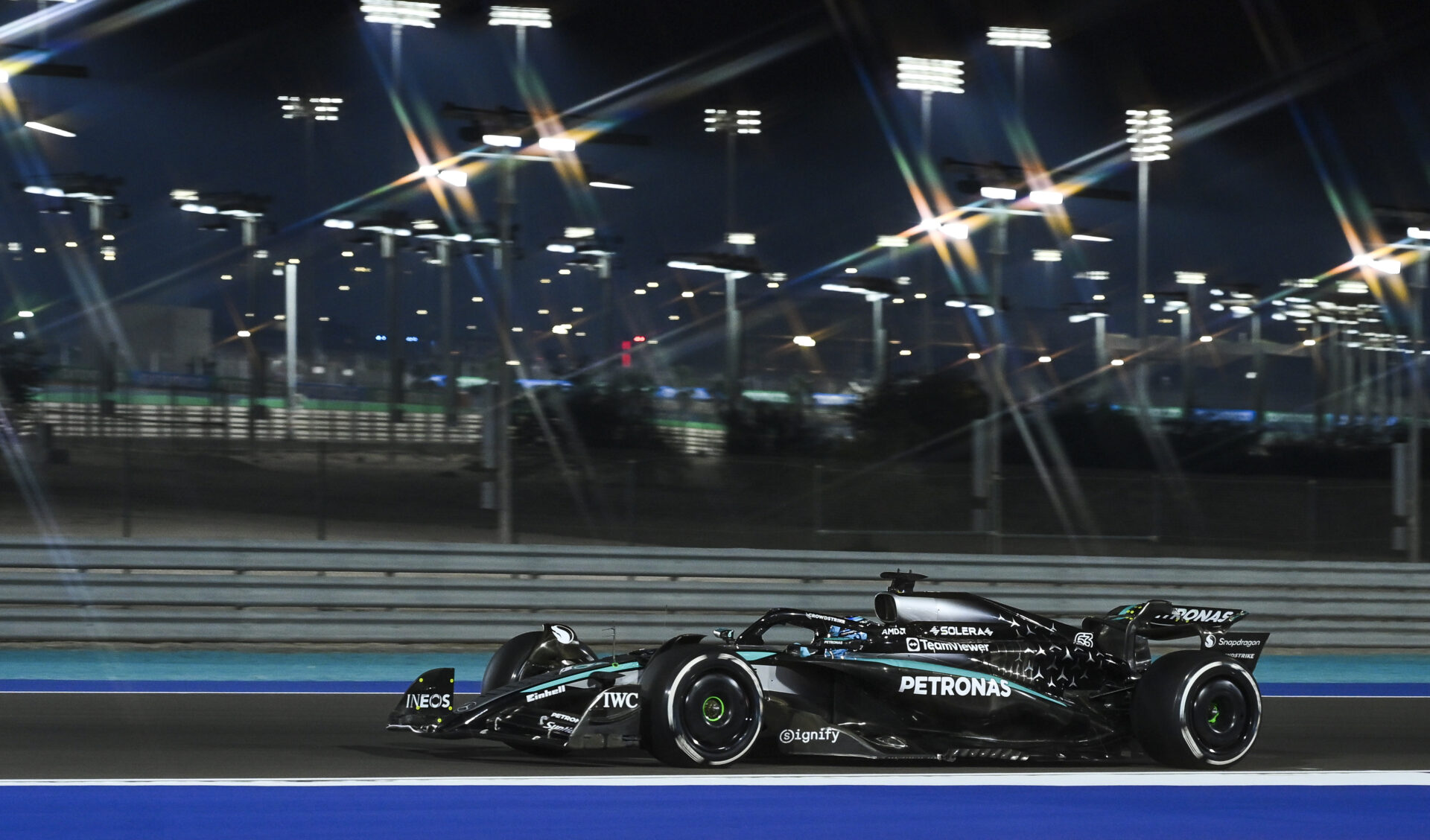

The first chapter in the battle between engine manufacturers played out at the Circuit de Catalunya last week as the 2026 Formula 1 season officially began.
While F1 testing got underway behind closed doors, all five power unit suppliers were present, each one collecting as much information as they could on their new engines.
George Russell had some positive things to say about Red Bull’s debut engine, though both Audi and Honda have already found a few areas they’ll need to improve before the season opener in Australia.
The main focus remains on Mercedes and Ferrari. Both had three teams each running their engines during testing in Spain, and both are expected to be leading the charge when racing begins.
Lewis Hamilton posted the quickest time of all five days for Scuderia, but Mercedes racked up far more laps than anyone else across testing.
Now, early signs suggest Mercedes may already hold a key advantage over Ferrari with one particular aspect of F1’s new power units.
Mercedes’ Power Unit Management Gives Them Early Edge Over Ferrari for 2026
A new report from Motorsport has shed light on how Mercedes and Ferrari approached testing at the Circuit de Catalunya.
The 2026 regulations have split power units into two core elements: an internal combustion engine (ICE) and an electric motor. The original intention was for each to contribute equally, but the ICE is expected to play a larger role over time.
With that in mind, teams spent less time chasing outright pace during this opening run and instead focused on how best to balance energy delivery between the two systems.
According to Motorsport, Mercedes appear ahead in this area already. Their unit reportedly offers a more seamless integration between the ICE and battery, providing smoother and more efficient power management.
Battery management will become crucial in both attack and defence scenarios under the new rules, so understanding how to maximise these systems could be just as important as raw engine output.
While Ferrari’s unit is said to be lighter, if Mercedes-powered teams can optimise their energy usage more effectively, it could create early headaches for drivers like Lewis Hamilton and Charles Leclerc heading into the season opener.
Lewis Hamilton Praises Ferrari After 2026 Power Unit Debut
Speaking after the test at Montmelo, Hamilton said: “It’s been a really enjoyable and productive week.
“A lot of work has been done over the winter, both personally and by the entire team, and it’s positive to see this commitment reflected in the mileage completed without any major setbacks.
“There’s still a lot to learn and a lot of work to do, but the atmosphere within the team is good, and I see everyone very focused.”
Ferrari know that these next few weeks are crucial. They need to match up what they’re seeing on track with what they’re getting from wind tunnel testing and simulation work.
The Prancing Horse have less experienced partners in Haas and Cadillac when it comes to understanding their new power unit compared to Mercedes being able to rely on McLaren, Alpine and eventually Williams.
That shouldn’t overshadow how well Ferrari performed in their first run. But if they’re serious about ending that title drought since 2008, there’s no room for complacency. They’ll know exactly how high the bar needs to be set.
Receive exclusive football transfer news and updates twice a week to your mailbox