
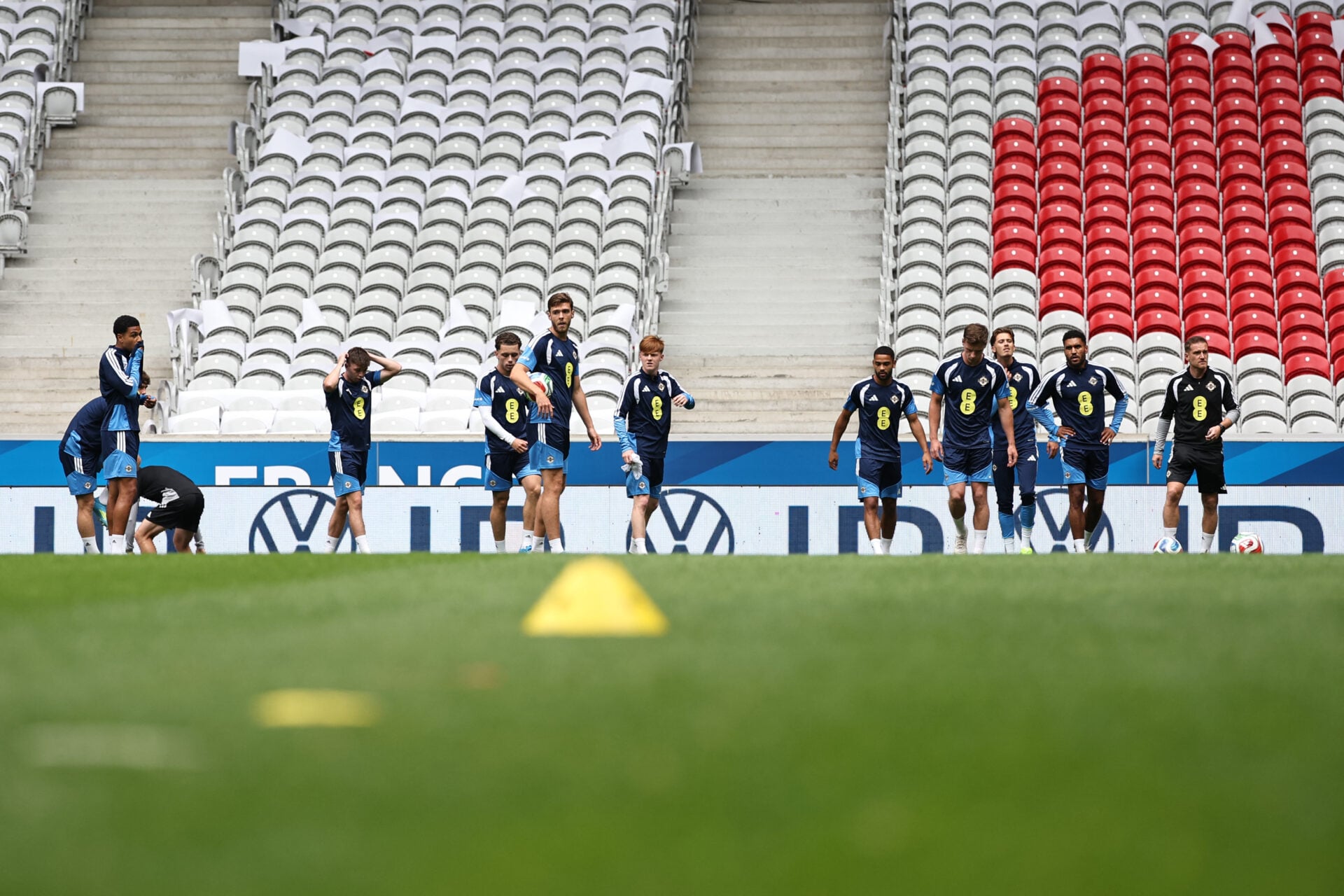

FIFA’s toughest challenge for the 2026 World Cup might not be the expanded 48-team format, but making 16 very different North American stadiums feel like one perfect soccer field.
The tournament will span Canada, Mexico, and the United States, with 104 matches putting heavy strain on venues built for different sports, climates, and stadium designs.
That is why grass scientists spent years developing a surface that players should barely notice, because if the pitch becomes the story, something has gone wrong.
FIFA’s natural grass plan transformed NFL stadiums
In a PBS interview, University of Tennessee turfgrass expert Dr. John Sorochan explained how FIFA aimed for consistency across every 2026 World Cup venue.
The solution is a modular hybrid surface that is still overwhelmingly natural grass, about 95 percent grass with five percent synthetic reinforcement. Millions of fibers are stitched into the root zone, giving the grass a framework to hold onto, much like rebar in concrete.
The sod was grown on plastic, encouraging roots to spread sideways so the grass could be rolled up, transported, and installed like a living carpet. Underneath, sand-based layers, drainage, ventilation, irrigation, and vacuum systems help control moisture and firmness.
The scale of the project is huge. All 11 U.S. host venues are NFL stadiums, and artificial-turf sites like Atlanta, Boston, Dallas, Houston, Los Angeles, New York/New Jersey, and Seattle needed major conversions. Vancouver’s BC Place also required a temporary grass solution.
Climate added another layer of complexity. Southern U.S. venues and Mexico’s warmer sites, including Monterrey and Guadalajara, needed Bermuda grass, while cooler locations use Kentucky bluegrass blends. Five domed stadiums also need UV grow lights because grass cannot survive heavy tournament use without a replacement for sunlight.
Natural grass keeps World Cup stars focused
Players prefer real grass because it feels more forgiving underfoot, helps the ball move naturally, and avoids the performance fears that come with artificial surfaces.
Putting the world’s best footballers on turf at a men’s World Cup would have sparked major backlash, especially after years of complaints about burns, soreness, and unpredictable ball movement on synthetic fields.
Sorochan’s team built machines to test those risks. One simulates a player’s foot strike, while another drops a ball from two meters to see whether each surface reacts the same way.
That is the real goal. FIFA is not just installing grass. It is trying to make Miami, Vancouver, Mexico City, Dallas, and New Jersey all feel like part of the same tournament.
The best pitch at this World Cup may be the one no one talks about.
Receive exclusive football transfer news and updates twice a week to your mailbox