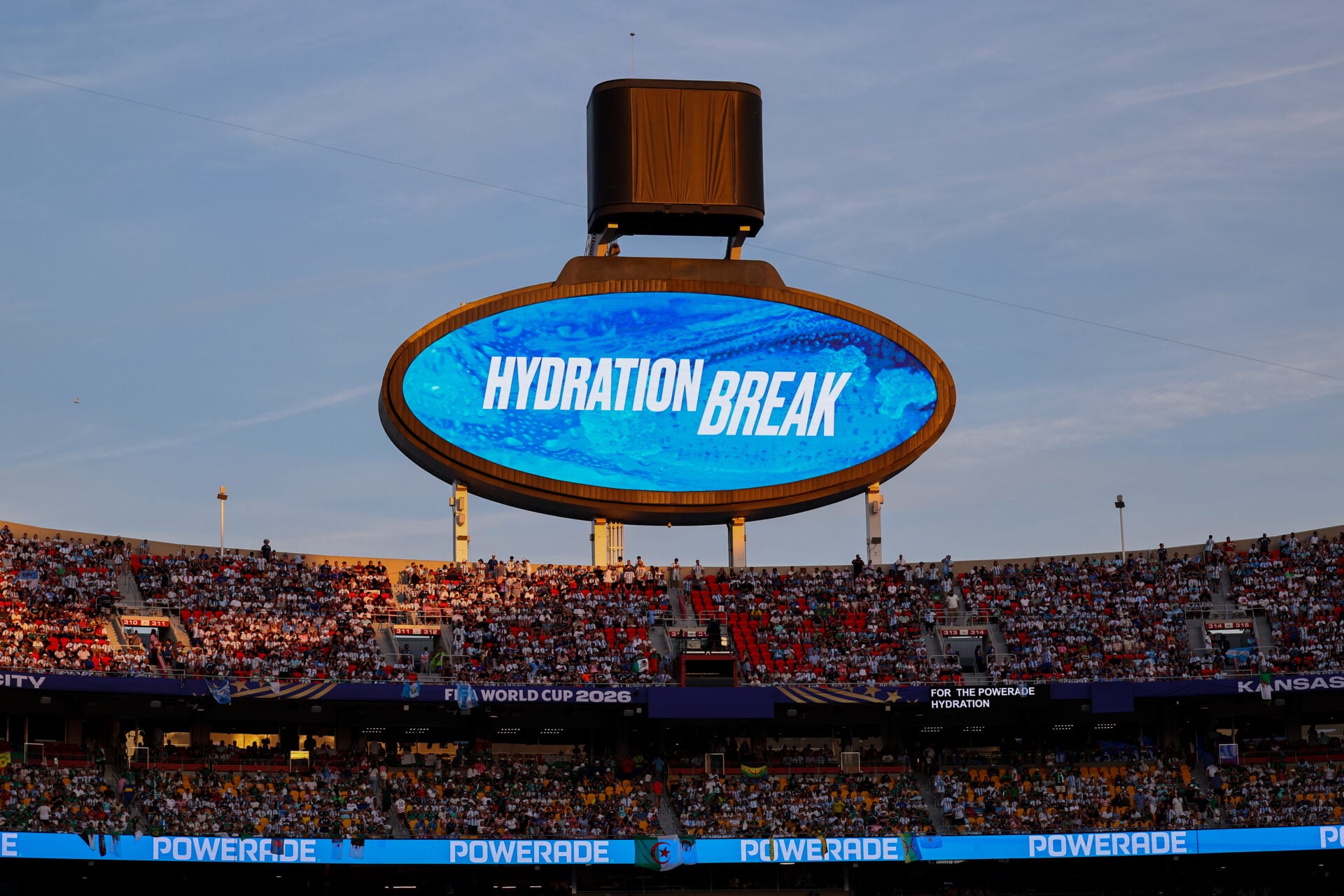

In a World Cup awash with controversy, FIFA’s so-called ‘hydration breaks’ have been perhaps the biggest of the lot. And certainly the most visible.
The three-minute pauses in play effectively split 90-minute matches into four quarters. They take place in every game, regardless of location, temperature or any other factor.
Officially, FIFA and its all-seeing eye, president Gianni Infantino, say that hydration breaks are part of their “commitment to player welfare.”
The fact that they are allowing broadcasters to sell more adverts is, per the party line, merely a happy coincidence. Incidentally, it’s a happy coincidence that has helped FIFA increase its TV revenues to $4.3bn, 45 per cent higher than in Qatar, 2022.
Among coaches, players and some members of the punditocracy, hydration breaks are not only commercially useful but also effective as tactical timeouts. In their view, it is a natural evolution for the world’s most popular but perhaps worst-monetised sport.
Among supporters, the near-universal consensus is much bleaker.
It’s nakedly commercial; cent-wise, dollar-foolish; the nadir of a tournament which, in the commercial mecca of North America, is emblematic of soccer losing its soul.
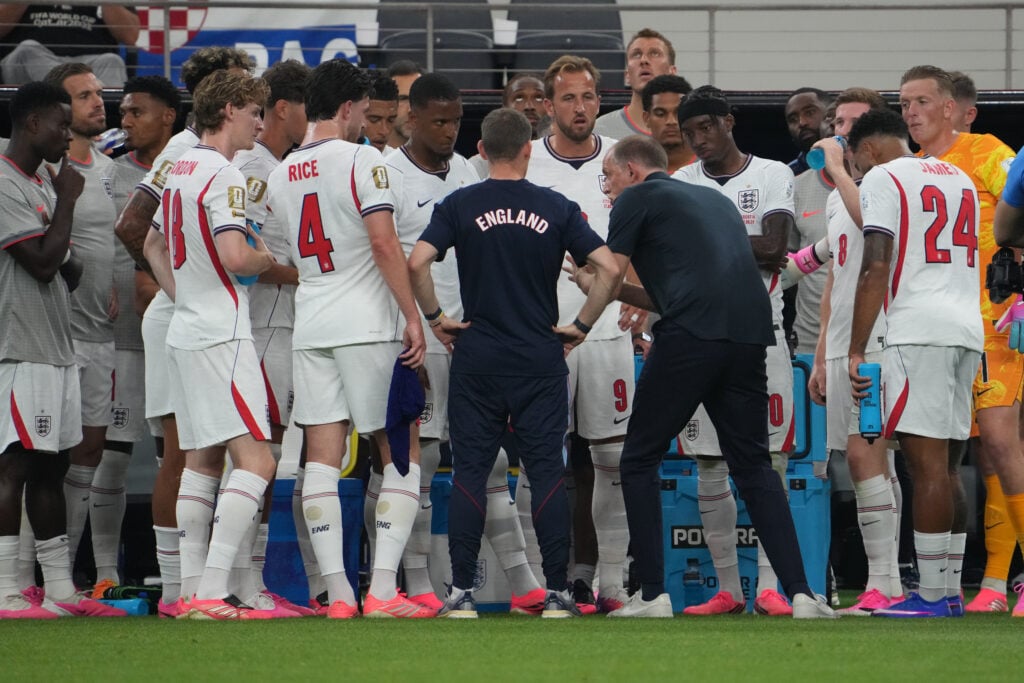
England fans have been perhaps the loudest in-stadium critics of hydration breaks, booing when the referee calls time out. There is a fear that the Premier League, the richest league in the world by revenue if not by profit, could be next.
Speaking exclusively to HITC, Professor Kieran Maguire, a football finance lecturer at University of Liverpool, suggested that English football supporters need to be wary of mission creep towards a similar model being adopted in the Premier League.
“One of the proposals of the European Super League was to have four quarters with the ball in play for 15 minutes,” said the Price of Football author and host of the eponymous podcast.
“We have seen with the hydration breaks – which are clearly not hydration breaks – that the objective is to allow broadcasters, especially in the US, to generate more revenue from adverts. Those additional revenues can then be recycled into the game with increased sums paid for the rights for the World Cup.
“I suspect it will now be a case of who blinks first. I don’t think the Premier League will be a leader in having hydration breaks – but they will be more than happy to be a follower. There is no doubt that, with the majority of Premier League clubs losing money, the desire is significant from club owners to grow revenue.
“In an SCR [Squad Cost Ratio] environment, it’s pretty certain that you’re going to see clubs, institutions and players look for ways to grow revenue. So I don’t think that there would be huge opposition in the Premier League, but it is going to be a case of who breaks first.”
- Read more:
FIFA on course to make official $4.3bn World Cup announcement
13 World Cup nations write angry letter to football boss amid Gianni Infantino feud
The cheapest FIFA World Cup ticket just got 2,638% more expensive
Receive exclusive football transfer news and updates twice a week to your mailbox