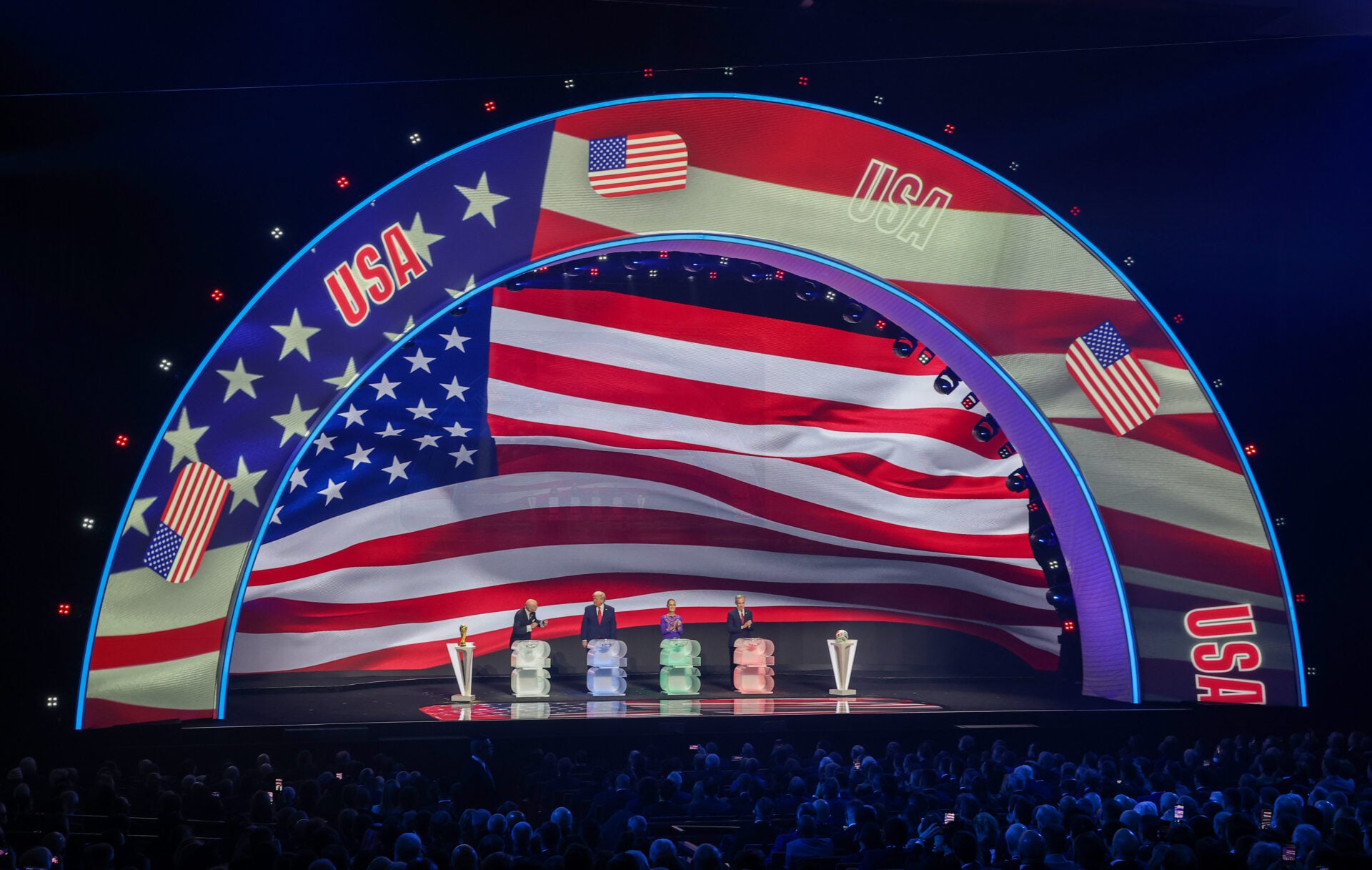

The 2026 edition of the FIFA World Cup will go down as one of the most divisive in history – and that’s saying something.
Since its inception, the World Cup has been used as a propaganda tool by Mussolini’s Italy in 1934, an Argentina under military dictatorship in 1978, Russia four years after the 2014 invasion of Crimea, and Qatar in 2022 amid scrutiny about civil liberties, migrant worker conditions and corruption.
But in all likelihood, more ink, smartphone pixels and airtime have already been dedicated to the politics of the 2026 World Cup in America, Canada and Mexico than any other.
On the pitch, the tournament has been a success so far. The US got off to a flying start with a 4-1 win over Paraguay, while Mexico impressed at the iconic Azteca against South Africa and Cape Verde earned a historic draw against tournament favourites Spain.
But in the background, there has been white-hot fury over dynamic pricing; the naked commercialisation of the tournament; the cosy relationship between US president Donald Trump and FIFA president Gianni Infantino; the visa issues preventing fans, staff and officials from being able to attend; the expansion from 32 teams to 48; and the ‘hydration breaks’ which have effectively split matches into quarters to allow broadcasters to sell more adverts.

On that last point, it seems FIFA’s strategy has paid dividends.
Research from respected UK industry publication SportBusiness suggests that the total value of FIFA’s TV rights in 2026 will reach an astonishing $4.5bn.
That’s 45 per cent more than the World Cup in Qatar in 2022.
Fox is the English language rightsholders of the World Cup in the US, while Telemundo owns the Spanish language rights.
Together, official figures suggest that 25 million tuned in for the US’s World Cup opener, doubling the previous record.
Receive exclusive football transfer news and updates twice a week to your mailbox