
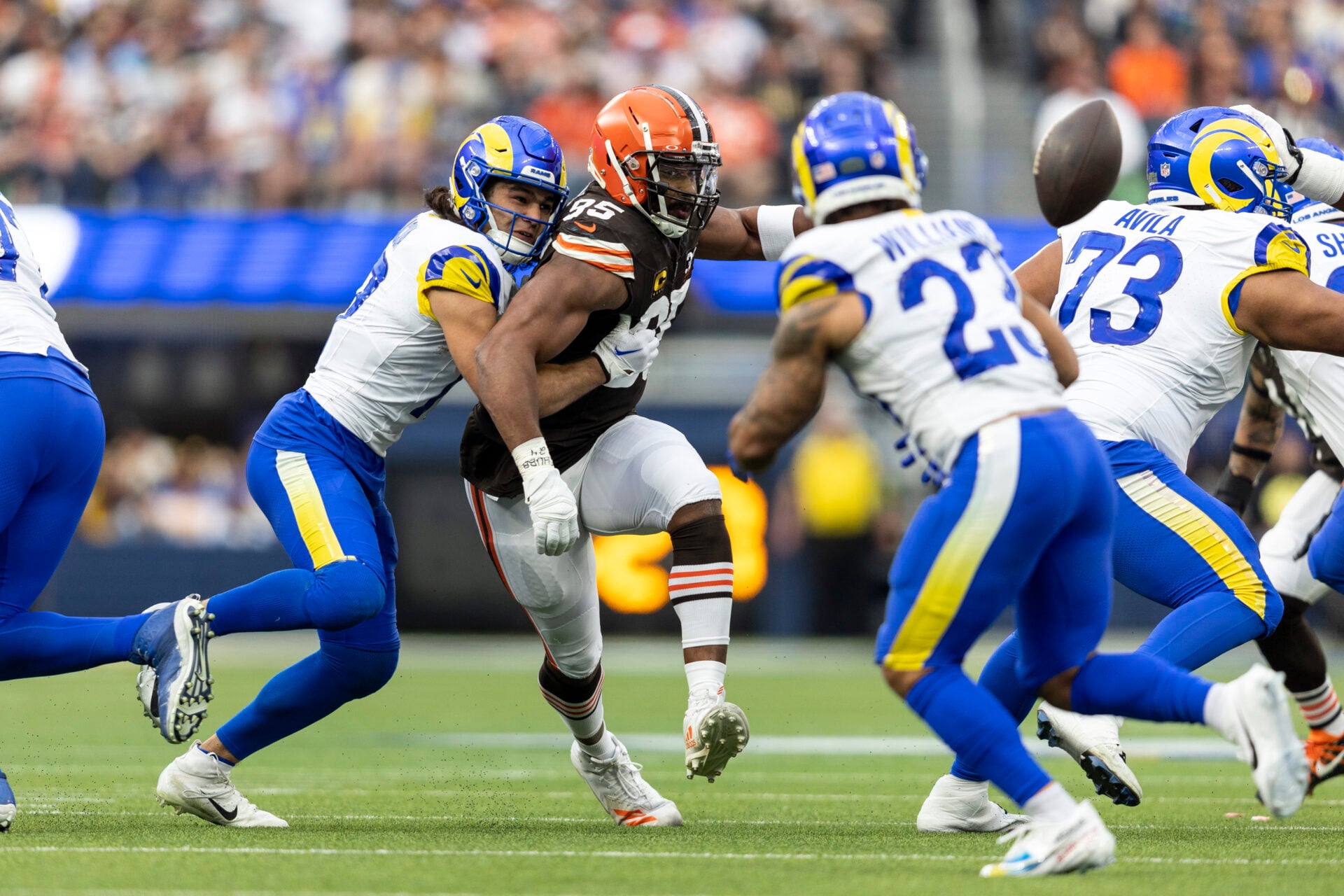

Puka Nacua has drawn a light-hearted parallel between Myles Garrett’s recent storyline and one of the NBA’s biggest narratives.
Speaking on The Pat McAfee Show, Puka Nacua explained why he sees a connection between Cleveland Browns star Myles Garrett and Milwaukee Bucks forward Giannis Antetokounmpo.
The comparison was not about how the two play, but how public frustration and trade speculation can give way to renewed commitment.
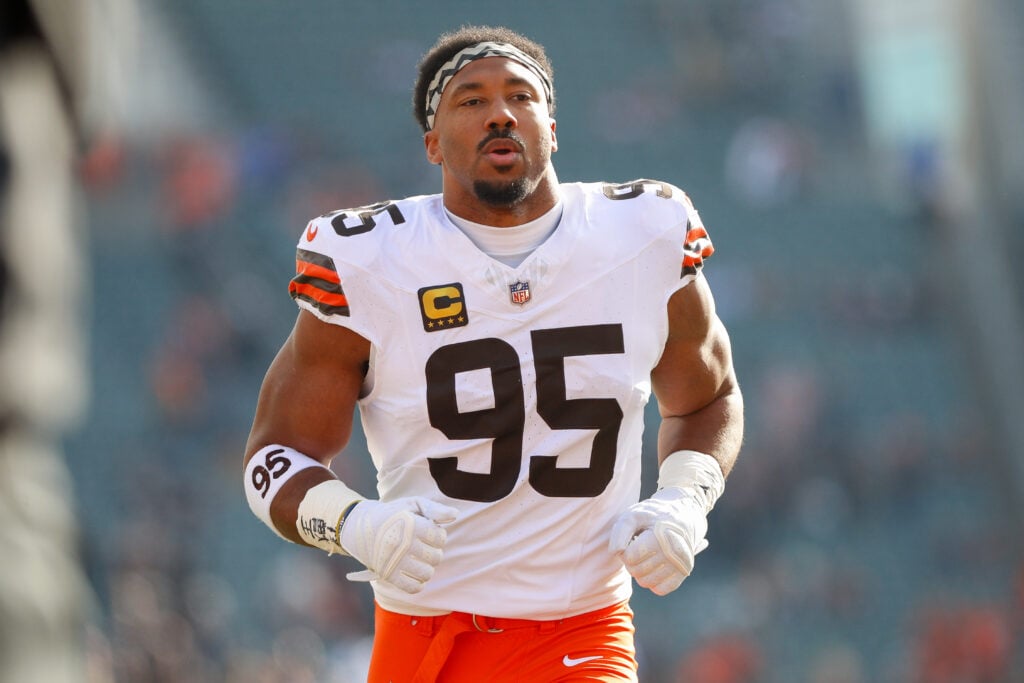
Puka Nacua explains the Myles Garrett and Giannis comparison
Puka Nacua framed the comparison around how elite players sometimes voice dissatisfaction before ultimately staying put.
“It’s like, ‘Oh, I don’t want to be here.’ And then, ‘Hey, look, I’m back guys,’” Nacua said.
The comment was widely interpreted as a playful reference to Garrett’s trade request, which was followed by a massive contract extension and continued dominance in Cleveland.
Nacua drew the parallel to Giannis Antetokounmpo, who was surrounded by heavy trade speculation before ultimately remaining with the Bucks.
Why the comparison resonated
In both cases, Nacua highlighted how public narratives can shift rapidly when superstars flirt with uncertainty but then recommit to their teams.
Garrett went on to deliver one of the most productive seasons of his career after signing his extension, reinforcing his status as one of the NFL’s most dominant defenders.
Giannis followed a similar path in the NBA, with trade rumours fading once the deadline passed and his future remaining in Milwaukee.
Nacua’s comparison was not meant as criticism, but rather as a light-hearted observation on how top-level athletes manage pressure, leverage, and public perception.
Receive exclusive football transfer news and updates twice a week to your mailbox