
Detroit Lions’ offensive line adjustment
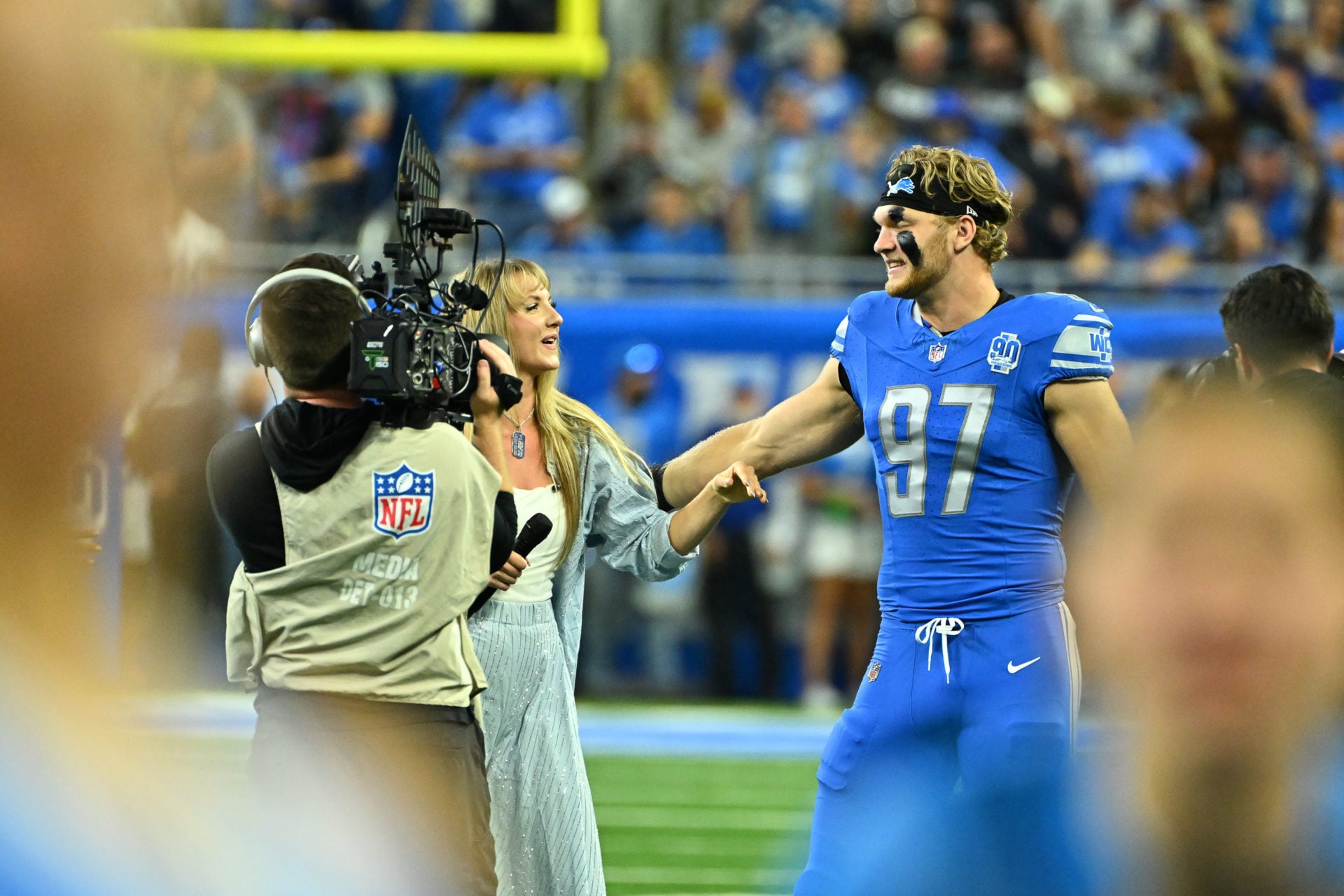
Penei Sewell moving to left tackle is the headline, but the bigger question for Detroit is whether the rest of the line can regain its rhythm.
Campbell told reporters that Sewell had been preparing for his left-side move well before organised team activities began. “It’ll be like riding a bike for him,” Campbell said. “He has played left. That’s muscle memory. That’ll be seamless. Sewell can do it all.”
Sewell spent a lot of time on the left in college, playing 1,372 snaps there across 2018 and 2019. He also started his rookie year on that side, stepping in for Taylor Decker over the first eight games. Across his career, he’s logged 683 snaps at left tackle—536 of those came as a rookie. While only 147 have come since then, it’s not like he’s starting from scratch.
Detroit isn’t moving a career right tackle into unfamiliar territory. They’re asking their best lineman to step back into a role he already knows well.
Detroit’s offensive line is adjusting to more than just Penei Sewell’s move
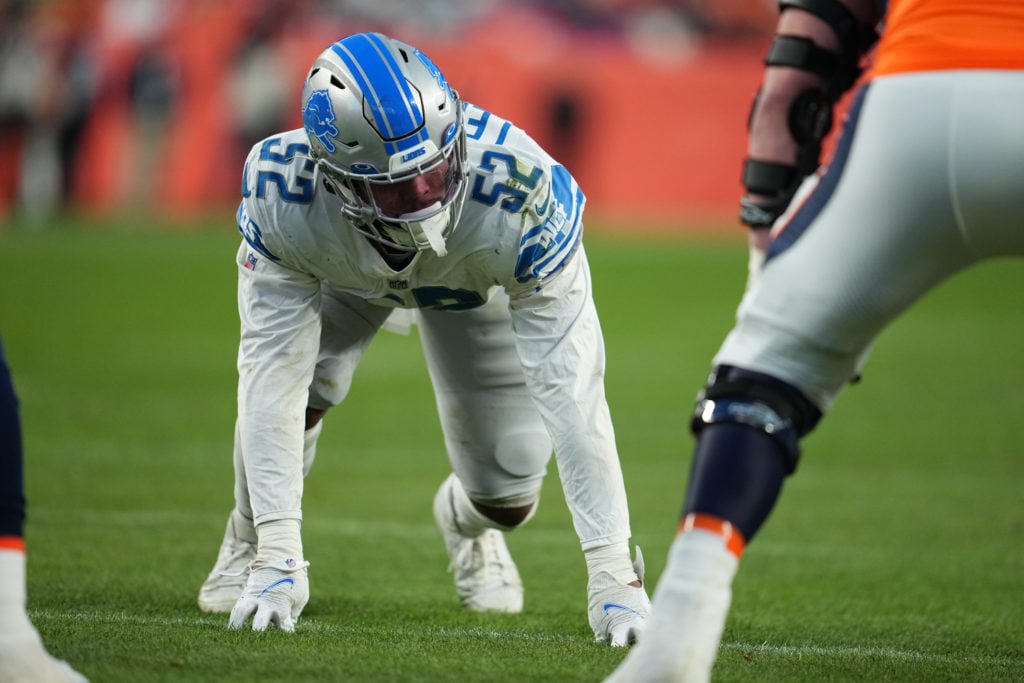
Sewell steps into the spot left by Taylor Decker, who was released this offseason after a decade with the team. The Lions addressed the opening by drafting Clemson tackle Blake Miller at No. 17, with Miller or veteran Larry Borom expected to fill Sewell’s former role at right tackle. Free-agent signing Cade Mays comes in at center, while Christian Mahogany and Tate Ratledge are projected to start at guard.
Decker and Graham Glasgow were both let go, and All-Pro centre Frank Ragnow unexpectedly retired. It was a major blow, leaving Detroit juggling line combinations throughout the year and struggling to find any rhythm.
Communication is just as important as blocking for a centre, and Mays is taking over after Ragnow’s retirement. Campbell liked what he saw, saying “Cade, man, he’s a good-looking dude. He’s a big man, he’s built right, moves pretty good.” The challenge now is getting familiar with terminology and pre-snap calls that set the entire protection.
If Mays can stabilise the middle of the line, Sewell’s transition will be easier to manage. But if issues persist at centre, even an All-Pro on the blind side might not be enough to solve protection problems.
How the guard spots could impact the rest of the line
Both Mahogany and Ratledge are still settling into their roles. Mahogany was taken in the sixth round back in 2024, while Ratledge was a second-round pick in 2025. Both had inconsistent seasons last year, though Campbell has noted some improvement from Ratledge.
That part of the line is still a bit of a question mark. Sewell can solidify one side, but he can’t fix every issue up front by himself. The Lions will need their younger linemen to use all that practice time and turn it into more reliable performances once the season begins.
Mahogany, a 2024 sixth-round pick, and Ratledge, a 2025 second-rounder, are coming off up-and-down seasons, though Campbell pointed to growth from Ratledge.
That interior is where the reset can still stall. Sewell can cover one edge. He cannot fix every interior exchange, stunt pickup or run-game combination, and the Lions need the younger linemen to turn reps into cleaner weekly play.
Even the best player needs to improve
The most striking part of Detroit’s offseason came from Sewell himself. Despite earning his third first-team All-Pro nod and a nomination for the inaugural Protector of the Year award, he graded his own 2025 harshly. “It wasn’t my best ball. It was far from that,” Sewell said.
“I’m a firm believer that it starts with me up front. I believe that I’m gonna set the tone. This year was definitely a down year for me, and we’ll start with that.”
That is the lens for Detroit’s whole front. Better line play is the key to the offence recovering from a disappointing 2025, and the Lions will know the reset worked when the middle communicates faster, the guards hold up, and the offence plays from structure instead of patching problems around it.
Receive exclusive football transfer news and updates twice a week to your mailbox