
The World Cup and the NBA Finals are among the greatest sporting spectacles on earth – and that’s reflected in the prices that governing bodies, arenas and resellers charge for tickets.
The New York Knicks snatched victory from the jaws of defeat with one of the all-time great comebacks last night, overturning a 29-point deficit to take a 4-1 lead against San Antonio Spurs at Madison Square Garden.
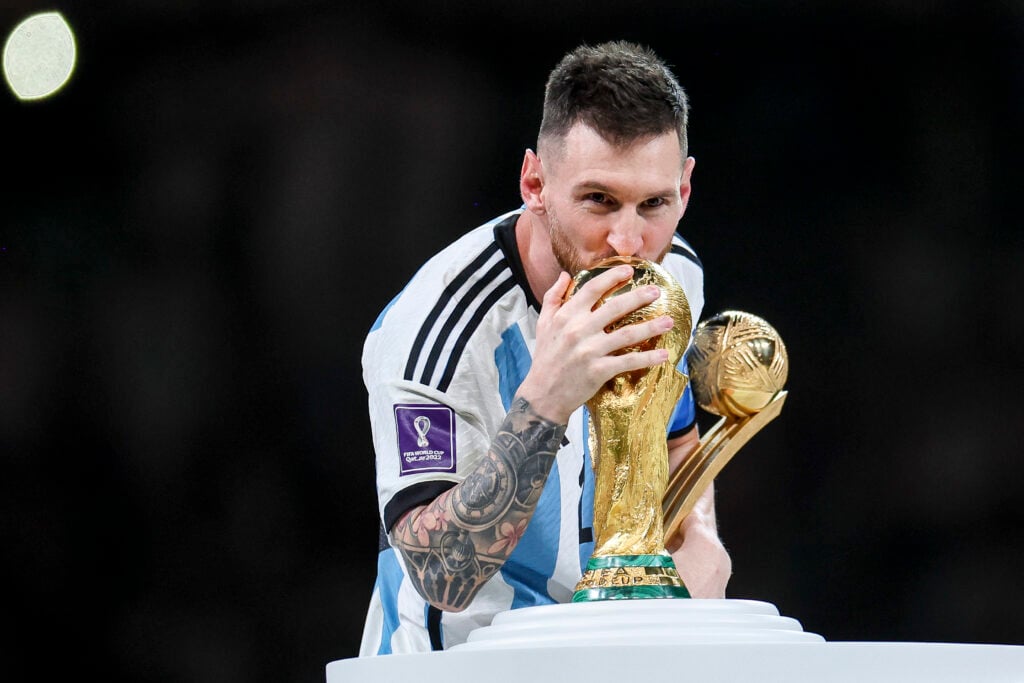
10 miles away, across the Hudson River, MetLife Stadium is gearing up for its first match of the FIFA World Cup, five-time champions Brazil vs Morocco, semi-finalists in 2022. For the duration of the tournament, MetLife will be called the New Jersey Stadium, as FIFA’s policy is for stadiums to go unbranded for its tournaments.
As well as ensuring FIFA’s own sponsors’ value isn’t diluted, that stance is – ostensibly, at least – emblematic of soccer’s resistance to naked commercialism. Supporters belong to ‘clubs’, not ‘franchises’, and their shirts have ‘badges’, not ‘logos’. Owning a team has long been considered a very expensive hobby, a vehicle to live out a childhood fantasy, not a traditional investment.
But for better or for worse (nearly all fans would argue it’s the latter), soccer is learning from North American sport’s business model. The sport is now awash with private equity firms, evangelising about the game’s unrivalled ‘intellectual property’, rapidly loyal customers (fans), and valuations that trend sharply up and to the right.
At the World Cup, profit is being extracted at every turn. FIFA, a non-profit organisation, is in charge of distributing that money between its 211 member nations, which it regularly boasts are more numerous than the UN.
Countless airtime, smartphone pixels and ink has been devoted to FIFA’s pricing strategy for the World Cup, with the organisation’s divisive president, Gianni Infantino, forecasting revenues of $13bn over the next five weeks. The wider economic impact in the States, he says, will be many multiples of that figure.
So, how does their model compare to its more commercially mature equivalent in the NBA?
Front Office Sports, a respected industry publication, relay estimates from a consultancy which suggests that Madison Square Garden is likely to have generated in excess of $20m in revenue at each of the Knicks-Spurs games. That’s with a capacity just shy of 20,000.
Some suites, where the executives pay through the nose to wine and dine clients, were listed for seven figures. For the World Cup final at New Jersey Stadium, hospitality packages start at $35,000 per person. The most expensive – the kind where, if you have to ask “how much”, it’s not for you – will likely go for millions, like the NBA.
On the flip side, FIFA has faced problems selling out stadiums for some of its less glamorous matches. While a handful of $60 tickets are ringfenced for supporters, the organisation’s dynamic pricing model, where prices fluctuate based on supply and demand, has either alienated supporters or convinced them to leave it until the very last minute to secure a seat in the hopes of a better deal.
Ticket prices are a how-long-is-a-length-of-string argument these days, though. Tiered, dynamic pricing and the funnelling of tickets to official and unofficial resale platforms means that actually divining an average ticket price is a byzantine undertaking.
The NBA Finals average ticket price in 2025, when Oklahoma City Thunder overcame Indiana Pacers in seven, was $1,100. Scarcity is a factor in the playoffs, whereas there are around seven million tickets available in total for the World Cup.

That pricing challenge is fundamentally different for FIFA. And the new-fangled, labyrinthine ticketing system, coupled with late demand and myriad other factors mean we will have to wait until after the final on 19 July for reliable data on average prices throughout the tournament. That is if FIFA – an organisation not famed for its transparency – choose to release it at all.
Suffice to say, the average ticket prices across the entire World Cup will be considerably lower than the NBA Finals. But that accounts for fixtures like Haiti against Scotland as well as its showpieces. For the final itself, experts say average prices will exceed the NBA Finals – and, even in a conservative reading, probably by quite a margin.
Then, there is a whole ecosystem of sanctioned and unsanctioned scalping from which FIFA will also take a cut.
So which is more expensive? It depends which way you slice it. But one thing is for sure: this all-American World Cup (with a dash of Canada and Mexico) will redefine soccer’s commercial ambitions.
Receive exclusive football transfer news and updates twice a week to your mailbox