
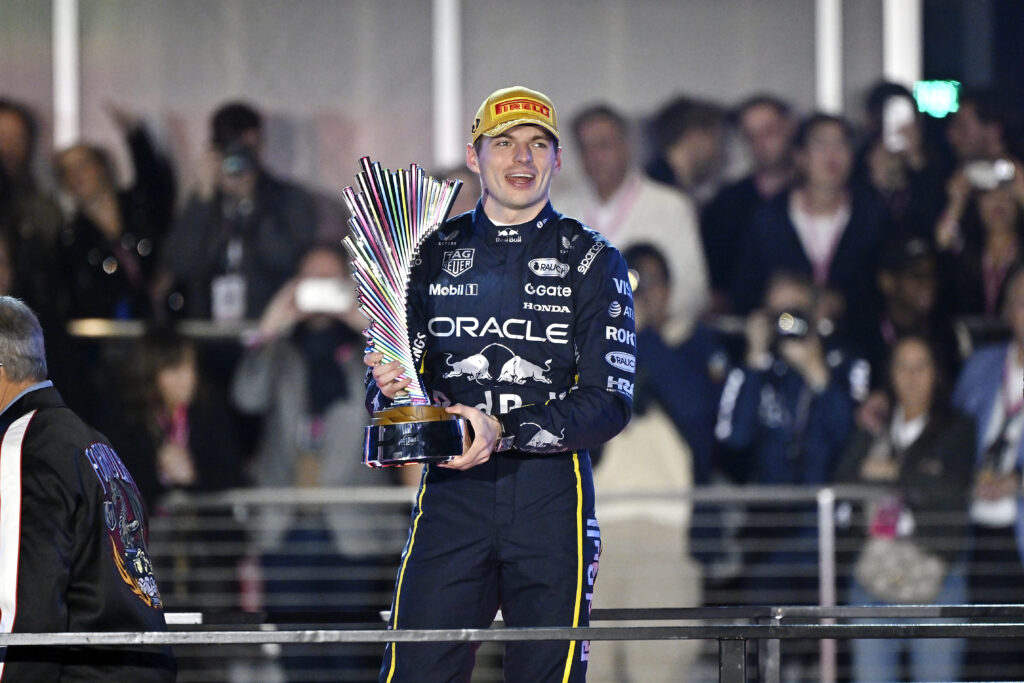
Max Verstappen’s time as F1 champion came to an end in 2025, and now his focus turns to whether Red Bull can adjust to the 2026 regulations in time to compete for the title again next season.
The sport is set for one of its most significant technical shake-ups ever. Active aerodynamics will make their debut, new engine rules will come into effect, and all teams will need to adapt to updated chassis regulations and tyres from Pirelli.
The new rules centre around the power units. The split between electrical and combustion power will move from 20/80 up to an even 50/50, and F1 will switch entirely to synthetic fuel. It is also the year Red Bull steps into engine manufacturing.
Red Bull have ended their partnership with Honda, who have moved over to Aston Martin. Instead, Red Bull have teamed up with Ford, aiming to tap into the American company’s expertise in hybrid technology.
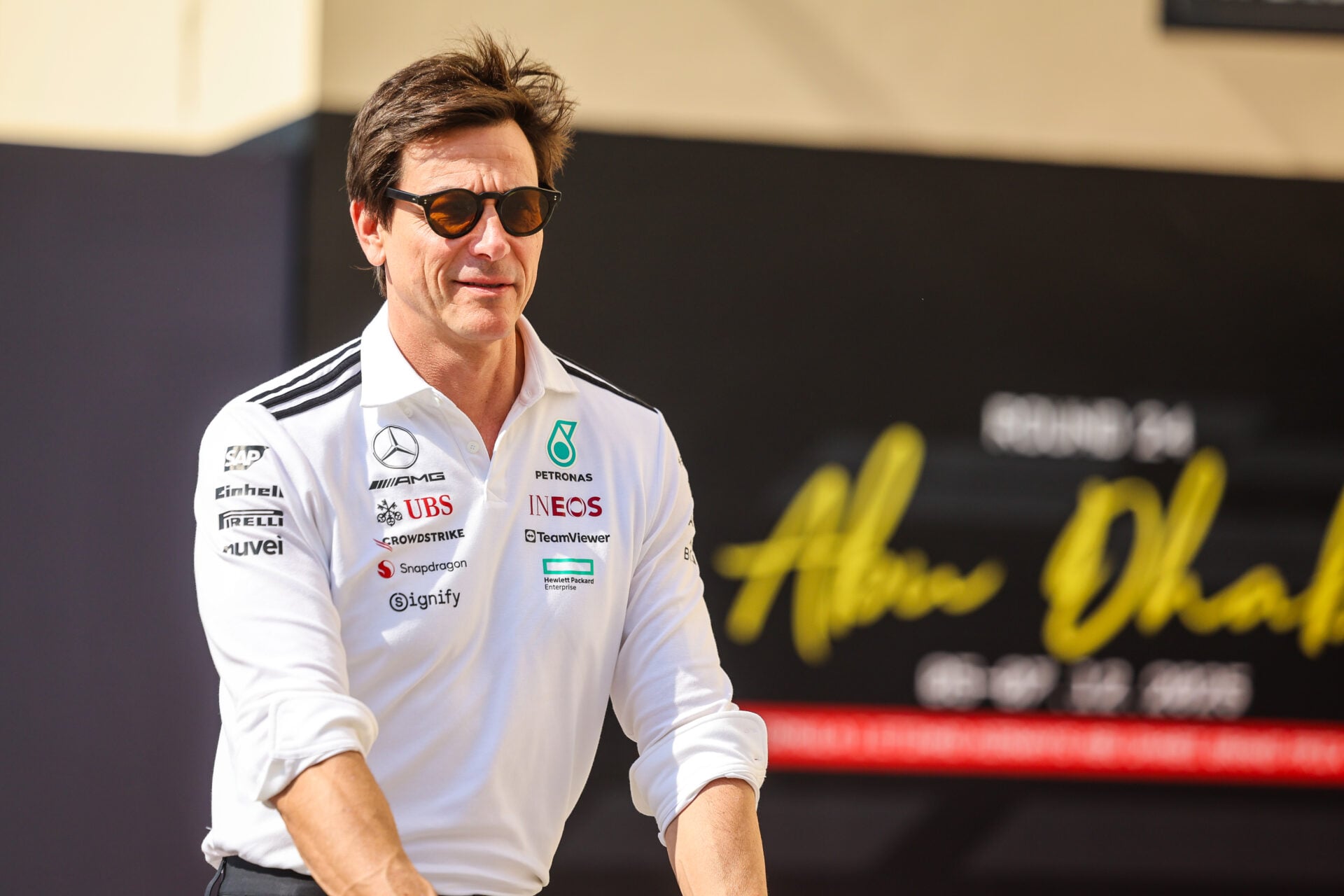
Toto Wolff believes Verstappen’s simulator skills will be a key asset in 2026
Many expect Mercedes to come out on top of the new regulations, much like they did back in 2014 when the V6 turbo-hybrids were introduced. One of the biggest changes this time around is the removal of the MGU-H.
The increased electrical component is expected to play a major role in performance, and Mercedes team principal Toto Wolff thinks that drivers who spend more time in simulators – like George Russell and Verstappen – could have an edge under the new rules.
“We will be needing to compensate for a lack of electric power on every single lap, particularly on the ones with long straights. I think what we are seeing now, the strategies, it almost adds like a little chess component,” he said to Beyond The Grid.
“Where is the driver going to deploy his energy? Who is better prepared? I think the sim driver generation will be in a good spot here. You look at George and his generation, Max, they work on the simulator and they enjoy that. It’s their generation.
“So, yes, I think whoever loves to be in the virtual world, be it on a rig at home or in a simulator in a factory, is going to have an advantage.”
Technical director Ben Hodgkinson has indicated that Verstappen is ‘impressed’ with Red Bull’s preliminary data for their 2026 F1 engine. However, the performance parity among engine constructors under the new regulations will not be determined until the first race in March.
Lewis Hamilton’s simulator reluctance could pose a problem in 2026
Wolff’s view that Russell and Verstappen might have an early edge in managing energy deployment also raises questions about where Lewis Hamilton fits into the new landscape, given his long-standing dislike of simulator work.
Back in 2020, Hamilton made it clear he was not interested in virtual racing, saying it felt very different from the real thing. A year later, he admitted he rarely used Mercedes’ simulator, logging only around 20 laps a year.
Ralf Schumacher has even suggested that the Briton does not spend much time on Ferrari’s simulator either, while Charles Leclerc reportedly uses it daily to fine-tune the team’s setups and updates.
Hamilton has already had some initial runs with Ferrari’s 2026 car in the simulator and came away with positive feedback. But getting fully up to speed with the new engine regulations might require more simulator time than he has been comfortable with in the past.
Receive exclusive football transfer news and updates twice a week to your mailbox