
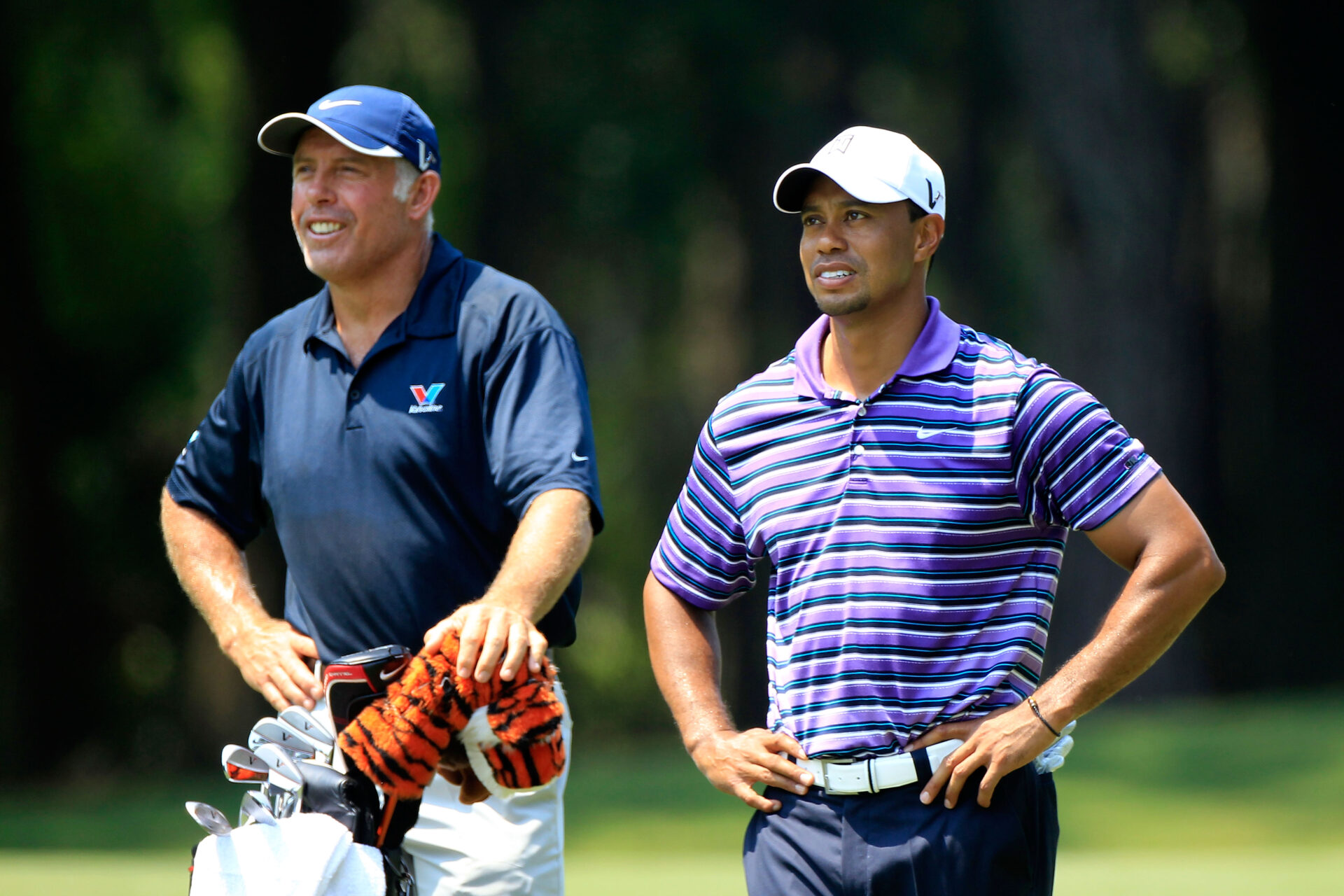

The PGA Tour has started to move in new directions recently, with Tiger Woods becoming more influential in shaping what comes next.
Woods has already played a role in welcoming new leadership, congratulating Brian Rolapp on taking over as CEO of the tour – a decision the 15-time major champion helped influence.
Among the topics demanding early focus is slow play, a persistent frustration throughout both the men’s and women’s games.
Ian Poulter of LIV Golf believes slow play has “always been an issue,” a view shared across many parts of the sport. Even outside the men’s circuit, players like LPGA star Nelly Korda were vocal about slow conditions during the Women’s PGA Championship at Fields Ranch East last month.
Steve Williams points to the cause of slow play on the PGA Tour
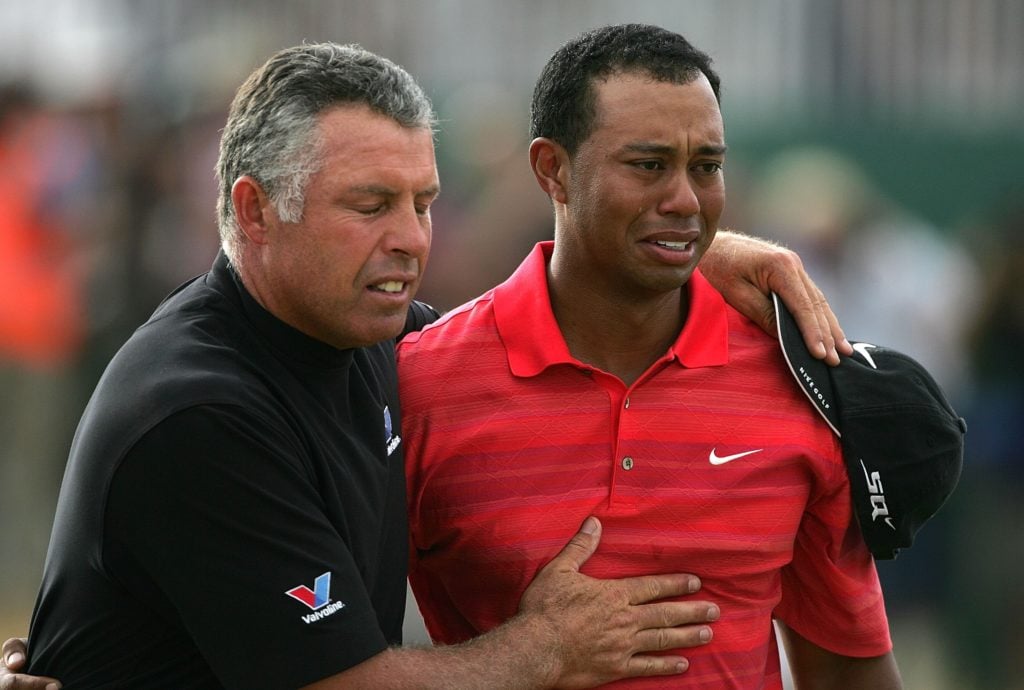
And now another respected voice has added to the conversation – this time from a caddie’s perspective. Steve Williams, who spent over a decade working alongside Woods, shared his view during an appearance on GOLF’s Subpar podcast.
“I had a brief stint caddying for Jason Day and nothing against Jason, I would call him a modern day player and I would call Tiger an olden day player,” Williams said.
“When I was caddying for Jason, he was using the up and down, he had information about how far the ball went in 70-degree, 80-degree, 90-degree, 100-degree weather and all these different things. It became overwhelming.”
Williams explained that this abundance of numbers often complicated decision-making, recalling waiting on specific holes where relying on raw numbers felt unhelpful.
“Tiger was a feel player. I think that is why he was so successful playing on links courses, golf courses that were target courses, parkland courses, your Bethpage type courses,’ he added. ‘I think he played strictly by feel. He did not use all those numbers that are required.”
“I think today, part of the problem is that the information that is available now has contributed to the slow play on Tour. I think there is just too much information now, whether that is a good thing or a bad thing is an individual choice.”
He even spent 13 years on Tiger Woods’ bag, while he worked with several other high-profile names, including Jason Day, Greg Norman and Adam Scott.
Slow play has often stoked frustration over recent years, including from Charley Hull, who has expressed her concerns in strong terms. For now, though, it remains an unsolved issue.
PGA Tour’s changes to address slow play
Golf has always depended on players to call penalties on themselves, but slow play affects fellow competitors too.
This year, though, the PGA Tour Americas adjusted its Pace of Play policy after fans spoke up. Now, a player is hit with a one-stroke penalty for their first “bad time” – which happens when they take longer than allowed to play a shot.
The policy goes further on its second strike – a two-stroke penalty – and leads to disqualification on the third. Those changes were made in March.
The Korn Ferry Tour has also adopted the same system, hoping the crackdown will encourage players across all levels to move faster between shots.
Receive exclusive football transfer news and updates twice a week to your mailbox