
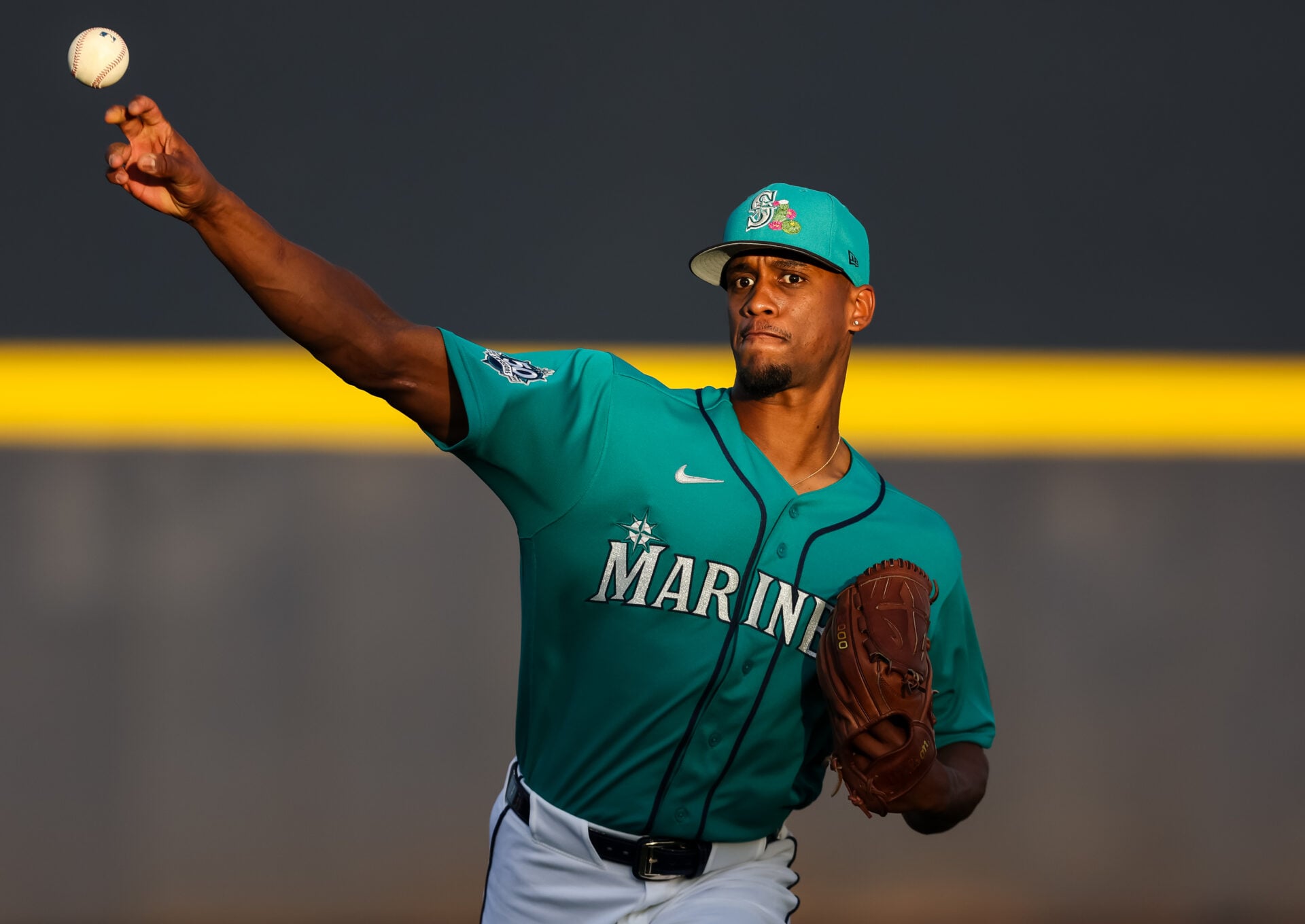

The Chicago Cubs did not acquire Yosver Zulueta expecting a finished product, and if he were one, the Seattle Mariners probably would not have moved him in the first place.
What the Cubs appear to be doing is something they have grown increasingly comfortable with in recent years: betting on elite raw talent and trusting their pitching infrastructure to handle the rest. Zulueta is the latest example.
The hard-throwing right-hander arrived from Seattle for cash considerations and was immediately optioned to Triple-A Iowa. It looks like a minor transaction on the surface, and it may say something bigger about how the Cubs are building their pitching staff.
The appeal is obvious
There is a reason teams keep giving Zulueta opportunities, because few pitchers can do what he does when everything is working. The 28-year-old has touched 100 mph during his professional career and features the kind of velocity that grabs the attention of scouts and front offices alike. His slider has long been viewed as a legitimate weapon too.
Put those ingredients together and it is easy to see why organizations keep believing there is more to unlock. Power arms are hard to find, and power arms with this much remaining upside are harder still.
The stuff has never been the problem
Command has. For all of Zulueta’s velocity and strikeout potential, consistency has stayed elusive, and his walk rates have repeatedly undermined his effectiveness across multiple organizations.
That is ultimately why Seattle was willing to move on, and it is also why the Cubs could acquire him without giving up a significant asset. Contenders make this kind of move all the time, because the cost is small next to the potential reward.
The Cubs have a type
That is what makes the acquisition interesting. Chicago has repeatedly targeted pitchers with loud tools and developmental questions. Through waiver claims, minor trades, free-agent bargains and bullpen conversion projects, the Cubs have shown a willingness to chase upside rather than settle for lower-ceiling options.
The strategy has produced mixed results, with some reclamation projects working and others fizzling out, but the philosophy is clear. The Cubs would rather bet on elite traits and try to solve the flaws later.
Why it makes sense right now
Bullpen depth has become more important than ever across baseball, and few contenders get through an entire season without cycling through a long list of relievers. That reality keeps organizations hunting for arms that could provide value if the right adjustments click, and Zulueta fits squarely into that search.
The Cubs are not banking on him becoming a late-inning weapon tomorrow. They are betting that somewhere inside the pitcher who can reach triple digits is a reliever worth developing. If they are right, they land a useful bullpen piece for almost nothing. If they are wrong, the financial investment is minimal.
The move is more about process than player
That may be the most important takeaway. Zulueta is not arriving in Chicago as a proven major-league reliever. He is arriving as a project, and projects like this have become a defining part of the Cubs’ pitching approach.
The organization keeps searching for undervalued arms with premium stuff, hoping its coaching and development system can turn potential into production. Yosver Zulueta is simply the latest test case, and whether he succeeds or fails, the move says plenty about how the Cubs believe winning organizations should build pitching depth.
Receive exclusive football transfer news and updates twice a week to your mailbox