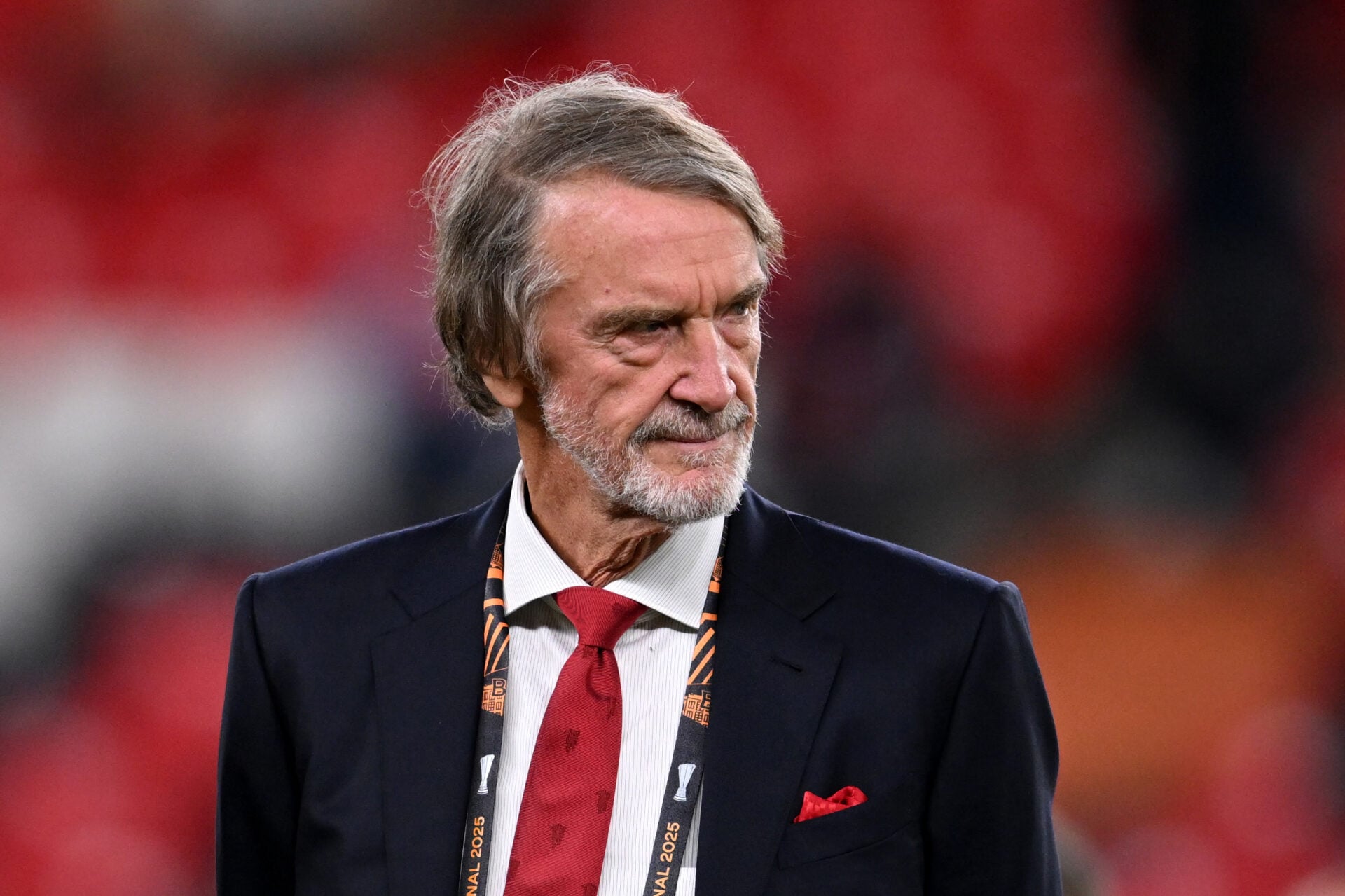

When Sir Jim Ratcliffe paid over £1bn for a minority stake in the club, it seemed to reinforce the idea that Manchester United are one of the most valuable brands in global football. But new analysis from Kinnaird Sports Intelligence suggests their real value might not match up to that reputation.
In financial terms, a ‘bubble’ is when the price of an asset exceeds its underlying worth. Eventually, those bubbles burst, and values drop sharply.
For years, United’s valuation – whether by analysts or the club itself – has only gone one way: up. But what exactly is driving that confidence?
READ MORE: Sir Jim Ratcliffe steps in to settle Man Utd transfer decision, according to Fabrizio Romano
Since their last profitable season in 2018-19, Man United have accumulated losses totalling £359m. Much of this has been covered by debt, and more recently by equity injections from Sir Jim Ratcliffe and Ineos.
Ratcliffe’s moves to cut staff numbers, overhaul the playing squad, and build a new stadium all point to an acceptance that United have fallen behind where they should be.
Add to that some underwhelming results on Ruben Amorim’s watch so far this season.
The strength of their brand still gives them some protection though. Even 15th place in last year’s table under Amorim still gave them more TV prize money than four clubs who finished higher—again because they get on TV more often than most teams regardless of results.

Their commercial operations and matchday revenues continue to keep them competitive financially. Even if poor recruitment has wasted plenty of that advantage in recent years.
United ended up spending nearly £150m net in the summer window too. And they used their pulling power again even without Champions League football, convincing Benjamin Sesko, Matheus Cunha and Bryan Mbeumo over moves elsewhere.
| Player | Direction | Club | Fee |
| Bryan Mbeumo | In | Brentford | £71m |
| Benjamin Sesko | In | RB Leipzig | £73.7m |
| Matheus Cunha | In | Wolverhampton Wanderers | £62.5m |
| Senne Lammens | In | Royal Antwerp | £18.2m |
| Diego Leon | In | Cerro Porteño | £3.3m |
| Harley Emsden-James | In | Southampton | £1m |
| Enzo Kana-Biyik | In | Le Havre | Free |
| Alejandro Garnacho | Out | Chelsea | £40m |
| Antony | Out | Real Betis | £21.6m |
| Marcus Rashford | Out | Barcelona | Loan |
| Jadon Sancho | Out | Aston Villa | Loan |
| Victor Lindelöf | Out | Released | Free |
| Christian Eriksen | Out | Released | Free |
| Jonny Evans | Out | Released | Free |
| Elyh Harrison | Out | Shrewsbury Town | Loan |
| Radek Vitek | Out | Bristol City | Loan |
| Ethan Wheatley | Out | Northampton Town | Loan |
The strength of their brand still gives them some protection though. Even with 15th place last year’s table under Amorim still gave them more TV prize money than four clubs who finished higher—again because they get on TV more often than most teams regardless of results.
Their commercial operations and matchday revenues continue to keep them competitive financially. Even if poor recruitment has wasted plenty of that advantage in recent years.
Kinnaird Sports Intelligence offers a different perspective on Manchester United’s true market value
United’s worth as an asset carries real weight. The way the market values the club plays a big part in who ends up owning it.
And, as the past two decades under Glazer ownership have shown, who owns Man United has a huge impact on what the club stands for and how well it can compete on the pitch.
Ratcliffe put forward £1.25bn to secure a 29 percent stake in the club. That sum covered both an upfront payment to the six Glazer siblings, Class A shareholders that invested in Man United through the New York Stock Exchange, and a separate financial commitment that has since been fulfilled.

That deal gave an implied valuation of £4.3bn for Man Utd as a whole. This is well below what Sir Jim called “the world’s worst contract”, referencing their existing TV rights deal with beIN Sports which still has three years left to run.
For reference, Forbes, Football Benchmark and Sportico have all placed United’s enterprise value between £4.4bn and £4.9bn, while Brand Finance is more conservative at around £3.2bn.
Kinnaird Sports Intelligence looks at things differently though.
Their data-driven model takes into account assets, profitability and long-term revenue generation potential – arriving at an appraisal of just £1.75 billion for Man Utd.
Joe Roberts outlines distinctions between KVM Model and mainstream market valuations
The fundamental difference between our valuation methodology (KVM) and other valuations from places like Forbes lies in what they’re actually measuring: intrinsic worth versus market price.
He continued: “For example, Forbes calculates ‘enterprise values based on historical transactions and future economics of each league,’ essentially estimating what someone would pay by analysing recent sale prices and market sentiment.
Receive exclusive football transfer news and updates twice a week to your mailbox