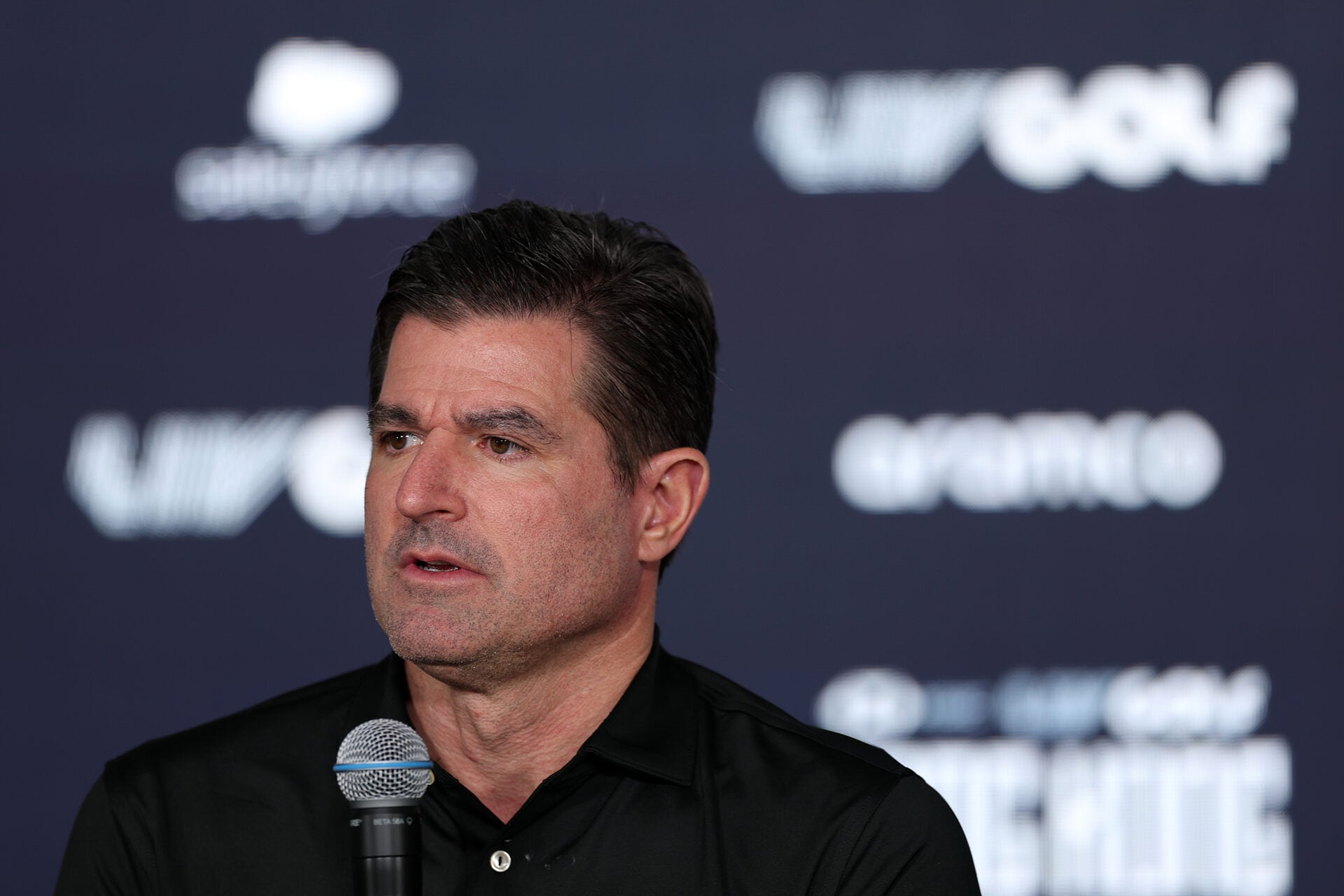

LIV Golf CEO Scott O’Neil says several different financial rescue packages are on the table for the embattled tour.
LIV has been urgently seeking funding since the Saudi Public Investment Fund (PIF), who have sunk over $5bn into the project, announced that they would cease funding the would-be rival for the PGA Tour after the climax of the 2026 season.
With only the UK, New York, Indianapolis and Michigan swings remaining, it has been reliably reported that PIF could turn off the tap even before the end of the tour.
The league’s powerbrokers, led by turnaround veterans Gene Davis and Jon Zinman alongside O’Neil, are now courting private equity firms and wealthy family offices with a view to securing up to $350m in funding to deliver the 2027 campaign and steer LIV towards a more sustainable future.
Under the terms of revised plans presented to potential investors, LIV could potentially file for Chapter 11 bankruptcy to create more breathing space for a restructuring which could see four events removed from the calendar, prize purses pared back and players offered equity in their teams.
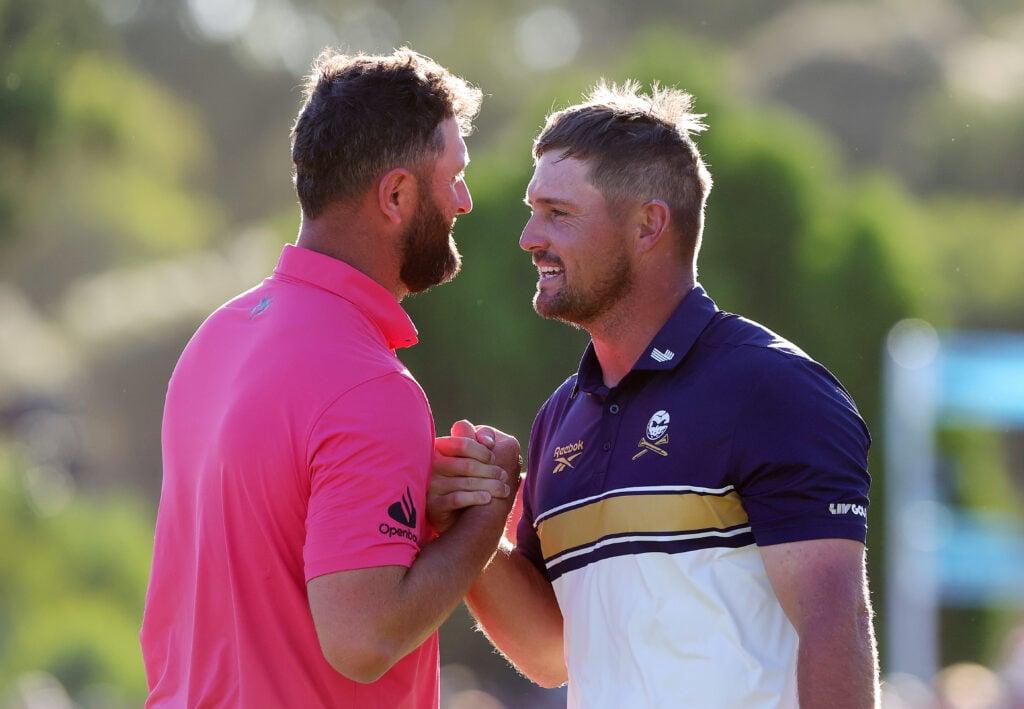
Marquee player Bryson DeChambeau’s deal expires at the end of the season, while Jon Rahm – who has distanced himself somewhat from the rescue efforts – is reportedly under contract until 2029.
The search is being led by Ducer Partners, the investment bank, with assistance from consultancy AlixPartners and law firm Gibson Dunn.
So, who might the team be trying to persuade to step in and save the star-crossed tour?
To date, no specific names have been reported. But in an interview with CNBC, O’Neil has revealed some information about the types of investor interested and the makeup of the proposals being discussed.
“The response has been positive,” he said. “What’s been really interesting is, How do you slice this? How do you cut it?
“Is there one partner that comes in, maybe a big private equity firm, at the full $300 [million], or do you have 10 or 12 investors at $50m and $25m units?
“And there seems to be an expression of interest on the family office side in the $50m range, and the private equity firms are looking at one take all.”
Private equity groups pool wealth from dozens or sometimes hundreds of limited partners and usually use debt to finance leveraged buyouts of companies. The largest private equity players control hundreds of billions of dollars in assets. In some cases, their portfolios are more valuable than PIF’s.
Typically, these firms aim to flip their purchase for a profit within a defined timeline – the median ‘time horizon’ is around seven years, but sports investments often take longer.
O’Neil has said he believes that a leaner, revamped version of LIV Golf could be profitable within two years. If PE firms accept his analysis, it could be an attractive investment.
Family offices meanwhile do what they say on the tin: managing the wealth of high net-worth families.
Whatever the structure of a lifeline deal, LIV is living on borrowed time.
Receive exclusive football transfer news and updates twice a week to your mailbox