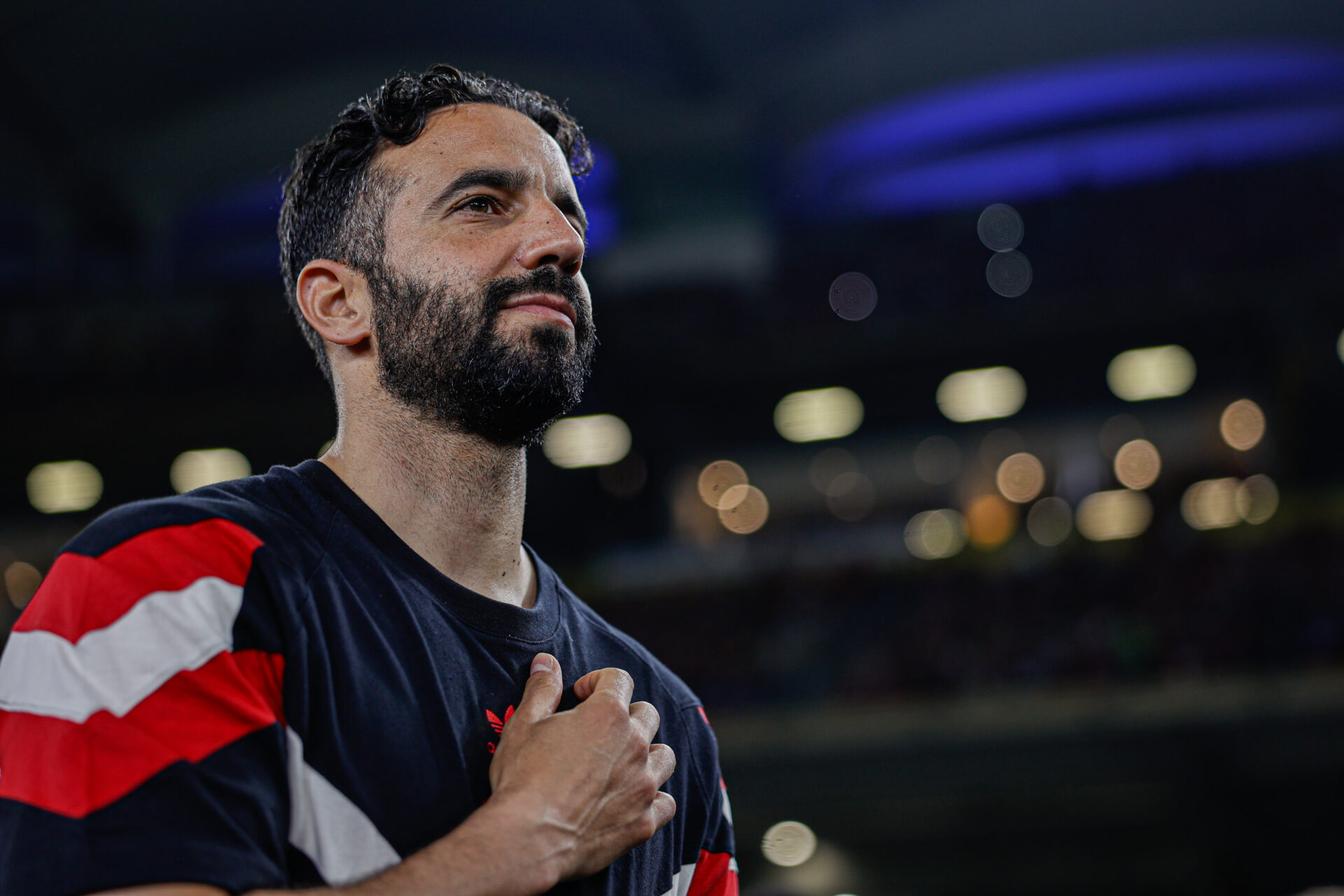

Ruben Amorim’s tactical style at Sporting Lisbon helped establish his reputation as one of Europe’s brightest young managers.
Amorim’s work at Sporting Lisbon was a key factor in Ineos’ decision to appoint him Manchester United manager last November.
During his time there, he ended a 19-year wait for the league title and established them as Portugal’s top side.
His willingness to trust academy players also fits well with United’s traditions, as he handed out 27 debuts during his time in Portugal.
Amorim brought his 3-4-2-1 shape to United and had a tough first season, working hard to get players used to his system. While there has been clear progress this season, he has also made some changes to how the team lines up.
Ruben Amorim has stepped back from pressing at Man United

At United, Amorim has shifted the focus toward controlling matches through possession rather than relying on counter-attacks as some of his predecessors did.
This was a key part of how he set up his teams at Sporting, where they would often limit the opposition’s time on the ball. While he has kept much of his system intact, there have been some changes along the way.
According to Coaches Voice, Amorim’s Sporting sides were among the most aggressive pressing teams in Europe. The front three pressed high up the pitch, and even the wing-backs in his system pushed forward to force turnovers.
That approach has not translated to Manchester. Opta data shows that United are only 10th in the Premier League for high turnovers this season.
Amorim seems more willing now to sit deeper and defend space rather than immediately pressing after losing possession. It looks like a move designed to protect what can be a vulnerable back line.
How Ruben Amorim has adjusted Man United’s defence
At Sporting, one of Amorim’s go-to tactics was asking his centre-backs to step forward into midfield, crowding the middle of the pitch. He wants that same kind of aggression from his defenders at United.
He set up a high defensive line in Portugal to cut down space for attackers, but he does not quite have the players for it yet at Old Trafford.
Amorim has even acknowledged that both Harry Maguire and Matthijs de Ligt are not well-suited to playing so high up the pitch, which has forced him to make adjustments and sit deeper.
The defence’s lack of pace consistently left United vulnerable to balls played over the top, necessitating a tactical adjustment from the manager. Consequently, United’s defensive line now sits significantly lower, ranking only 11th highest in the Premier League.
But that could shift as he continues to shape his squad. If they bring in a quicker centre-back, it would not be surprising to see Amorim push his line higher again.
Receive exclusive football transfer news and updates twice a week to your mailbox