
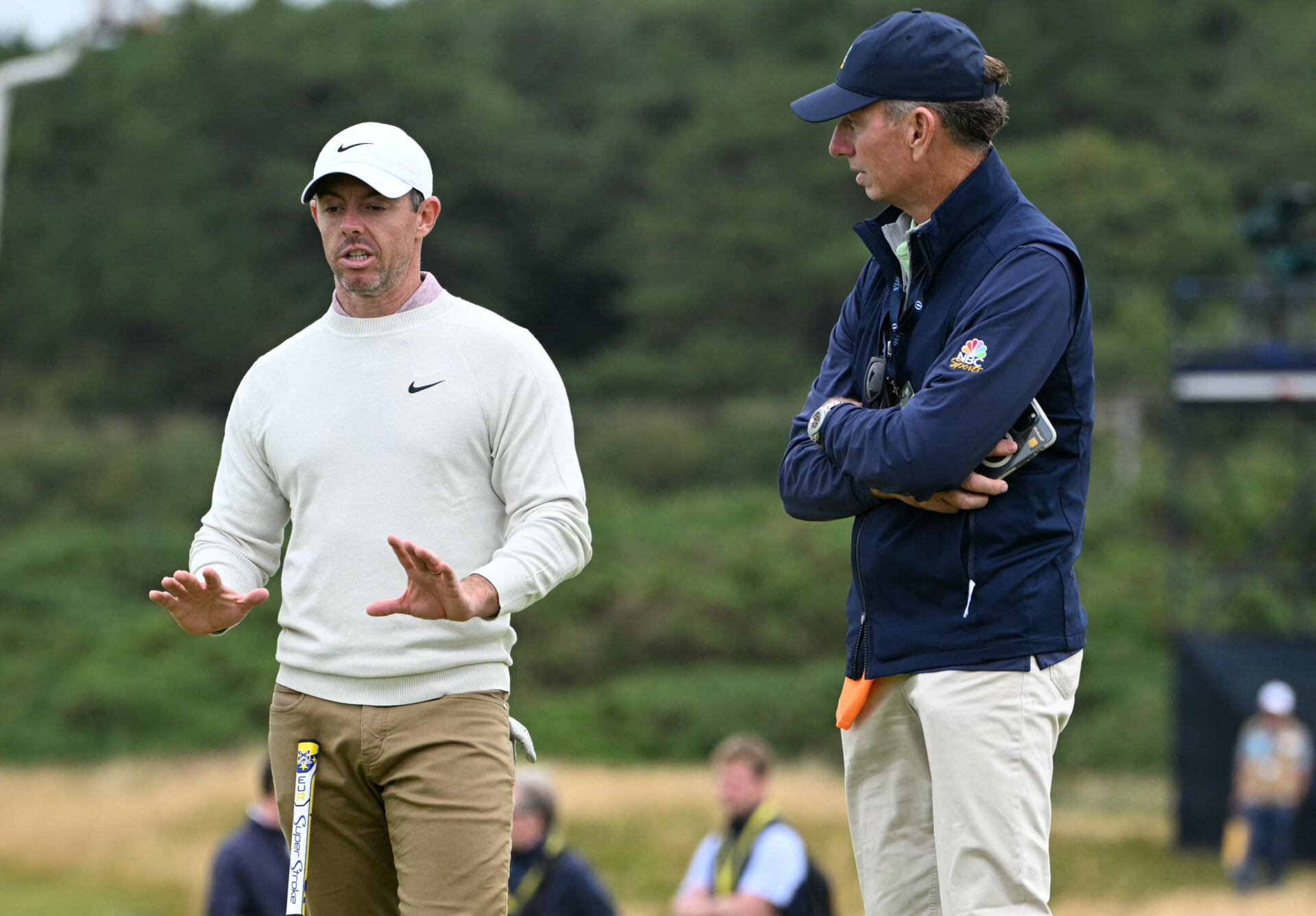

Rory McIlroy’s putting coach, Brad Faxon, is widely regarded as one of the best on the planet.
Turning professional in 1983, Faxon enjoyed a 34-year career on the PGA Tour, where he secured eight victories. But he’s best known for being a putting whisperer, leading the tour on the greens during three separate seasons.
Faxon has transformed Rory McIlroy’s putting. When they first started working together in 2018, the Northern Irishman ranked 159th in Strokes Gained: Putting.
Faxon taught McIlroy that putting was about touch and visualization, not perfect technique, and you can learn to improve the same way through this simple drill.
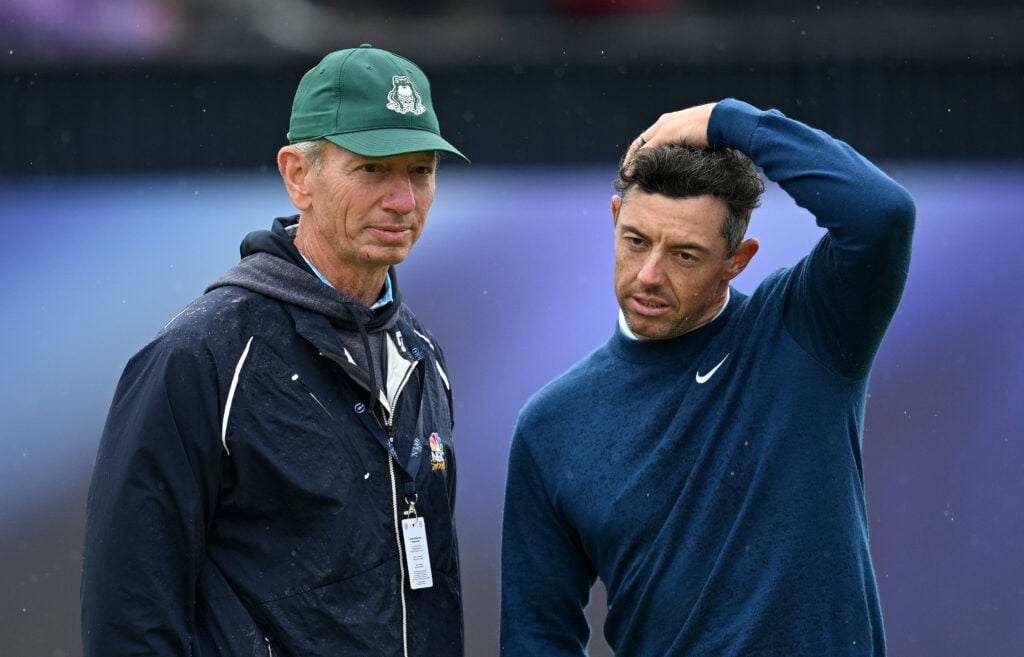
Brad Faxon’s simple putting drill for amateur golfers
Now, before you grab your putter, Faxon’s drill actually involves clubs all the way down the bag. He said it was originally designed to help juniors, but Faxon realized it could help any player struggling on the green.
Speaking on Rick Shiels’ YouTube channel, he explained, “My favorite little skill development exercises that I would give, I did it with Juniors, and I’m thinking, ‘You know, why don’t I do this to golfers so they can get better?’ So I love this, and this is a drill you can bring home, it’s easy, it’s six putts from six feet with six different clubs.
“And if you think about you’ve probably bladed a sand wedge before. Maybe putted from the fringe with a hybrid. So if you get six clubs and they should all be different, put them down and say all right, ‘I’m gonna make six putts in a row from six feet’.
“Mark it with a sharpie see how many you can make. Pick yourself a challenge point at the beginning: ‘I’m gonna make five out of six before I end my practice’, and then the psychology of this, so you usually putter first or last? I want it to be last.
“I want you to put it with the pressure on you. If you had to make five out of six or six out of six, to be with your putter, but I also want you, and this is where I think good golfers can sense this, I want you to be able to feel what it’s like when you putt with the sand wedge in your belly.
“Maybe when you’re having your hybrid, you can have all different stances, there’s no all of a sudden correct way to putt with that club, is there? I want you to feel this. Is there something liberating about that? Do you stop worrying about the result? Does that putter flow easily?
“If we throw away expectations, we would be better.”
Brad Faxon named the most overrated part of putting
Faxon went on to give some crucial advice for players struggling with the mental side of putting.
He said, “If you’re a little bit fearful or indecisive when you putt, I love the practice of looking at the hole in your practice strokes. I like the practice of your practice stroke being important to feel what you want to feel on your actual stroke.
“If you’re going to err on that, err on the side of exaggerated with long and speed. So most people get short and quick, or bad transition. I like looking at the hole, not looking at your stroke while you do it, not being ball conscious, and letting that practice stroke, and you had continuous motion with that you did two or three or four in a row, I like that.”
Faxon’s philosophy is all about touch and feel. He doesn’t want players to overthink putts, and that extends even to thinking about where the club face is pointing.
The club face is typically considered as the most important aspect of the putt, but Faxon said that worrying about this can harm performance rather than help it.
“I think the most overrated thing I see, especially with better golfers, is club face alignment at address. I think where it is at impact is crucial, but there are a lot of great putters like Tiger Woods where the face was open.
“Players bounce the putter a lot. Before they take it back, they might have a little forward press that could open or close the face. I want you to disregard that as something that should be on the list of things that are important.”
It seems that if you can take anything from this lesson, it’s that you need to think less!
Receive exclusive football transfer news and updates twice a week to your mailbox