

Qatar have announced La’eeb the ‘super-skilled’ headdress as the mascot for the 2022 Fifa World Cup, but where does the character rank compared to the past mascots since 1966?
England became the first country to have a mascot when they hosted the eighth edition of the quadannual tournament in 1966. It was also one of the first mascots to be associated with a major sporting competition, and has become a tradition with each following edition.
Mascots used at World Cups have tended to feature a design encompassing aspects of the host nation. The character is also often anthropomorphic to help draw a younger audience to the tournament and drive sales of merchandise, further promoting the relevant event.

Qatar unveil La’eeb as official mascot for 2022 Fifa World Cup
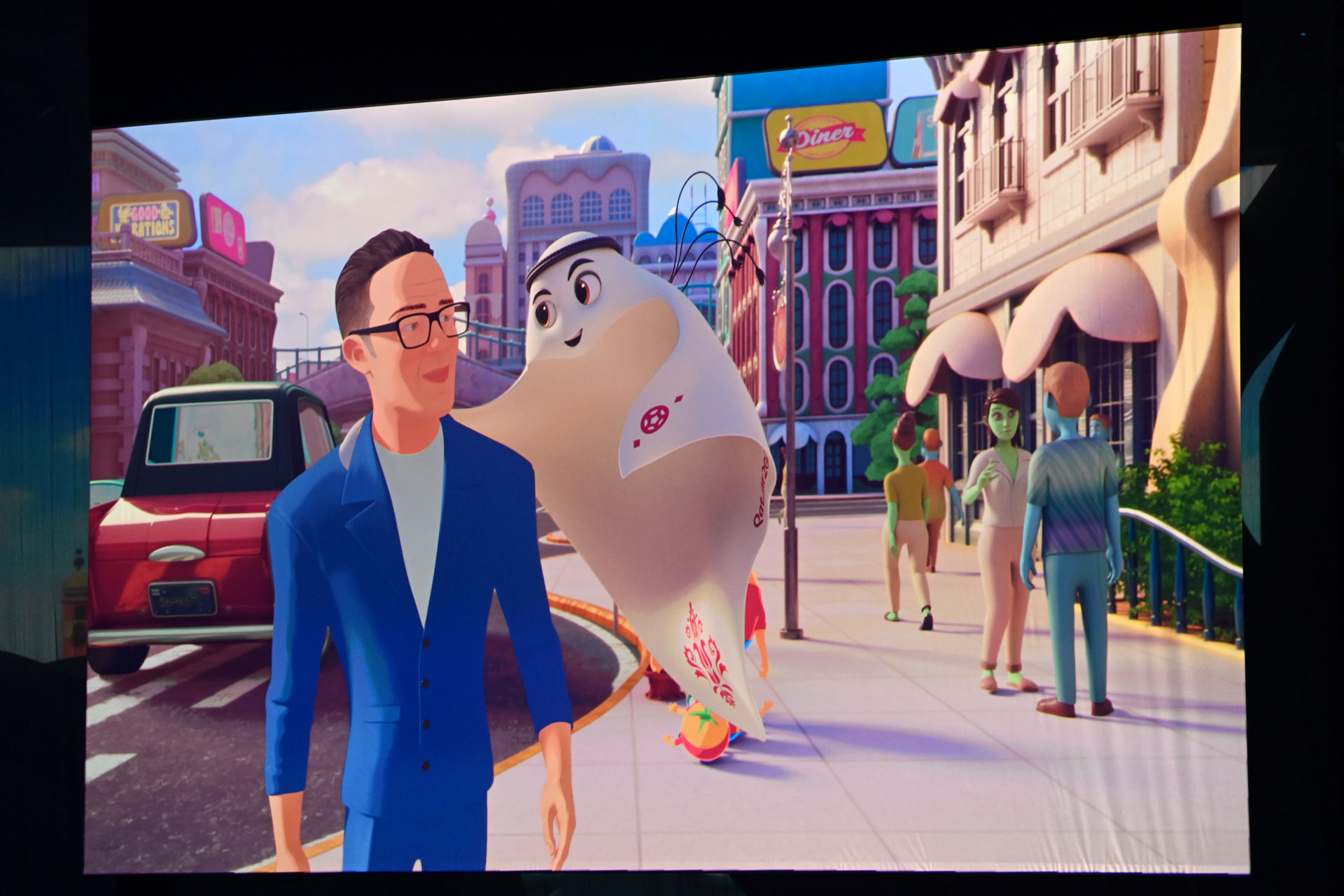
Qatar and Fifa unveiled La’eeb as the official mascot of the 2022 World Cup at the draw for the group stage, taking the form of a ghutra. It is the popular headdress in Arab countries, often worn by Qatari dignitaries, while the word is Arabic and means ‘super-skilled player’.
La’eeb will be seen throughout the first World Cup held in a Middle Eastern country, while also being downloadable in GIFs and stickers to be used on social media platforms. Also, it carries the slogan ‘Now is all’, and will be downloadable for screensavers and filters, too.
So, now La’eeb is in what Fifa are calling the ‘mascot-verse’ – a parallel world where past, present and future mascots live – where does Qatar’s rank with past World Cup mascots?

15) Argentina 1978: Gauchito followed early trend for World Cup mascots
The 1978 World Cup in Argentina saw Gauchito debut as the official mascot. Gauchito was a young boy wearing the Albiceleste kit, accessorised with a hat branded ‘Argentina ‘78’, a neckerchief and a whip – typical items belonging to gauchos, reputed for their bravery.
14) Mexico 1970: Juanito was the first humanised World Cup mascot
Mexico unveiled Juanito as their mascot for the 1970 World Cup. They followed England in having a mascot for their tournament with a boy in the El Tri kit, also wearing a sombrero. His name was also a variation of Juan, a common name in Spanish-speaking countries.

13) West Germany 1974: Tip and Tap picked up from where Juanito left
West Germany 1974 saw Tip and Tap feature as the official mascots of the 10th Fifa World Cup. The tournament was also the first edition to feature the current trophy, after Fifa had permanently awarded the Jules Rimet trophy to Brazil following the third of their five wins.
Tip and Tap were two boys wearing kits resembling the West Germany strip, while one had ‘WM’ written on the front and the other ‘74’. They also symbolised togetherness, with the two wrapping their arms over the shoulder of the other, while offering a welcoming wave.
12) Spain 1982: Naranjito was the first cartoon character used as a mascot
Spain became the first Fifa World Cup host nation to use a cartoon character as the mascot in 1982 with Naranjito. The character was an orange, a typical fruit in Spain, in the Roja kit, and used the Spanish word for orange ‘naranja’ plus the diminutive suffix ‘-ito’ as its name.

11) Russia 2018: Zabivaka selected as World Cup mascot after voting process
Fifa announced in 2016 that a wolf would be used as the mascot for the 2018 World Cup in Russia after it received 53% of the more than one million votes cast by the Russian public. The character by student designer Ekaterina Bocharova beat a tiger (27%) and a cat (20%).
The wolf’s name ‘Zabivaka’ loosely translates as ‘the one who scores’, and wore red shorts with a blue and white t-shirt branded ‘Russia 2018’. Its accessories were coloured in those of the Russian flag as is common with most World Cup mascots used throughout the years.
10) USA 1994: Striker, the World Cup Pup took inspiration from household pet
The United States of America took inspiration from the popular household pet, a dog, for their mascot in 1994. Striker’s quirky proportions and happy facial expression, plus a plush teddy, emphasised its appeal to a younger audience to help promote the 1994 World Cup.

9) Germany 2006: Pele and Beckenbauer unveiled Goleo VI the lion and Pille
Goleo VI the lion was Germany’s mascot for the 2006 Fifa World Cup with a talking football named Pille as a sidekick. Its name was a combination of ‘goal’ and the Latin word for Lion, ‘Leo’. Pele and Franz Beckenbauer also unveiled the mascot at an event in Leipzig in 2004.
8) South Korea and Japan 2002: Ato, Kaz, and Nik broke from the norm as mascots
South Korea and Japan showed the quirky nature of modern Asian culture in their mascots at the 2004 Fifa World Cup. Ato, Kaz and Nik were orange, purple and blue futuristic-esque creatures in a fictional football-like sports team named ‘The Spheriks’ with Ato the coach.

7) Qatar 2022: La’eeb the ‘super-skilled’ headdress showing Middle Eastern culture
La’eeb will highlight a small piece of Middle Eastern culture to a young audience across the world as the mascot for the 2022 Fifa World Cup in Qatar. It is unlikely to be a huge driver of merchandise sales, but could carry a huge digital footprint through social media usage.
6) Mexico 1986: Pique shows Mexican spice in characteristic mascot
Mexico used a characteristic of a jalapeno pepper with a moustache and with a sombrero as the mascot for the 1986 World Cup. The character was a joyous image for branding for the tournament, and a unique mascot for matches played during that year’s competition.

5) France 1998: Footix the cockerel took on one of nation’s symbols as mascot
France characterised the cockerel, one of the symbols of the nation and their national side, as the mascot for the 1998 Fifa World Cup. Footix also carried longevity with football in the country, as the 2019 Women’s World Cup used Ettie – a chicken noted to be its daughter.
4) South Africa 2010: Zakumi the leopard a bright sight at Fifa tournament
Zakumi the leopard was a bright sight at the 2010 South Africa Fifa World Cup. The happy-faced mascot depicted a self-confident and adventurous creature to help carry a positive atmosphere through the joyous tournament as the first World Cup held on African soil.
3) Brazil 2014: Fuleco the three-banded armadillo highlighted nation’s biodiversity
Brazil took inspiration from the three-banded armadillo for the mascot for the 2014 World Cup. The animal – vulnerable after a sharp, recent decrease in population – is indigenous to the northeast part of the country, so was used to highlight the biodiversity within Brazil.

2) England 1966: World Cup Willie the first mascot for Fifa tournament
World Cup Willie set the tone for World Cup mascots at England 1966, when it became an instant hit and long-lasting memory for many in the country. The cartoon lion had a Union Jack football shirt and rugged mane to fit the era, and came with a series of merchandise.
1) Italy 1990: Ciao, the Tricolore stickman with a football for a head
Ciao, the mascot for Italia 90, was a stickman with a football for a head as Italy went for an abstract design for that year’s World Cup. It was very modern for the time, and came with a simple greeting for a name while pushing the colours of the Italian Tricolore to the world.
Receive exclusive football transfer news and updates twice a week to your mailbox