
All six teams from the White Rose county that have played Premier League football are represented, including both Sheffield clubs and Bradford City.
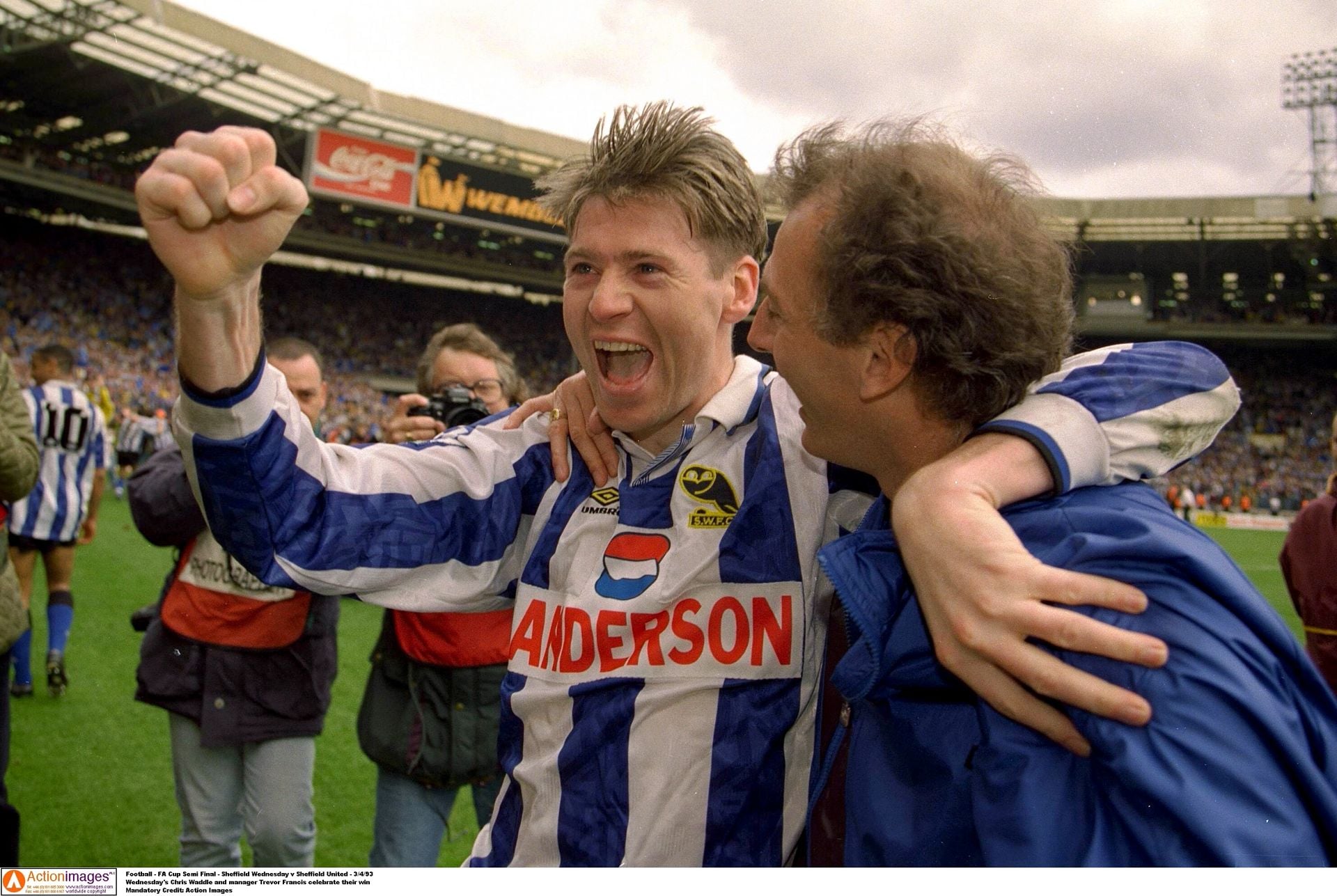
 Chris Waddle in his Sheffield Wednesday days
These are far from halcyon days for football in Yorkshire. Although the situation is looking somewhat brighter than in recent years, the fact remains that Hull City are the only side from the county to currently be playing top flight football (whether Middlesbrough is part of Yorkshire is a separate debate).
It wasn’t always this way. The first ever Premier League season contained Leeds United and both Sheffield clubs, while Barnsley and Bradford City joined the party before the decade was out.
Since Leeds’ relegation in 2004, however, the only Yorkshire representation in the top division has come through the aforementioned Hull and a fleeting visit from Sheffield United in 2006/07.
But of the Yorkshire teams that have played in the Premier League, which players make the combined XI? In order for every team to be represented, some big names have been left out. Think you can come up with a team that would beat this lot? Leave it in the comments below.
Goalkeeper – Kevin Pressman
There is nothing better for a player than to become a legend at their boyhood club, and through more than 400 appearances over the course of nearly two decades Kevin Pressman did exactly that at Sheffield Wednesday.
 Kevin Pressman
His prime coincided neatly with the early years of the Premier League in the 1990s, and he was a virtual ever-present for the Owls during that period. He also had a tendency to raise his game for Steel City derbies, which didn’t exactly harm his standing with the Hillsborough faithful.
Right back – Gary Kelly
 Leeds’ Gary Kelly is watched closey by Boro’s Noel Whelan
Elland Road nowadays has a revolving door for players and managers, but Gary Kelly is a reminder that this wasn’t always the case. A one-club man, Kelly became the only player from outside the Don Revie era to make 500 appearances for Leeds during his 16 years with the Whites.
His consistency was remarkable, and he was twice named in the PFA Premier League Team of the Year. Kelly stayed loyal to Leeds after their relegation and retired in 2007 aged 32.
Centre back – Michael Turner
Hull’s stays in the Premier League so far have been brief, so it is only fair to highlight a player who was crucial in the first season they ensured survival. Geovanni showed his quality in flashes, but for reliability Michael Turner takes the nod.
The centre half played every minute of Hull’s 2008/09 campaign – one of only two outfield players to do so – and notched four goals in the process as the Tigers stayed up in dramatic fashion on the last day. He was linked with Liverpool and Manchester City that summer but eventually moved to Sunderland; he has never quite recaptured his fine Hull form since leaving the KC.
Centre back – David Wetherall
A Yorkshireman who starred for not one but two of the county’s clubs in the top flight, Sheffield-born Wetherall made over 200 league appearances for Leeds United before departing for near neighbours Bradford City in 1999.
 Picture Supplied by Action Images – David Wetherall
Wetherall was a club-record signing when he arrived at Valley Parade, but he paid his fee back and then some when he scored the winner against Liverpool on the final day of the 1999/00 season that kept Bradford in the top flight. He stayed with the Bantams until 2008, and is a rare example of someone who is well thought of by supporters of both Leeds and Bradford.
Left back – Ian Harte
The nephew of Gary Kelly, Harte also etched his name into Leeds folklore as he played an integral role in their successful years under David O’Leary at the turn of the century.
An Irishman with a wand of a left foot, Harte became better known for his set-piece prowess than his defending ability and conjured up numerous magical moments from dead ball positions. He ended up scoring 39 goals for Leeds – not bad for a left-back.
 Ian Harte
Right midfield – Chris Waddle
Following a successful three years in France with Marseille, Waddle returned to England in 1992 to play in the rebranded top division for Sheffield Wednesday. His impact was immediate, and he ended the first ever Premier League season by being voted the Football Writers’ Association Player of the Year.
Waddle dazzled the supporters at Hillsborough with his trademark trickery on the wing, and revelled in playing in front of fans who would encourage him to take his man on. A true entertainer, he was unfortunate to see his career at Wednesday disrupted due to injuries; when fit and on song, however, he gave full-backs a torrid time when wearing the blue and white stripes.
Centre midfield – Neil Redfearn
 Neil Redfearn celebrates a Barnsley goal
1997/98 was Barnsley’s first – and so far only – season in the top flight of English football, and the Tykes didn’t cover themselves in glory. They were marooned in the bottom three from September onwards, conceded 82 goals and ended up being relegated in 19th place.
It wasn’t all doom and gloom at Oakwell though, particularly if your name was Neil Redfearn. The midfielder hit double figures in the league for the Tykes, including the winner in their first ever top flight victory, and is still a revered figure in South Yorkshire.
Centre midfield – Gary McAllister
A large part of Leeds’ 1991/92 title win that preceded the Premier League’s inception was down to the quality of their midfield, which continued to star in the rebranded top division. There is a good case to be made for Gary Speed and David Batty to take this spot, but for the added goal threat and general all round midfield class McAllister gets the nod.
 Gary McAllister – Leeds United in action against Steve Nicol – Liverpool
The Scottish international was an integral part of the Whites engine room until 1996, becoming renowned for his skill from set-pieces. He also captained the side for two seasons, and left Elland Road having firmly endeared himself to the supporters.
Left midfield – Harry Kewell
Events since Kewell’s departure from Leeds have soured relations between himself and the fanbase, but when he was firing for the West Yorkshire side there were few better wingers in the Premier League.
The Australian made his debut as a 17-year-old in 1996, and developed into one of the most feared widemen in England. He was the creative fulcrum in the Leeds side which reached the UEFA Cup semi-final in 2000 and the Champions League last four a year later, linking up well with fellow countryman Mark Viduka in the process. He may have left under a cloud, but he more than played his part in some famous nights for the Whites.
 Harry Kewell in action for Leeds
Striker – Brian Deane
The player with the honour of scoring the first ever goal in the Premier League, for Sheffield United against Manchester United, Deane ended the season with 14 league goals for the Blades and joined Yorkshire rivals Leeds in a club-record deal following the conclusion of that campaign.
Deane wasn’t as prolific in white as he was in red and white, struggling initially with the pressure brought about by the transfer fee. His commitment was never in doubt, however, and he forged effective partnerships with Rod Wallace and Tony Yeboah at Elland Road as well as netting some crucial goals himself.
Striker – Benito Carbone
Not many players have left Inter Milan for Sheffield Wednesday, but that is exactly what Benito Carbone did in 1996 – and Owls fans were soon delighted that he had. Fans tell tales of arriving at Hillsborough early to watch Carbone and his Italian compatriot Paolo Di Canio warm up, and the two men captivated crowds in the blue half of the Steel City in the late ‘90s.
 Benito Carbone fires a shot in for Bradford City
After scoring 25 league goals for Wednesday, including some stunners, he found his way via Aston Villa to Bradford City, where he starred for his second Yorkshire club. Despite Carbone’s best efforts, the Bantams couldn’t avoid relegation and he had to leave as his wages were simply too high for the cash-strapped club. The Italian reportedly gave up £3.2m to avoid being known as the man who made Bradford go bust, so he is understandably still well thought of around Valley Parade.
A fair line up, or should there be others included? Leave your Yorkshire XI’s below.
Receive exclusive football transfer news and updates twice a week to your mailbox