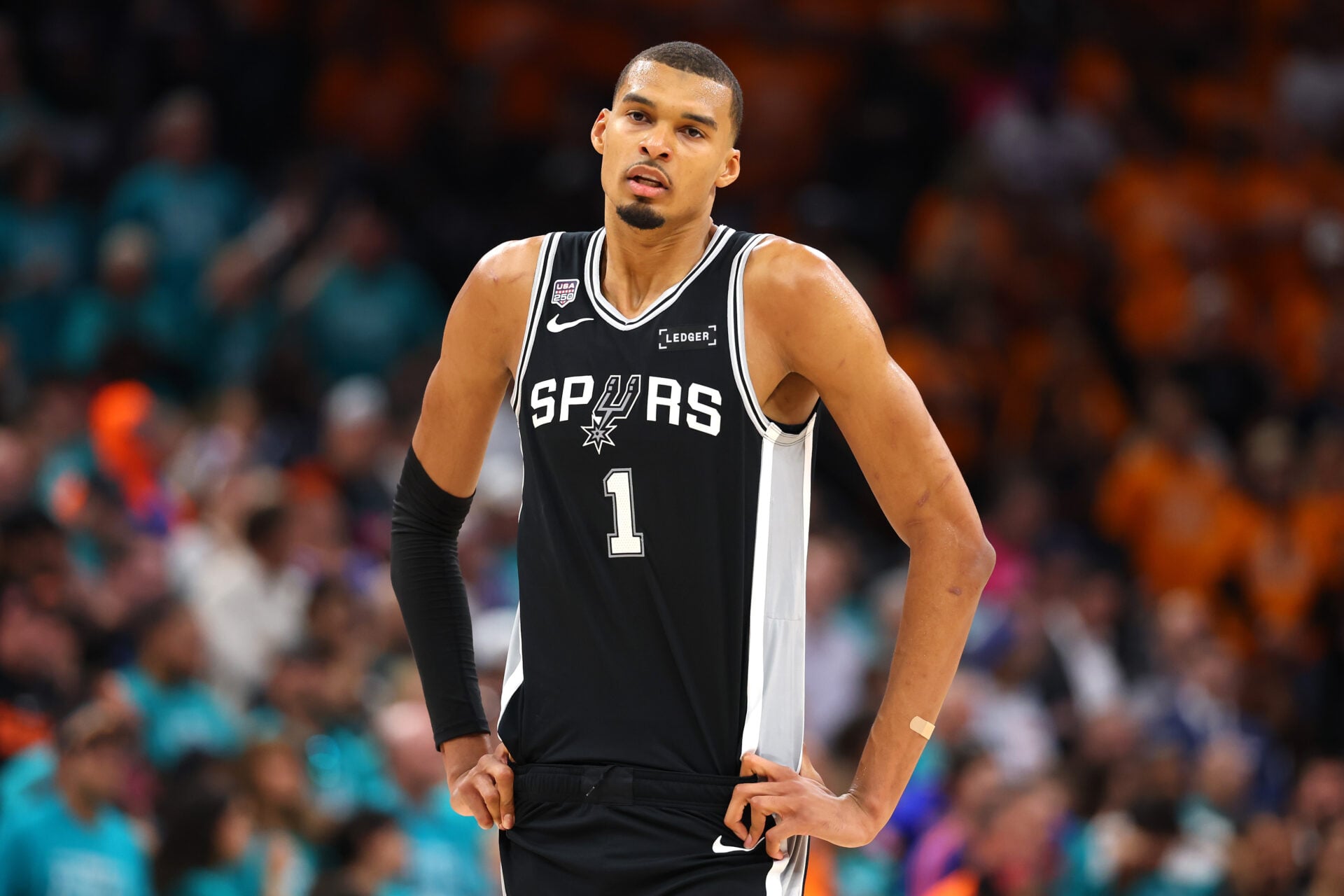

The NBA has issued a lifetime ban after a fan ran onto the Finals court and tried to turn Victor Wembanyama’s Game 1 stage into a selfie moment.
The interruption came at a dangerous time for the San Antonio Spurs. The Knicks were leading 92-86 in the fourth quarter, but the Spurs still had enough time to change the game.
Instead, security had to sprint onto the floor. That made the punishment feel less like a warning and more like a line the league had to draw immediately.
Victor Wembanyama selfie incident forces NBA lifetime ban
Marc Stein shared the NBA’s punishment after a fan entered the court area during Game 1 of the Finals and forced play to stop near Wembanyama.
“The individual who entered the court area during Game 1 of The Finals was arrested and will be banned for life from all NBA arenas. A second individual will also receive a lifetime ban for his role in the incident.”
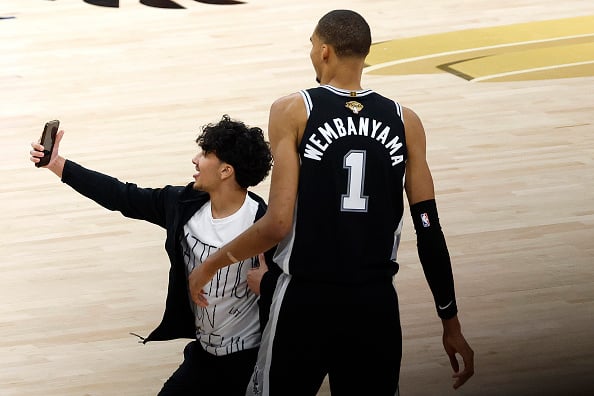
The incident happened at Frost Bank Center with just over six minutes left in the fourth quarter. The fan ran onto the court with a phone out and appeared to angle toward Wembanyama for a selfie before security removed him.
Wembanyama looked surprised, while Knicks center Mitchell Robinson stood nearby as the moment briefly froze the game. Play later resumed with a jump ball, but the break landed in a live Finals possession rather than a dead moment.
New York still finished the job, winning 105-95 and taking a 1-0 series lead. Wembanyama had 26 points and 12 rebounds, but San Antonio lost control late.
NBA lifetime bans show Finals security stakes
The league has dealt with ugly fan behavior before, and this punishment fits a broader NBA pattern of acting hard when players are targeted.
In 2021, a fan who threw popcorn at Russell Westbrook in Philadelphia was banned. That same postseason, a Knicks fan was banned after spitting at Trae Young, while a Celtics fan faced arrest after throwing a water bottle toward Kyrie Irving.
The Utah Jazz have also issued lifetime bans after incidents involving Westbrook, including abusive behavior that crossed far beyond normal heckling. Those examples matter because the league cannot wait for contact before treating court access as a threat.
A fan with a phone may look less dangerous than a thrown object, but the risk is bigger once someone reaches the playing surface. Players have almost no time to judge intent.
That is why the NBA’s response needed to be firm. The Finals are already intense enough without Wembanyama or anyone else having to process a stranger charging into their workspace.
Receive exclusive football transfer news and updates twice a week to your mailbox