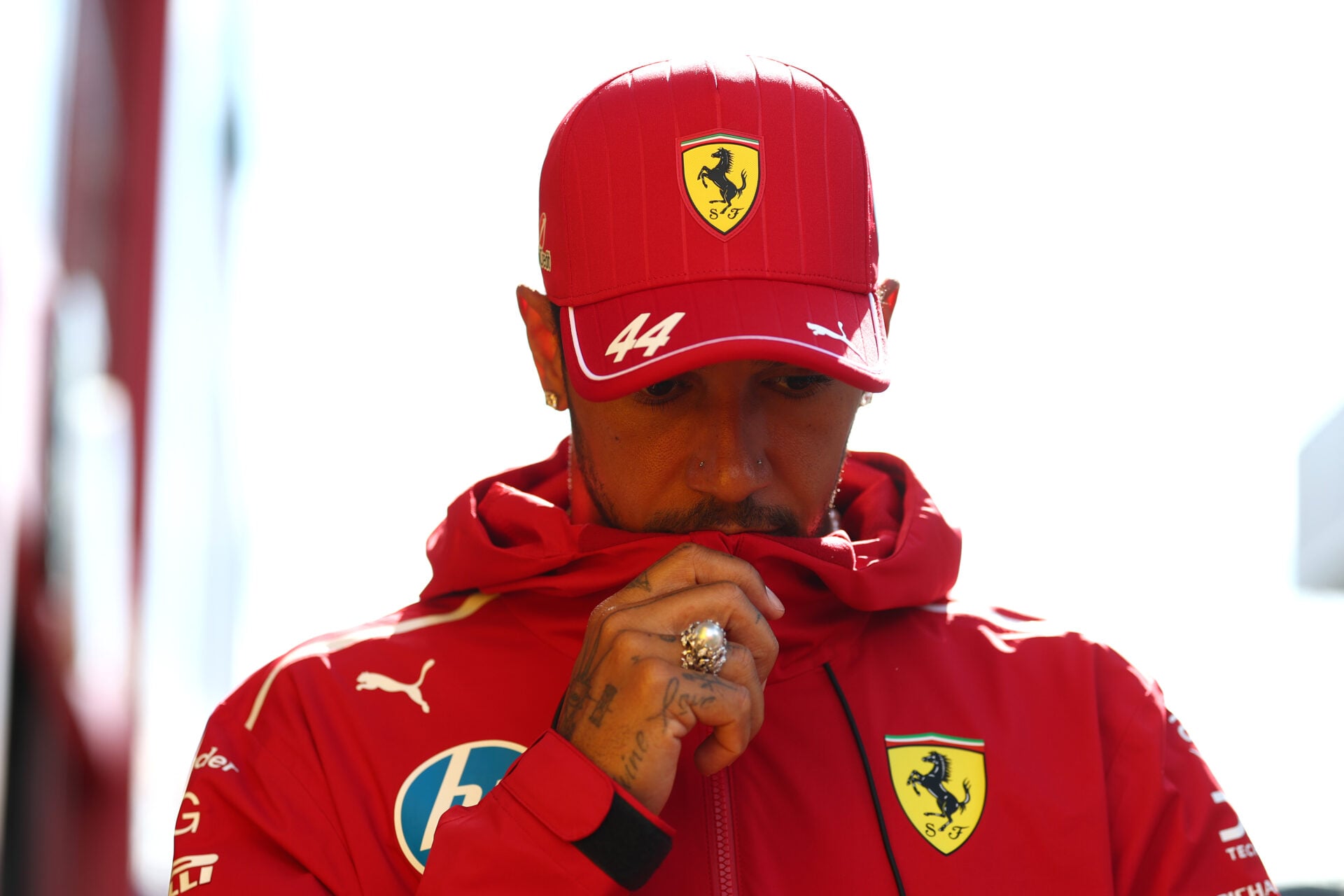

After Lewis Hamilton’s controversial loss of the 2021 F1 title, Andrew Shovlin has explained why Mercedes couldn’t build a car capable of returning him to championship contention in the years that followed.
Following the 2022 regulation changes, Hamilton struggled to match his previous form in a Mercedes. He didn’t pick up a win under the new rules until the 2024 British Grand Prix.
That win at Silverstone came 945 days after his victory at the 2021 Saudi Arabian Grand Prix and followed the major announcement that Hamilton would be leaving Mercedes for Ferrari in 2025.
READ MORE: Carlos Sainz shares Ferrari reaction to first Williams podium
The Silver Arrows entered the new era of regulations with a drastic approach, unveiling a ‘zero-pod’ concept that removed a crucial element of airflow to the power unit.
Mercedes chose an aggressive direction with their car design when Formula One introduced sweeping new regulations in 2022. The team adopted what became known as the “zero-pod” concept – effectively eliminating sidepods from their design. While it looked bold, it didn’t deliver results on track. A major issue was how cooling had to be managed without sidepods, which compromised airflow around key components like radiators and turbo intakes.
Why did Mercedes struggle so much with this change?
The early signs were encouraging for teams running low-rake cars under the old regulations, especially after Aston Martin’s strong start in Bahrain. But while Red Bull quickly adapted and maintained their pace into 2023, Mercedes found themselves lagging behind due to handling issues and continued tyre wear problems tied to ride height restrictions.

Despite ongoing struggles throughout this period, Lewis Hamilton remained committed to staying positive and helping Mercedes work through these technical hurdles – even if it meant enduring one of his longest winless streaks before finally breaking through again at Silverstone later on during this season cycle update window instead…
Andrew Shovlin on What Mercedes Learned from the 2022 Regulation Change
After sticking with that bold approach for a season and a half, Mercedes eventually reverted to a more traditional sidepod design, hoping it would help close the gap to Red Bull’s growing dominance. But by then, it was too late.
Red Bull had already refined their 2022 title-winning car into the RB19, one of the most dominant machines in F1 history. The team went on to win 21 of the 22 races in 2023.

Speaking to Auto Motor und Sport, Mercedes director Andrew Shovlin admitted there were regrets over not giving Hamilton a front-running car at the start of the new regulations.
The engineer explained, “We realised at some point that in the aerodynamics development that there were many areas that our tools simply did not represent well enough. The flow under the car was, for example, much more complicated than what we had seen before.”
“The cars produce, above all, extreme amounts of downforce at the end of straights. Earlier, there was clearly more downforce in slow corners.”
“One could drive the cars higher and softer because they produced downforce further away from the road. The more we learn now from what we have learned then, we get annoyed about why we didn’t think about certain things earlier,” he added.
Mercedes admit why they were slow to realise mistakes under new F1 regulations
After sticking with the radical philosophy for a season and a half, the German constructor opted to return to a more conventional design, which featured sidepods, in hopes of clawing their way back into contention amid Red Bull’s emerging dominance.
However, by the time they made the switch, it was already too late. Red Bull had evolved their 2022 title-winning car into the RB19, one of the most dominant cars in F1 history, winning 21 out of 22 races in 2023.
Speaking to Auto Motor und Sport, Mercedes director Andrew Shovlin reflected on the team’s regrets about not providing Hamilton with a competitive car at the start of the new regulations.
The engineer revealed, “We realised at some point in the aerodynamics development that there were many areas that our tools simply did not represent well enough. The flow under the car was, for example, much more complicated than what we had seen before.
“The cars produce, above all, extreme amounts of downforce at the end of the straights. Earlier, there was clearly more downforce in slow corners.
“One could drive the cars higher and softer because they produced far away from… The more we learn now about it all is why we didn’t think earlier about certain things.”
Receive exclusive football transfer news and updates twice a week to your mailbox