
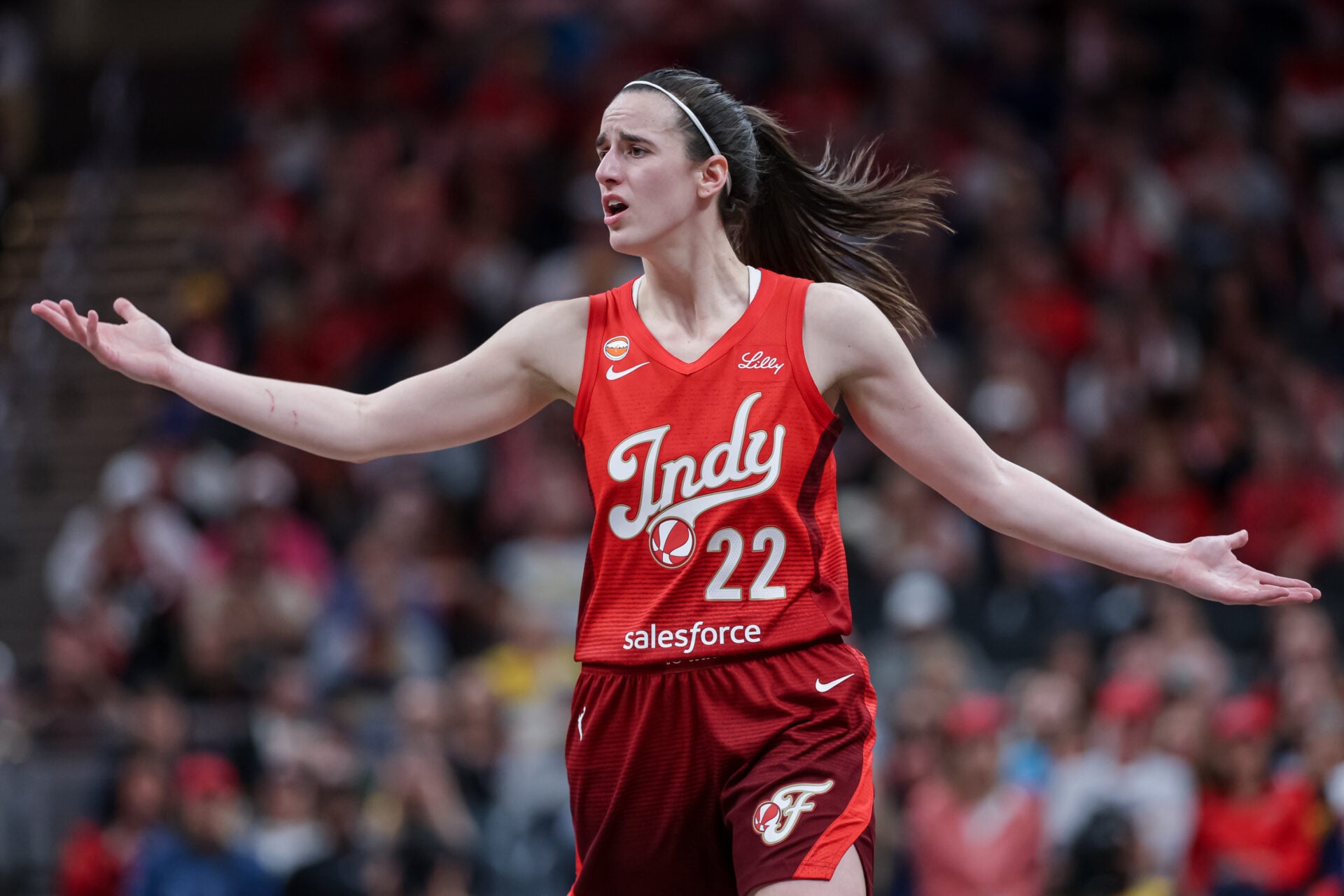

Jason Whitlock wants Indiana Fever star Caitlin Clark to embrace a harder Michael Jordan-style edge if the franchise keeps struggling under Stephanie White.
The Fever’s early-season issues have turned every visible moment between Clark and White into a bigger discussion.
A sideline exchange during a rough loss only added fuel to the idea that Indiana’s most important player may eventually need to force a higher standard.
Whitlock’s comparison was intentionally provocative, but it tapped into a familiar sports argument. When a generational player changes a franchise, the coach is rarely judged in a normal way.

Jason Whitlock pushes Caitlin Clark toward Michael Jordan coach killer edge
Jason Whitlock on X used the Michael Jordan comparison to argue that Caitlin Clark should not fear the power that comes with being the face of the Indiana Fever.
“Michael Jordan was a coach killer, I got no problem with it. They [Chicago Bulls] fired two coaches. Stephanie White just took them to the WNBA semifinals. She could still get fired,” Whitlock said.
Whitlock’s point was not subtle. He was arguing that elite players are allowed to make organizations uncomfortable if the structure around them is not helping them win.
Clark has already denied the idea that she wants White gone, but the tension around Indiana is still real. The Fever have looked disjointed, Clark has faced more defensive attention, and White is trying to manage a team carrying far more pressure than most WNBA groups.
Michael Jordan’s history explains Caitlin Clark and Stephanie White tension
The Jordan comparison works because Chicago went through instability before finding the coach who unlocked its dynasty. Jordan played for multiple Bulls coaches before Phil Jackson, and Doug Collins was fired in 1989 even though Jordan had enjoyed playing in his system.
Jackson changed the direction of the Bulls by installing more structure around Jordan rather than simply letting him dominate the ball. That history is why Whitlock sees a lesson for Clark, even if the situations are not identical.
White is not an obvious failure. She helped take Indiana to the WNBA semifinals, and Clark has publicly pushed back against exit rumors around her coach.
The pressure comes from Clark’s status. When a player becomes the franchise’s engine, ownership has to decide whether the coach is maximizing her or merely surviving around her.
Whitlock clearly believes Clark should not be afraid of that conversation becoming uncomfortable.
Receive exclusive football transfer news and updates twice a week to your mailbox