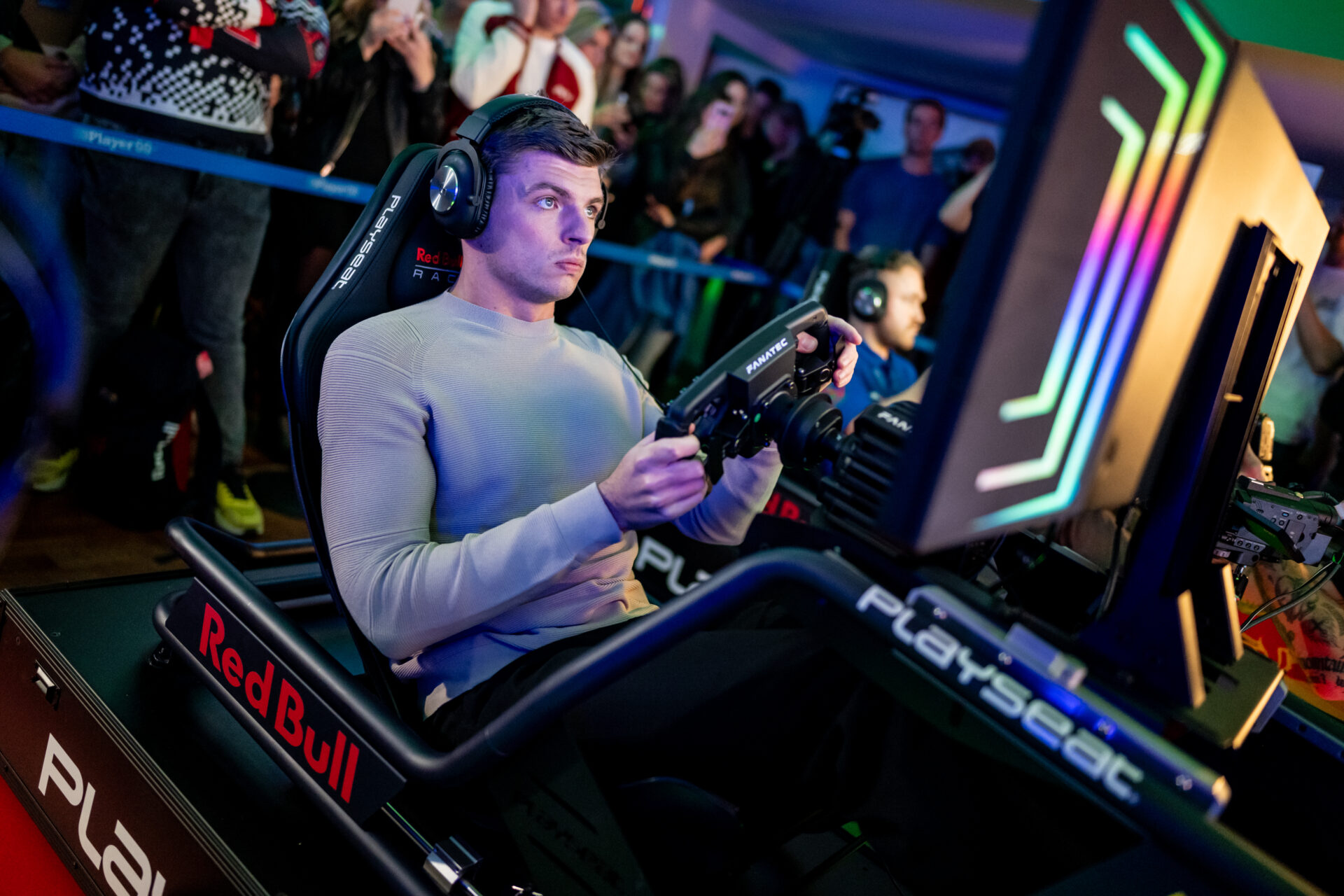

Max Verstappen’s natural talent already sets him apart from much of the grid, and his dedication to sim-racing is only adding another layer to his skill set.
Since breaking into the sport in 2015, Verstappen has matured from a 17-year-old prospect into one of Formula 1’s defining drivers.
He trails only Lewis Hamilton and Michael Schumacher on the all-time wins list and, at just 28 years old, has plenty of time to close that gap.
Now entering his 12th season in Formula 1, Verstappen has experience across every era he’s raced in but remains young enough to stay connected with how the next generation is approaching their careers.
How Sim-Racing Helps Max Verstappen Prepare for F1 Races
Verstappen doesn’t treat it as just a pastime; he uses it as a way to sharpen his race craft. He told Fabrizio Romano: “For me, I still feel like it helps me prepare for racing. It keeps me sharp. I think you have different types of drivers on the grid.”
The Dutchman added: “You have naturally gifted people who are doing less prep and they can still be fast. And then you have others who really need to put in more work to be competitive.”
Sim racing may be helping Verstappen ‘improve performance’
Riccardo Ceccarelli of Formula Medicine spoke to Motorsport.com about how Verstappen’s time spent on simulators, both at home and at Red Bull’s Milton Keynes base, has played a part in his continued growth as a driver.
The highly respected F1 doctor was asked about the technology shifts happening in the sport and how older drivers might adapt to new regulations. He highlighted the importance of mental clarity in managing these transitions.
“It’s difficult to answer because, obviously, people who are able to clear their minds of superfluous thoughts and complications are more lucid simply because their frontal lobe is like a clean, blank slate,” Ceccarelli said.
He added: “Those people are able to make better use of automatisms and therefore have a much more efficient cognitive side because they can manage many things automatically, devoting their energy to strategies that can improve performance.
“The prototype of this driver is Verstappen. Max is also capable of spending hours on the simulator without effort, so the Dutchman will be able to exploit his cognitive reserves to manage the most complex controls.
“Obviously, these are assessments we make on paper. We haven’t seen the drivers in the 2026 single-seaters yet, except for Audi, but the topic is very exciting and we’ll be following the individual adjustments.”
Max Verstappen’s Race Awareness Stands Out in F1
Verstappen’s mental strength has been a big part of his recent success in Formula 1, helping him consistently perform at a high level.
Former teammate Alex Albon has pointed to Verstappen’s remarkable ‘brain capacity’ as something that truly sets him apart. Albon noted how Verstappen can keep track of what’s happening across the circuit even while fully engaged in a race.
Jos Verstappen’s intense karting sessions are often credited as a key factor behind his son’s skill set, and Max continues to apply those lessons during additional simulator training away from the track.
The upcoming season is expected to introduce even more complex tools for drivers, and it looks likely that Verstappen will adapt faster than most, given his background and approach to preparation.
Read More Like This:
- How Max Verstappen has responded to Red Bull’s early struggles in 2026
- Helmut Marko’s Red Bull decision over Max Verstappen contract raised eyebrows within the team
- How many F1 stars made the top 100 highest paid athletes list: Hamilton, Verstappen inside top 15
Receive exclusive football transfer news and updates twice a week to your mailbox