
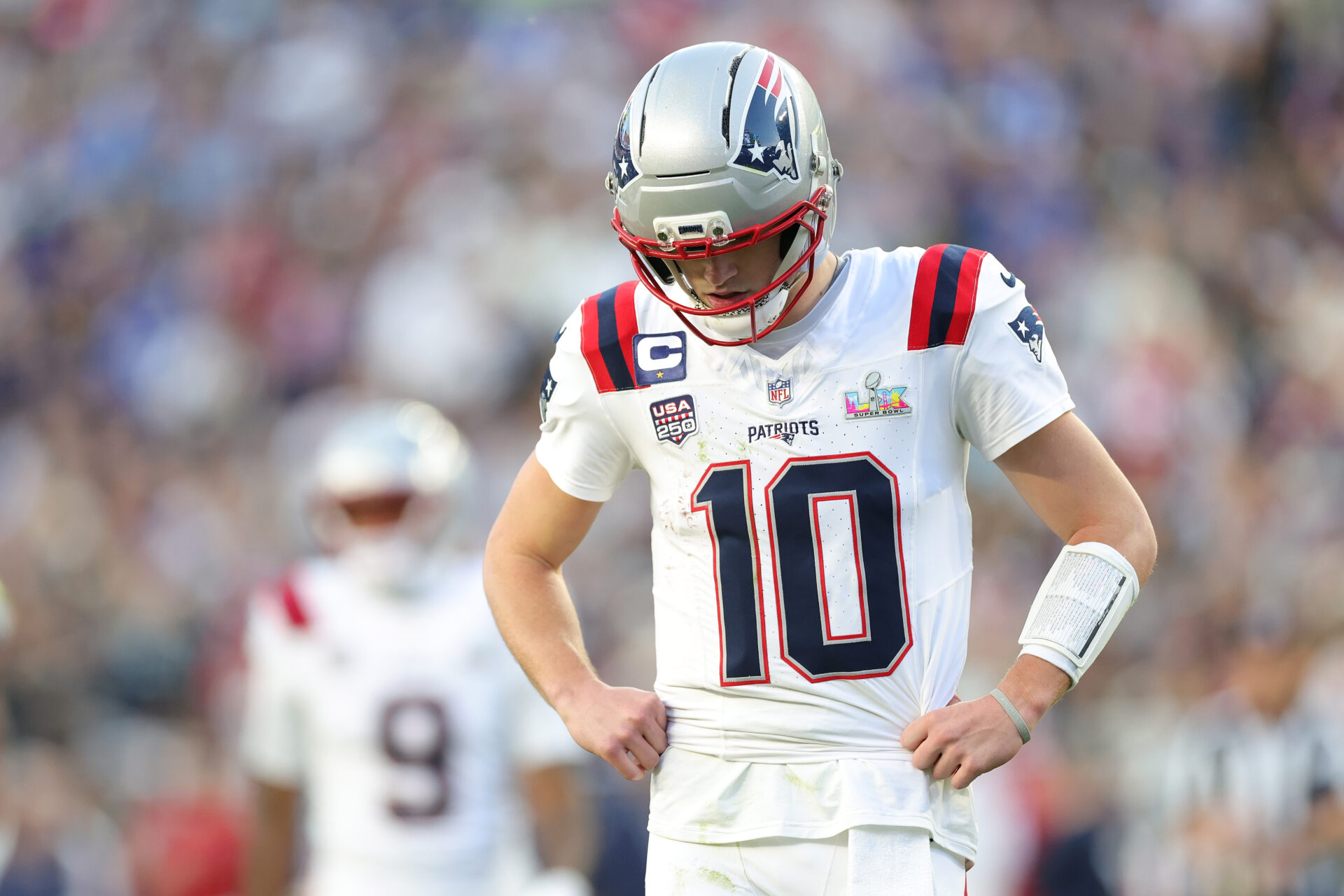

Bad Bunny’s Super Bowl 60 halftime show ended up highlighting a brutal on-field reality for the New England Patriots that fans could not ignore.
What was meant to be a light-hearted viral stat quickly turned into an uncomfortable summary of why the Patriots fell well short on the biggest stage.
Bad Bunny’s halftime show reveals a shocking Patriots comparison

A statistic shared by Front Office Sports drew attention for all the wrong reasons for New England.
“Bad Bunny traveled 124.4 yards with the football during his halftime show. The Patriots rushed for 79 total yards in the actual game,” they wrote on X.
The comparison spread rapidly online because of how stark it was. In a game defined by physical control and efficiency, the Patriots were outpaced on the ground by a performer during a choreographed halftime routine.
While the stat was framed humorously, it reflected a deeper issue. New England’s inability to establish any consistent rushing threat left the offense predictable and easy to defend against across four quarters.
Bad Bunny’s halftime movement was carefully designed for entertainment, but the numbers unintentionally exposed how little ground the Patriots were able to gain when it mattered most.
Patriots rushing failure key to Super Bowl 60 defeat
The Patriots’ 29-13 loss in Super Bowl 60 was shaped by their struggles in the run game. With just 79 rushing yards, New England failed to control tempo, time of possession, or field position.
That lack of balance allowed Seattle’s defense to focus heavily on the passing game. Without a credible rushing threat, drives stalled quickly, and scoring opportunities dried up.
The inability to run the ball also affected New England’s defense. Short offensive possessions meant more snaps for the unit, which wore down as the game progressed.
By the second half, the outcome felt inevitable. Seattle controlled the clock, protected its lead, and never allowed the Patriots to regain momentum.
The halftime stat became symbolic because it captured the imbalance so clearly. When a Super Bowl contender is outgained on the ground by a halftime performer, the underlying problems are impossible to dismiss.
Receive exclusive football transfer news and updates twice a week to your mailbox