
FIFA are set to introduce a new measure designed to address on-field verbal abuse in the wake of the Vinicius Jr. controversy.
The proposal follows allegations of racist remarks during Real Madrid’s Champions League fixture against Benfica on February 17.
Scrutiny intensified after Benfica’s Gianluca Prestianni allegedly covered his mouth while speaking during the exchange involving Vinicius Jr.

FIFA move towards presumption rule on mouth-covering
UEFA continues to investigate the matter, with Prestianni being suspended for the second leg, missing the game that saw Real Madrid advance to the Round of 16.
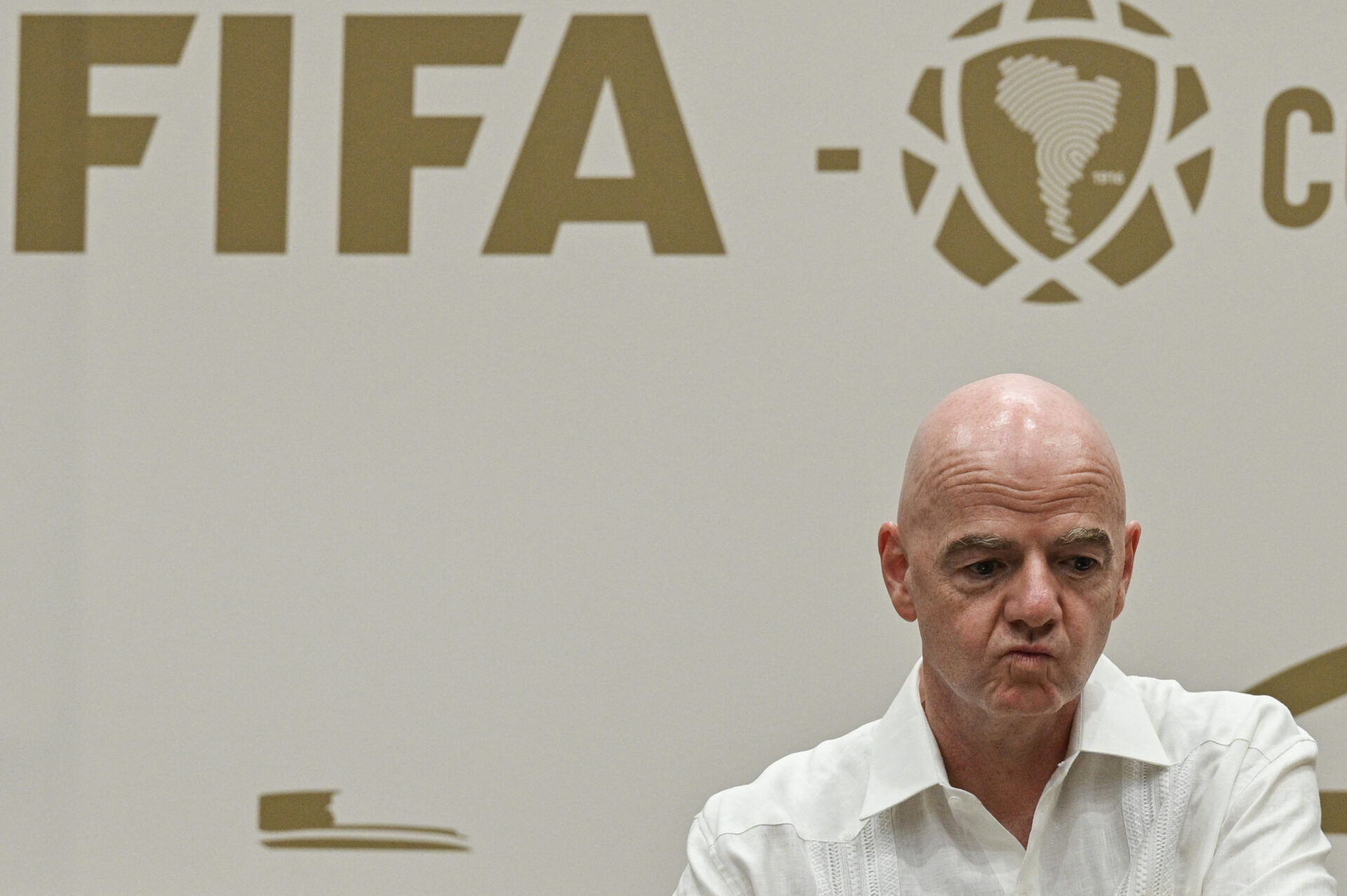
Gianni Infantino wants FIFA to take action to ensure that a situation like the one Vinicius Jr. encountered never happens again.
“If a player covers his mouth and says something, and this has a racist consequence, then he has to be sent off, obviously.”
“There must be a presumption that he has said something he shouldn’t have said, otherwise he wouldn’t have had to cover his mouth.”
“I simply do not understand if you don’t have something to hide, you don´t hide your mouth when you say something. That’s it, as simple as that.”
The International Football Association Board is expected to consider amendments in April, with implementation targeted ahead of the World Cup in June.
Disciplinary framework also under review
Alongside automatic dismissals, Gianni Infantino and FIFA are evaluating how sanctions can both punish and deter discriminatory behavior.
“We need to act and to be decisive, and it has to have a deterrent effect. Maybe we should also think about not just punishing, but also somehow allowing, changing our culture, allowing players or whoever does something to apologise.”
“You can do things that you don’t want to do in a moment of anger and apologise, and then the sanction has to be different. We have to stop racism.”
“We cannot just be satisfied by saying, ‘well, it’s a problem in society so we cannot do anything about it except what we are already doing.’”
The proposed adjustments underline FIFA’s push to strengthen its stance against discrimination as global competition approaches.
Receive exclusive football transfer news and updates twice a week to your mailbox