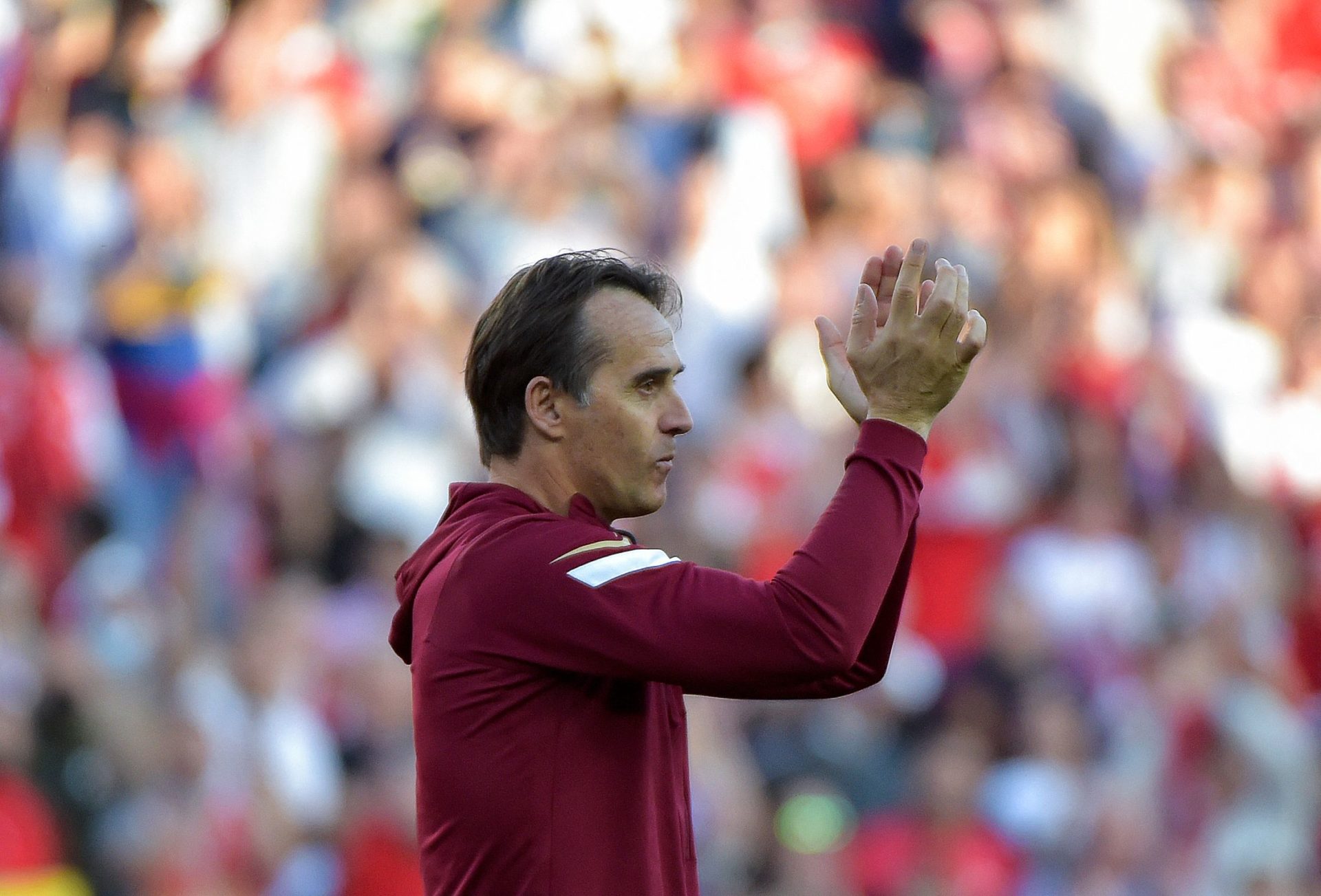

When Julen Lopetegui came within touching distance of taking over at Molineux back in 2016, Wolves had just limped to a 14th place finish in the Championship with a squad containing the likes of Jack Price, Michal Zyro and Rajiv Van la Parra.
“I was very close (to taking over at Wolverhampton Wanderers),” Lopetegui would tell The Guardian, the allure of the Spanish national team proving too strong.
“But, in the end, it wasn’t to be. When the (Spanish) federation called, naturally my objective became the national team. But it’s true that, before that, (Wolves and I) had been working hand in hand for some time.
“Wolves is a great club, where there would be significant investment and a desire to grow. To shine again.”

Evolution, not revolution at Wolves
Should Lopetegui finally take the reigns at Molineux six years on, he will find a very different club from the one he would have inherited from Kenny Jackett back in 2016. Yes, Wolves are stuck in the Premier League’s relegation zone. Yes, they’ve scored just three goals in eight games.
But most top-flight managers would bite your hand off at the joint if you offered them a roster including Ruben Neves, Max Kilman, Jose Sa, Joao Moutinho, Matheus Nunes, Goncalo Guedes, Pedro Neto, Adama Traore and co. The phrase ‘too good to go down’ is a dangerous one. But there’s no reason why Wolves, presuming they can find goals from somewhere, cannot start to climb the table pretty quickly with Crystal Palace, Nottingham Forest, Brentford and Leicester City on the horizon.
The question is, what would a Lopetegui Wolves team look like? How different would it be from the side who picked up just one win in 15 Premier League games under Bruno Lage?
Predicting Wolves’ XI under Julen Lopetegui?
Well, the first thing to note is that Lopetegui, who Sky say is their preferred candidate to take over, is likely to pick up where Lage left off (and eventually gave up) by attempting to instil a four-man backline. Since arriving at Sevilla in the summer of 2019, the one-time Real Madrid boss has fielded a back-four in all-but seven of his 169 games (Football Critic). Under his management, Diego Carlos and Jules Kounde struck up one of Europe’s most reliable centre-back partnerships.
He tends to prefer attack-minded, swashbuckling full-backs too, a la Jesus Navas, Sergio Reguilon and Marcos Acuna. This bodes well for Nelson Semedo and Rayan Ait-Nouri but not so much for the more reserved Jonny Castro Otto.

Lopetegui did, on occasions, ask one of his central midfielders to drop into the defence when Sevilla were in possession. Ruben Neves’ superb distribution and positional awareness could see him take on something of a quarter-back role under Lopetegui. Moutinho’s industry and work-ethic should come in handy too, in a manner not-too dissimilar to former Manchester City ball-winner Fernando.
With the flying full-backs providing width, Lopetegui usually prefers inverted widemen either side of a physical centre-forward. Expect to see the left-footed Neto start on the right, with the right-footed Guedes on the left. Do not be surprised, meanwhile, if Adama Traore is transformed into an orthodox right-sided full-back. Neves, a converted winger, played some of his best football in a more defensive role under Lopetegui after all; using his pace and crossing ability to excellent effect on the overlap.
A new role for Adama Traore?
Sasa Kalajdzic, when fit, could perform a role similar to that of Rafa Mir, Youssef En-Nesyri or Luuk de Jong at Sevilla. Diego Costa, who looked sharp on debut vs West Ham, will have to perform those duties for the time being. Both Kalajdzic and Raul Jimenez remain unavailable. Daniel Podence’s days as a false nine should, mercifully, come to an end.
Matheus Nunes, meanwhile, may be Wolves’ answer to Joan Jordan; an all-round midfield general who can carry, harry, press and probe.
Lopetegui, then, would bring less revolution and more evolution at Molineux. A similar, possession based approach (only Barcelona and Real Madrid averaged more of the ball than Sevilla in 2021/22) but with inverted wingers leading the attack and a two-man centre-back partnership at the other end.

Receive exclusive football transfer news and updates twice a week to your mailbox