
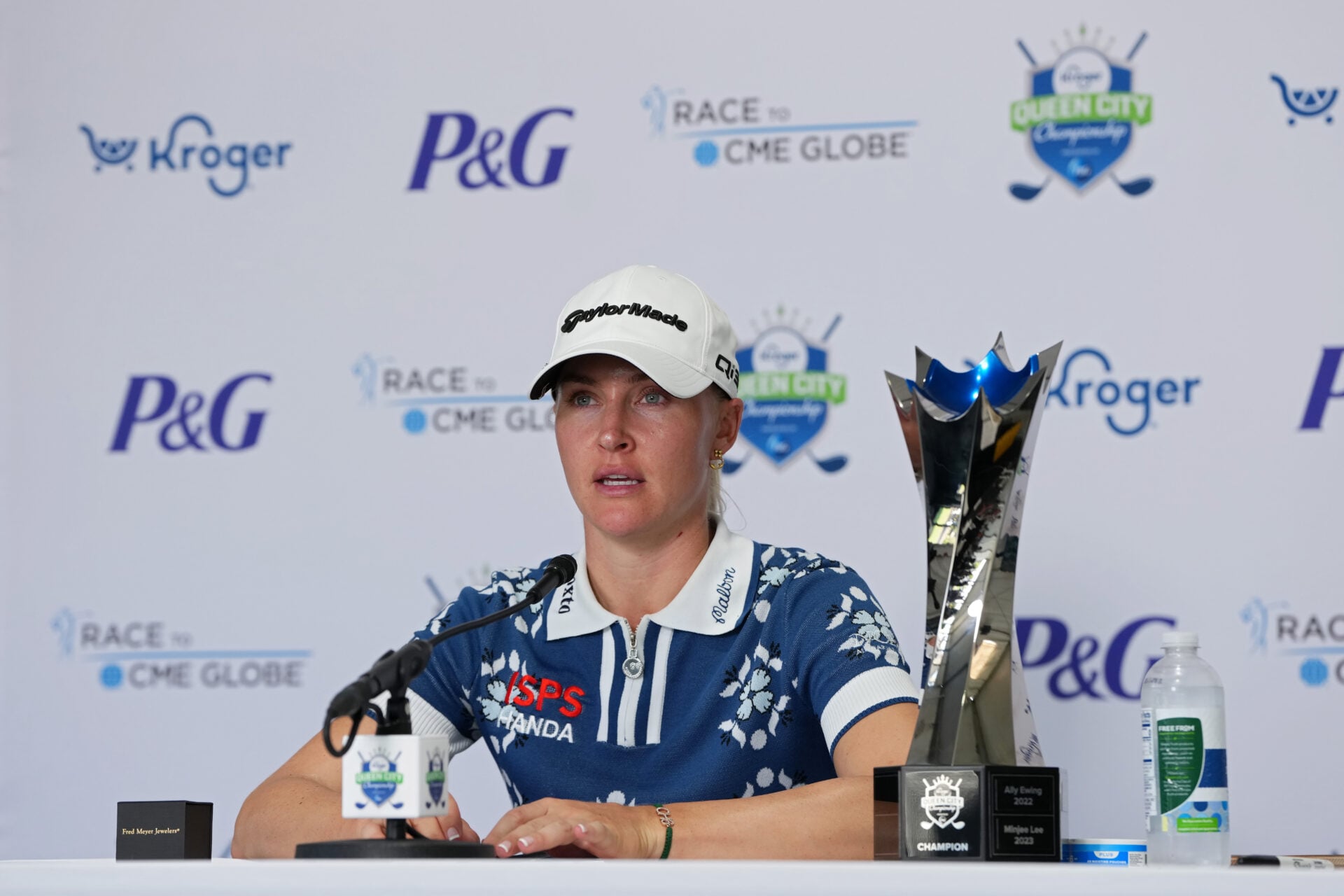

Following Hull’s remarks about her dream of playing Augusta, The Golfing Gazette explores why a Women’s Masters could be the groundbreaking step golf is ready for.
Charley Hull has become one of the most influential figures in the sport — not only within the women’s game, but across golf as a whole. With her fearless style of play, signature on-course flair, and enormous popularity among young fans, the LPGA star has helped bring a new generation into the sport.
Hull has long admired Tiger Woods, crediting him for transforming golf’s global reach. And in many ways, she now carries that same needle-moving power. Golf’s popularity has surged over the past three decades, and Augusta National suddenly finds itself with a rare opportunity to follow in Woods’ footsteps by reshaping the landscape once again.
Charley Hull on Augusta National and why it matters
Augusta National remains the most iconic golf course in the world — the scene of The Masters each April and, for most fans, the unofficial start of the season. But for Hull, Nelly Korda, and the rest of the LPGA’s biggest names, Augusta is still off-limits.

That reality has struck many observers as a shame at a time when the LPGA boasts some of the most dynamic and marketable players on the planet. Golf broadcaster Chantelle McCabe highlighted the point after Hull’s interview on Golf Channel, sharing that Augusta sits at the top of Hull’s “golf bucket list.” McCabe wrote: “Charley Hull says Augusta National is at the top of her golf bucket list (and same for many other LPGA players… wild they haven’t been invited). This would be a home run content capture.”
Although Augusta National has allowed female members since 2012, Hull’s comments reignited the conversation over whether the club could take an even bigger leap forward.
Why Augusta National should consider a Women’s Masters
Hull’s remarks have opened the door to an idea that could genuinely transform the game: a Women’s Masters at Augusta National. Imagine not one Masters each year, but two — with a women’s edition staged in May or September.
Such a tournament would mark a monumental advancement for women’s golf, offering enormous visibility and revenue while inspiring a wave of young female players around the world. For Augusta, it would also represent a continued evolution — building on the significant cultural shift that began when the club admitted its first female members just over a decade ago.
A Women’s Masters would be a landmark moment not only for the LPGA but for Augusta National itself. It would demonstrate a commitment to equality, create captivating new storylines, and further cement the club’s status as a modern leader in the sport.
For both Augusta and the women’s game, it feels like the rarest of opportunities: a change that is exciting, commercially smart, and undeniably overdue.
Receive exclusive football transfer news and updates twice a week to your mailbox