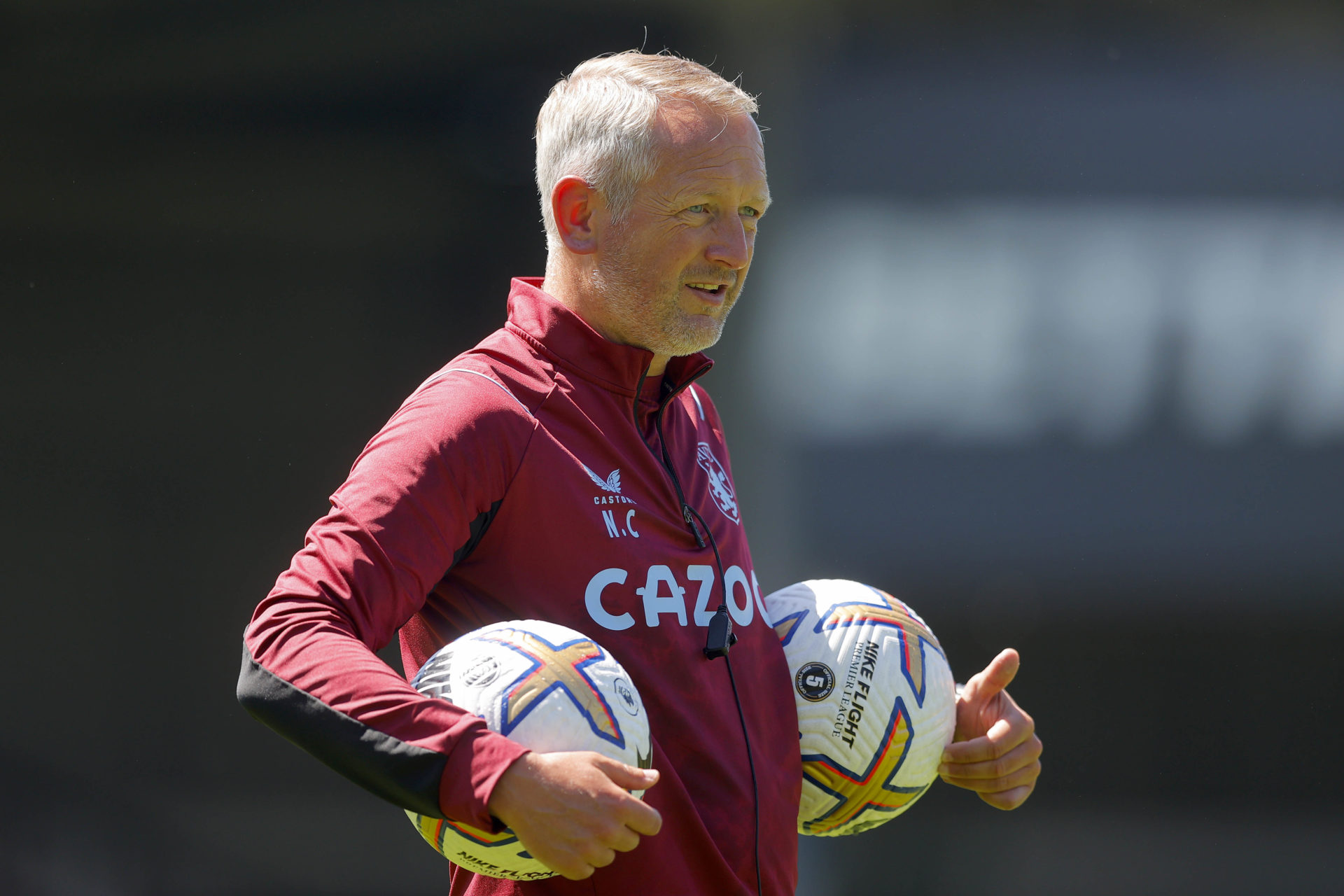

There are certainly a few things Mick Beale and Neil Critchley have in common.
Both made their name as talented young coaches in Liverpool’s academy, spent time as an assistant to Steven Gerrard and, with Queens Park Rangers and Blackpool respectively, made the step up from a backseat role to the top job in rather impression fashion during spells in England’s second tier.
Critchley led Blackpool to an eye-catching mid-table finish following their return to the Championship in 2021/22. Beale, meanwhile, earned himself the number one role at Ibrox just five months after signing on the dotted line at QPR.
It seems fitting then, given the similar nature of their coaching journeys, that it’s Critchley who takes Beale’s place in the Loftus Road dugout, inking a three-and-a-half year deal on Monday morning.

Evolution, not revolution
The parallels between Beale and Critchley do not stop there either. The former, during his brief spell in charge of QPR, introduced a high-pressing system complete with hard-working forwards and attack-minded full-backs. Critchley, at Blackpool, embarked upon a similar approach, albeit with some subtle differences.
The 44-year-old took over a Tangerines side who finished in the bottom half of League One in 2019 and guided them to promotion with calm, considered man-management and a clear style of play. Blackpool, for the first time in recent memory, had an identity again.
Intense, relentless, aggressive. Three attributes you could also use to describe Beale’s QPR. And while Critchley’s Blackpool averaged just 45 per cent possession in 2021/22 – QPR averaged over 50 per cent under Beale – that is probably down to a relative lack of quality at his disposal (WhoScored). He had no Chris Willock, Ilias Chair or Stefan Johansen at Bloomfield Road after all.
“I want us to be a possession-based team,” Critchley told the Blackpool Gazette in August 2021. “However, I don’t want us to be playing tippy-tappy five-a-side football inside our penalty area.”
QPR supporters, then, can probably expect more of the same under new boss. A continuation of Beale’s methods. Evolution, not revolution.

From 4-2-3-1 to 4-4-2
Critchley’s Blackpool often set up in a classic 4-4-2 with two centre-forwards. A slight alteration from Beale’s 4-2-3-1.
Critchley likes hard-working central midfielders capable of operating in a double pivot; protecting the backline with energy and industry. Johansen and Sam Field should fulfil those roles rather nicely, while giving QPR’s most talented individuals – the aforementioned Willock and Chair – the freedom to pull the strings further up the field (Up the Mighty Pool).
Josh Bowler took the Championship by storm under Critchley at Blackpool. Willock and Chair are two forwards in a similar mould to the now-Olympiakos man; mercurial dribblers who love to run and create.
Blackpool would often attack with a ‘front five’ too; one or both of the full-backs flying forward to create overloads in the final third. Kenneth Paal and Ethan Laird are well suited to such a role at QPR.
An emphasis on ‘positional play’ and overloads – an approach popularised by the likes of Pep Guardiola and Erik Ten Hag, for instance – highlights Critchley’s tactical intelligence and modern thinking.
“His work ethic is second to none,” veteran Blackpool goalkeeper Chris Maxwell told The Athletic. “Hours and hours of endless drills. I go back to a conversation I had with Gary Madine, and we said we feel like we’ve been taught how to play football wrong for the whole of our careers.”

A striking situation
One of the potential problems facing Critchley at QPR, however, could be a lack of genuine centre-forward options. Madine, Jerry Yates and Shayne Lavery all impressed to an extent in an old-school front two at Blackpool. Lyndon Dykes could certainly play the Madine role without too much difficulty, but Critchley may be forced into the market in pursuit of a Yates-like poacher.
Fortunately, Critchley’s Aston Villa connections could open the door to a loan move for one of the most exciting young forwards in England. Cameron Archer was prolific during a spell at Preston North End last season and is crying out for first-team football after a difficult few months at Bodymoor Heath.
QPR already have one Aston Villa loanee in their ranks; highly-rated central midfielder Tim Iroegbunam.
Archer is likely to have more admirers in January than a high-school Prom Queen on Valentine’s Day. The Critchley connection, however, is likely to give QPR a major advantage over many a rival suitor.

Receive exclusive football transfer news and updates twice a week to your mailbox