
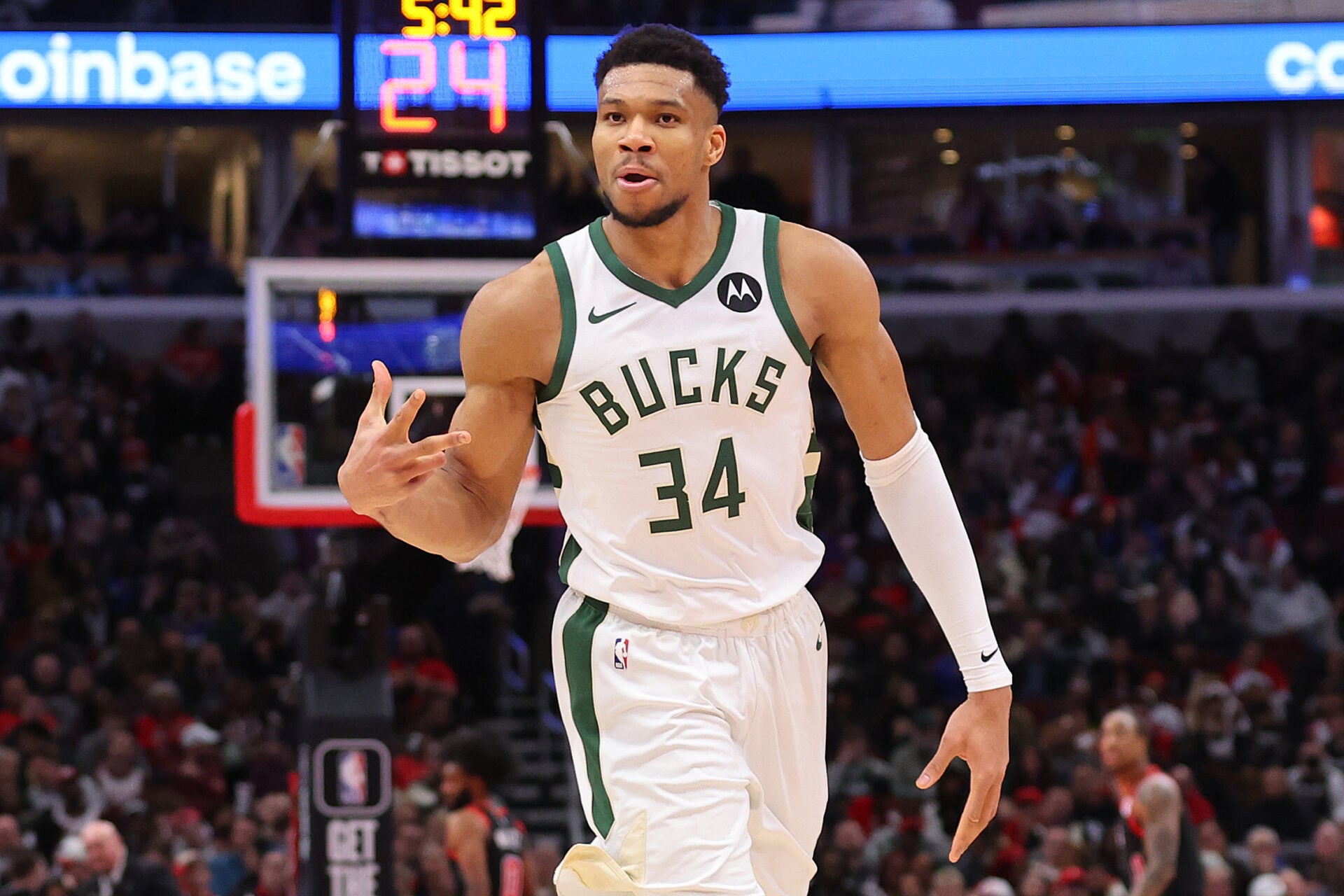

A seven-team Giannis Antetokounmpo trade to the Boston Celtics sounds outrageous, but the framework only starts to make sense if every team gets a specific job.
The headline move is simple: Boston lands Giannis and builds a terrifying core with Jayson Tatum and Derrick White.
The hard part is making the salary, incentives and rebuilding timelines line up without pretending Milwaukee would accept a soft return.
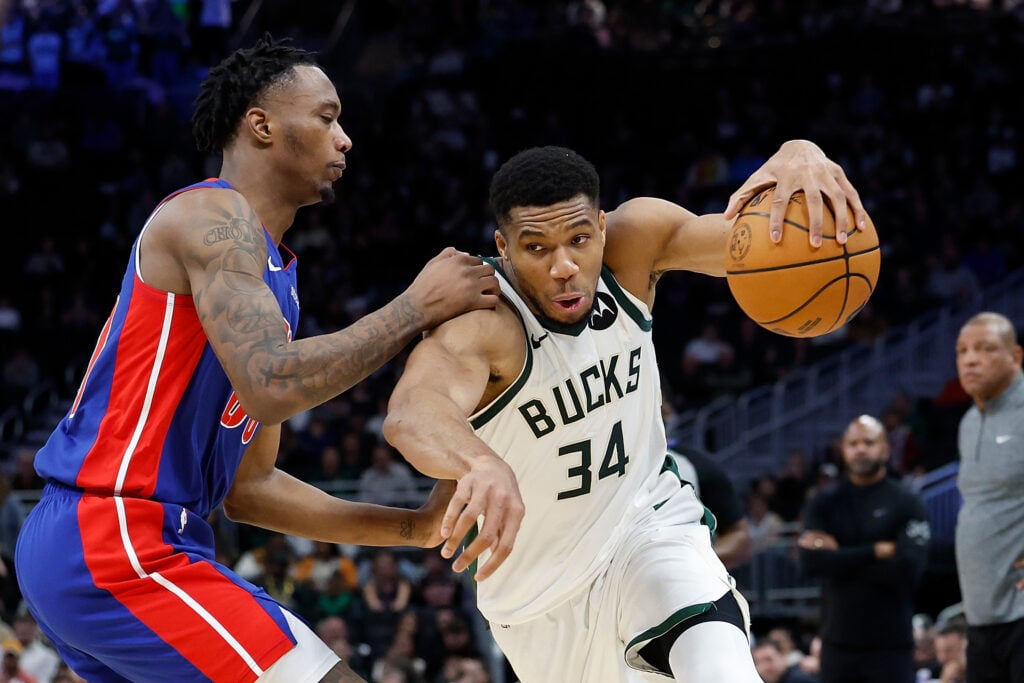
Giannis Antetokounmpo Celtics trade starts with Jaylen Brown
The base of the deal sends Giannis to Boston, while Milwaukee receives Jaylen Brown, Anfernee Simons, two Boston first-round picks, a Boston pick swap and a lightly protected Spurs first.
That is the right starting point because any realistic Bucks conversation must begin with a star-level replacement. Brown gives Milwaukee an All-NBA wing who can keep Damian Lillard competitive, while Simons adds scoring and shot creation.
The draft package matters too. A 2028 Boston first, 2030 Boston first, 2029 swap and 2028 Spurs first would give Milwaukee future flexibility if the post-Giannis build stalls.
From Boston’s side, the appeal is obvious. Giannis, Tatum and White would create an enormous defensive ceiling and a playoff offense built around pressure at the rim, transition force and Tatum’s half-court scoring.
Seven-team framework gives every NBA trade partner a role
The extra teams exist to move salary and create value lanes.
Brooklyn takes Kristaps Porziņģis plus a 2031 Boston second, using flexibility on a veteran big with upside. San Antonio gets Jrue Holiday as a playoff-tested guard next to Victor Wembanyama.
Portland turns Anfernee Simons into Baylor Scheierman, Jordan Walsh and a 2027 Boston first. Utah absorbs Pat Connaughton, gets Sam Hauser and adds a 2029 Milwaukee second. Charlotte takes Bobby Portis and a top-10 protected 2030 Milwaukee first.
If the deal landed this way, Boston’s starting five could be Derrick White, Payton Pritchard, Jayson Tatum, Giannis Antetokounmpo and Al Horford, or another veteran center if Horford is not retained in that role.
Milwaukee could counter with Damian Lillard, Anfernee Simons, Jaylen Brown, Bobby Portis or a replacement power forward, and Brook Lopez, assuming Lopez remains part of the Bucks’ frontcourt plan.
That is where the deal becomes easier to understand. Boston would be betting everything on a Giannis-Tatum title window, while Milwaukee would be trying to stay competitive immediately instead of bottoming out.
Milwaukee would also likely ask for another premium asset. Still, as a cap-sheet-conscious concept, this is the logic: Boston gets the superstar, Milwaukee stays competitive, and five other teams are paid to solve the math.
Receive exclusive football transfer news and updates twice a week to your mailbox