
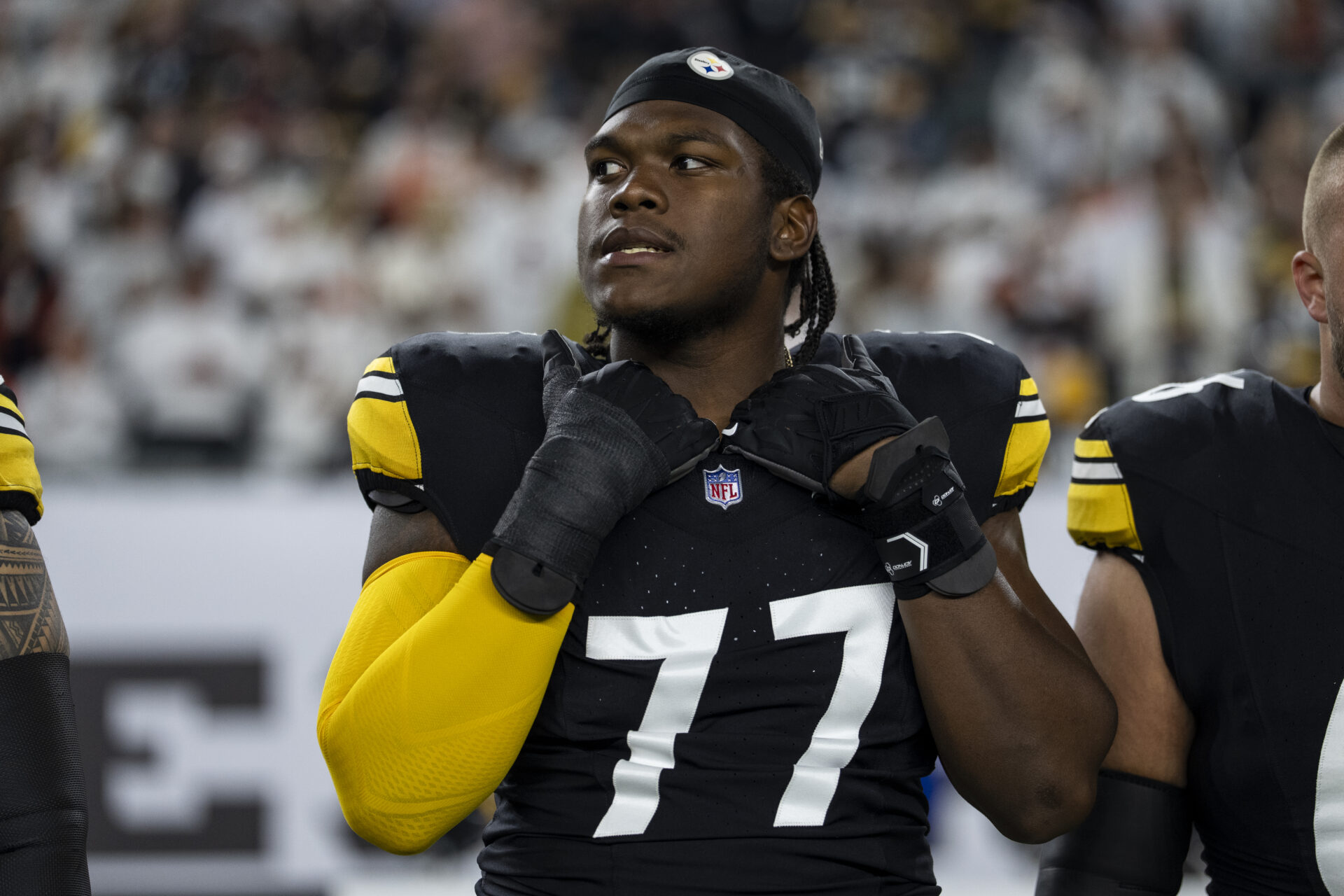

Broderick Jones’ fifth-year option was never the Steelers’ real problem.
Broderick Jones’ fifth-year option was always going to be a complicated call, but a series of events leading up to the May 3 deadline made Pittsburgh’s choice less about contract structure and more about immediate concerns.
By then, two other factors had entered the picture. First, Jones hadn’t fully recovered from neck surgery to address nerve issues, which included a spinal fusion procedure. Second, he failed his preseason physical.
The situation worsened after Jones underwent neck surgery in February. Not only did he miss all of training camp while recovering from spinal fusion, but he also failed his preseason physical.
Guaranteed money only matters if you know what you’re paying for
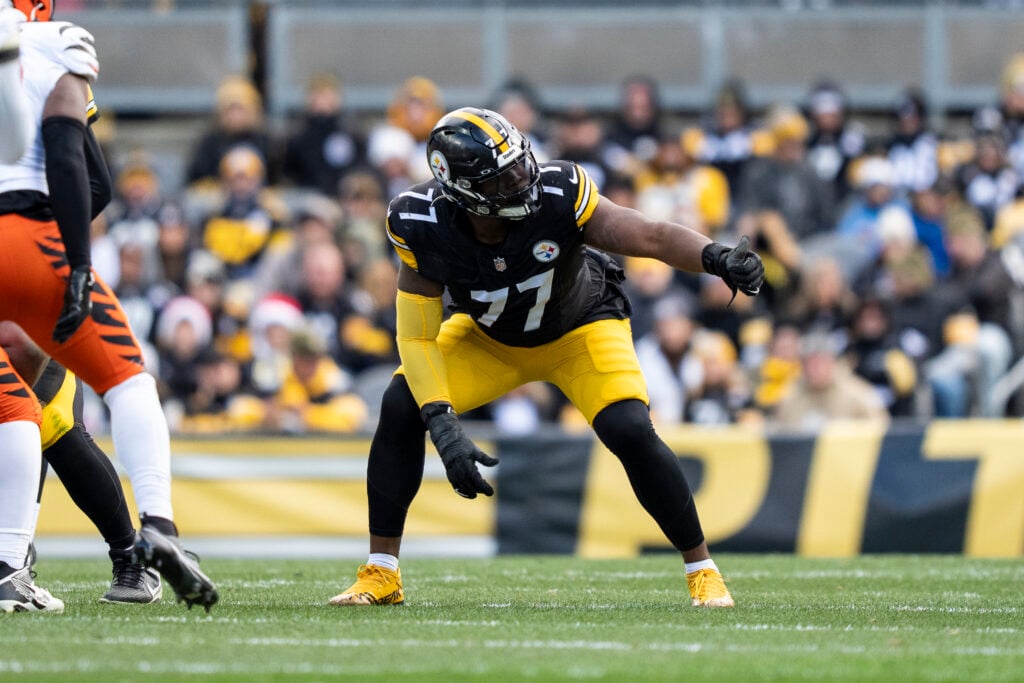
If Jones had been healthy and settled as the long-term option, this would have been a straightforward decision for the Steelers. Instead, they were looking at a player with 38 career starts, an uncertain recovery ahead, and a contract that would have been guaranteed before he’d even proven he could reclaim his spot in the lineup.
This move goes beyond just saving cash. Pittsburgh chose flexibility because the roster no longer supports blind confidence at one of the most important positions on offence.
Taking Max Iheanachor with the 21st pick makes a lot more sense now. Rather than just adding depth, it looks like the Steelers were already preparing for life without Jones.
Spending a first-rounder on a tackle while passing on a contract option for an existing player sends a clear signal. It’s no longer about future potential—left tackle is an immediate issue for the Steelers’ roster.
Pittsburgh’s line issues are spreading to the rest of the attack
The Steelers once hoped Jones would eventually settle in as a reliable option, especially after moving between tackle spots early in his career. Now, the team is set to start camp with no clear pecking order, only an open competition.
That doesn’t just impact left tackle. Uncertainty in that role can slow down how quickly you build the passing game and add pressure across the rest of the offence.
Jones’ future in Pittsburgh isn’t over because of the declined option. Instead, 2026 is shaping up as a pivotal year where he’ll need to re-establish his value to the team. A strong return could shift opinions back in his favour, but if he struggles, the Steelers are already moving forward with other options.
That’s what stands out about this decision. It wasn’t just about the finances—Pittsburgh has now made left tackle one of the most closely watched competitions on the roster.
Receive exclusive football transfer news and updates twice a week to your mailbox