
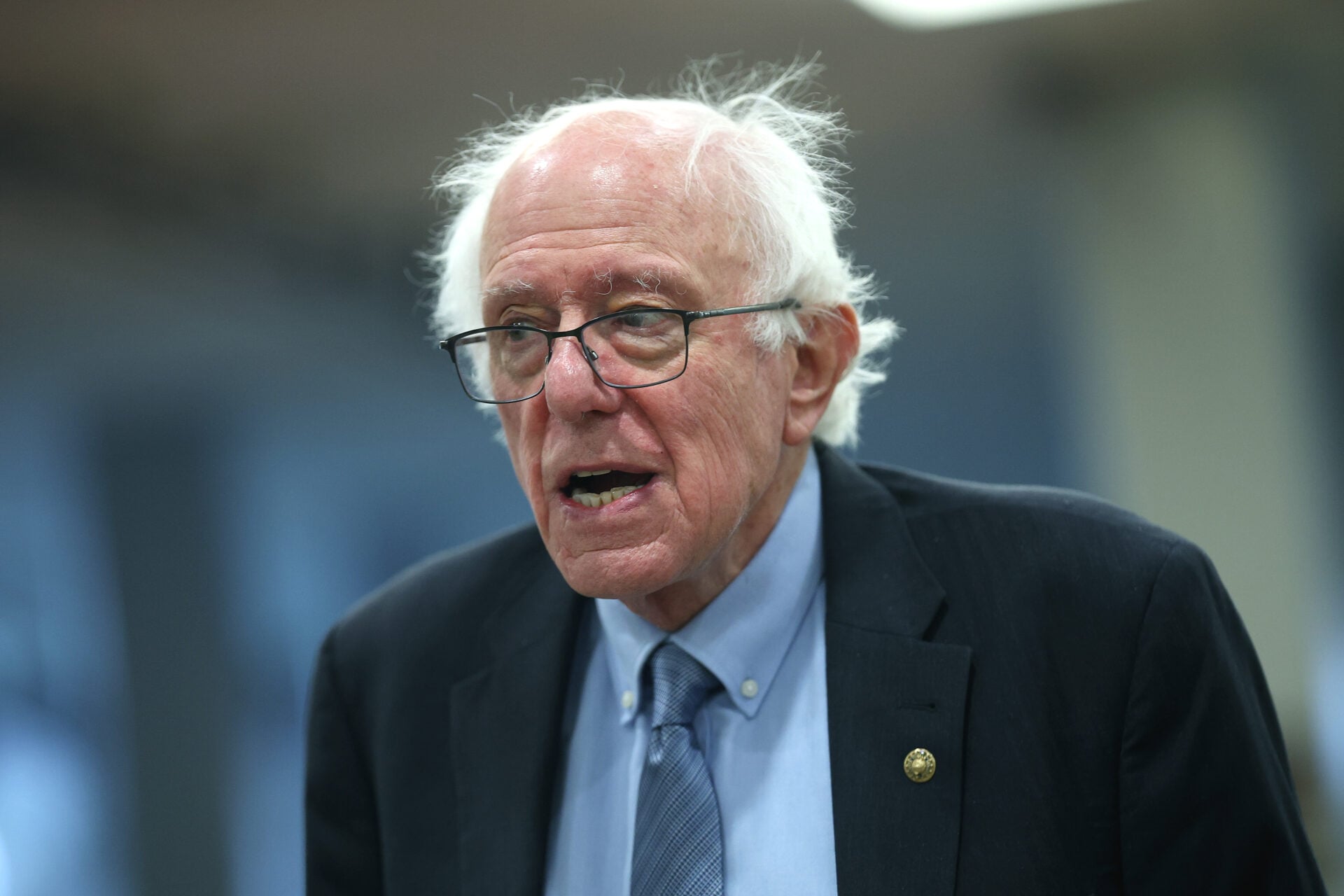

Bernie Sanders has pushed back forcefully after Donald Trump attacked Olympic skier Hunter Hess, framing the dispute as a warning sign about power and accountability in American politics.
The exchange unfolded online and quickly escalated, drawing attention to how political criticism, sport and patriotism are colliding in public discourse.
Bernie Sanders rejects Donald Trump’s attack on Olympian

In a statement shared by Bernie Sanders on X, the Vermont senator criticised Trump’s language and the broader message behind it.
“Trump called American Olympian Hunter Hess a ‘real loser’ for criticizing what’s happening in our country under Trump,” Sanders wrote.
He added: “Mr. President, this is not a monarchy. This is the United States and no one is required to bow down to you. Hess is not a ‘loser.’ He’s a proud American.”
Sanders’ response framed the issue as one of democratic principle rather than partisan disagreement. By invoking the idea of monarchy, he argued that public figures should be free to criticise leadership without facing personal attacks.
The senator also placed emphasis on Hess’s status as an Olympian, suggesting that representing the United States does not require political loyalty to a single individual.
Donald Trump’s criticism of Hunter Hess explained
The dispute began after comments posted by Donald Trump on Truth Social criticised Hess’s stance during the Winter Olympics.
“U.S. Olympic Skier, Hunter Hess, a real Loser, says he doesn’t represent his Country in the current Winter Olympics,” Trump began.
He added: “If that’s the case, he shouldn’t have tried out for the Team, and it’s too bad he’s on it. Very hard to root for someone like this.”
Trump’s comments focused on Hess questioning what it meant to represent the country under current political conditions. The framing suggested that criticism of leadership equated to a lack of patriotism.
That interpretation drew backlash from political figures and observers who argued that dissent is a core part of American identity. For them, Hess’s comments reflected personal conscience rather than rejection of the nation itself.
Sanders’ intervention aimed to reset that line. By defending Hess, he reinforced the idea that loyalty to democratic values does not require silence or submission.
Receive exclusive football transfer news and updates twice a week to your mailbox