

Aston Villa are enjoying one of the most successful periods in their history on the pitch.
While they haven’t actually won the Champions League like they did in 1982, Villa are now regulars in the competition, a feat made all the more impressive by the financial headwinds they have faced of late.
Wes Edens and Nassef Sawiris, the club’s majority shareholders, are competing against the might of the so-called Big Six, whose revenue dwarfs the rest of the league’s and, in the age of financial fair play, means they are able to outspend the likes of Villa by orders of magnitude.
Edens and Sawiris are willing to underwrite losses at Villa Park. But FFP, PSR and now SCR limits what they can spend in the transfer and wage markets, linking their expenditure to profit and revenue.

Despite qualifying for the Champions League again and winning the Europa League last season, Villa are in the unenviable position of needing player sale profits to comply with European and domestic rules.
Morgan Rogers, the jewel in the crown at Villa Park who is currently with England at the World Cup, could be a high-profile casualty in the transfer market, with Arsenal, Chelsea and Manchester United among those interested in the attacking midfielder’s signature.
But in order to avoid selling the fine silver, Aston Villa are said to be considering a different strategy.
Aston Villa academy sales will still be ‘pure profit’ even in the new SCR age
When news broke that the Premier League was replacing Profit and Sustainability Rules (PSR) with a new Squad Cost Ratio (SCR) system, many fans hoped that it would spell the end of clubs selling homegrown players for ‘pure profit’.
In football finance, players are classified as intangible assets for accounting purposes, with book values dictated by transfer fees and amortised over the length of the player’s contract and profit on disposal calculated against that book value.
But given that academy players have no associated fee, clubs have been selling them to book ‘pure profit’ and get within the PSR threshold, which limited clubs to losing £105m over a rolling three-year period.
When Villa sold academy graduate Jack Grealish to Manchester City, for example, the £100m-plus profit was so large that it effectively gave them a get-out-of-jail-free card for three years. Newcastle’s decision to sell Elliott Anderson was similarly chalked up to PSR constraints.
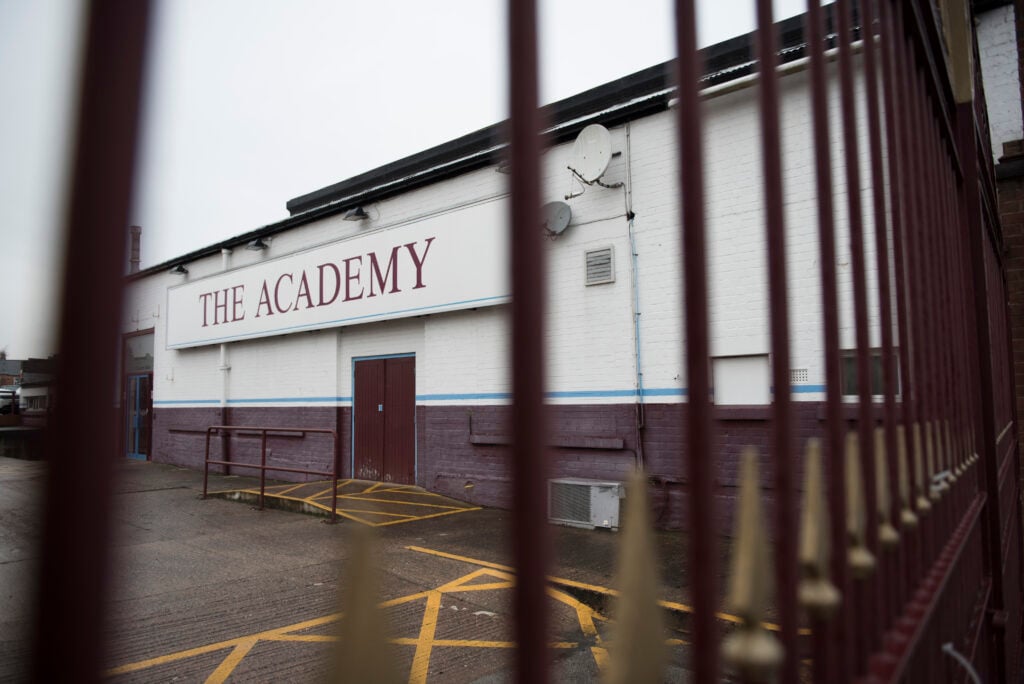
But under SCR, which will limit to spending 85 per cent of revenue on first-team costs, player sale profits are unfortunately included too. This time around, however, the Premier League looks at a three-year average on player sales, which perversely could mean that, while academy graduates are still the most efficient profit drivers, the likes of Villa may have to sell even more to get the same level of benefit.
That may be why Villa are reportedly briefing that virtually their entire academy is available for sale.
Per The Athletic, Villa will only allow George Hemmings and Bradley Burrows, 18 and 19 respectively, to leave on loan, but the rest of the young players all have a price.
Villa have already breached UEFA’s equivalent financial rules.
They are now subject to a settlement agreement which demands player sale profits.
Villa, it seems, are paying the price for their expenditure in recent years and the success it has brought.
- READ MORE:
Receive exclusive football transfer news and updates twice a week to your mailbox