


Alex Freeman’s goal against Australia became a World Cup highlight, but the minutes before it have pulled FIFA’s concussion rules back into scrutiny.
The United States defender stayed down after a head-on collision.
What happened next has become a player-safety debate as much as a match talking point.
Alex Freeman’s incident puts World Cup protocols under pressure
The Athletic reported that Freeman clashed heads with Australia’s Paul Okon-Engstler late in the first half, looked shaken, received an on-pitch check from U.S. medical staff, then stayed on and scored in the 43rd minute after a long VAR review.
“The problem that persists is that doctors are forced to do rushed concussion evaluations on the pitch. FIFA’s position puts players at risk and means they’re not going to have optimal medical diagnoses and outcomes when it comes to the most important organ in their body.”
That was the view of Chris Nowinski, the neuroscientist, former WWE wrestler, and concussion advocate. His larger argument is that players need at least ten minutes away from the field, in a quieter setting, before doctors make a reliable call.
That is why Nowinski, Headway, FIFPRO, the Premier League, EFL, and others continue to push for temporary concussion substitutes. Their case is straightforward: remove the player, assess properly, and avoid asking doctors to make brain-health decisions under crowd pressure.
Alex Freeman incident shows why FIFA faces a hard call
The counterargument from FIFA also deserves space.
FIFA told The Athletic that it introduced a robust concussion strategy at the 2022 World Cup, including independent concussion assessment and rehabilitation support, medical replay tablets, a FIFA Medical Coordinator, an injury spotter, and additional permanent substitutions for actual or suspected concussion.
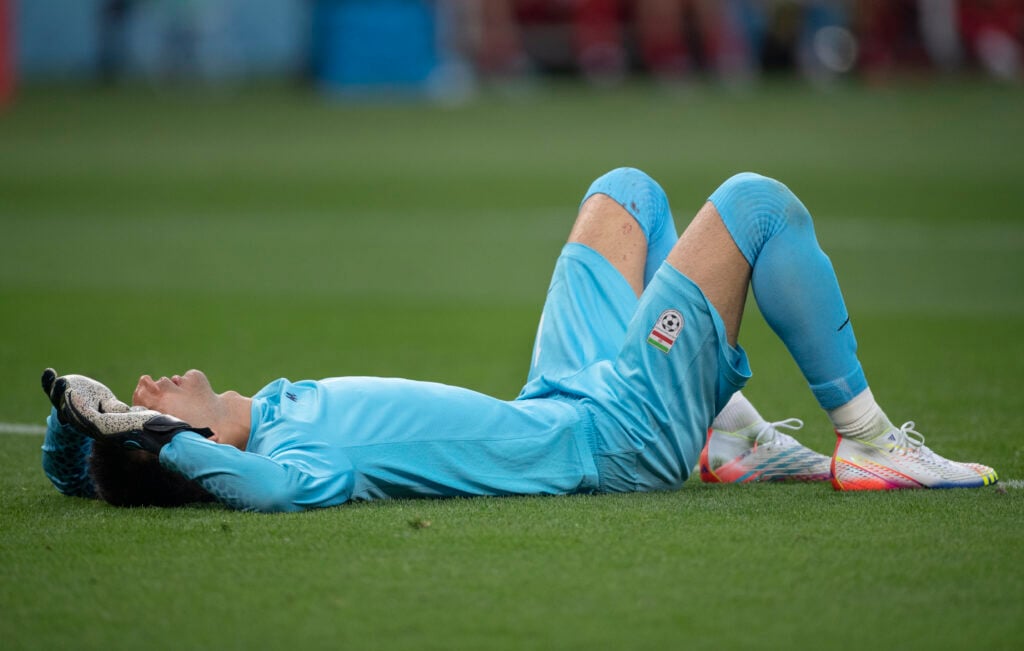
The governing body also argued that team doctors can stop play for up to three minutes and continue work pitchside for longer while play resumes. Its position is that permanent concussion substitutions reduce false positives and remove players when suspicion is strong enough.
The debate is sharp because soccer carries real concussion risk, even if rugby, American football and ice hockey usually sit above it in broad comparisons. Youth and women’s soccer studies still place the sport among notable concussion-risk categories, with collisions often the trigger.
Freeman’s case ended with a goal, not a confirmed concussion diagnosis. That distinction matters.
Still, if the choice is between competitive inconvenience and a fuller brain-health assessment, football should keep moving toward the option that gives doctors time, space, and the least pressure. The athlete’s health has to be the standard that wins.
Receive exclusive football transfer news and updates twice a week to your mailbox