
Transfers have the ability to make a club, but we sometimes forget that they can also break a club.
We hear a lot about terrible transfers, whether that be the €60 million Real Madrid paid to sign Luka Jovic, PSGs dreadful deal to sign Jese Rodriguez on massive wages for €25 million, or Chelsea paying Leicester City £35 million to acquire the services of Danny Drinkwater – but whilst they were all terrible transfers, which did a certain amount of damage to Real Madrid, PSG, and Chelsea, they were hardly catastrophic. All three have actually won major trophies since those transfers and remain superclubs who compete at the very highest level.
Even the ludicrous amount of money that Barcelona paid for Philippe Coutinho, which contributed to the enormous amount of debt that Barca racked up under former president Josep Bartomeu, or the crazy wages that Manchester United offered Alexis Sanchez, which destroyed what little wage structure and squad cohesion they previously had, have not yet at least, resulted in the downfall of Barcelona and Manchester United. Don’t get me wrong, things aren’t going great for either of them, and they haven’t been for a few years, but both teams still competed in the Champions League this season and will almost certainly be playing in Europe again next season.
No, instead of the usual focus on terrible transfers, which just tend to take into account cost versus performance, and sometimes sell on value, I wanted to take a look at some of the most truly damaging transfers in the history of football. I am talking about transfers that were so catastrophic that even Newcastle United’s club record signing of Michael Owen, who was handed a reported £120,000 a week deal at St James’ Park, and Everton wasting close to £50 million on Gylfi Sigurdsson, didn’t even get a look in.
Here are seven of the most ruinous, calamitous, and downright disastrous transfers of all time:
7. Seth Johnson to Leeds United
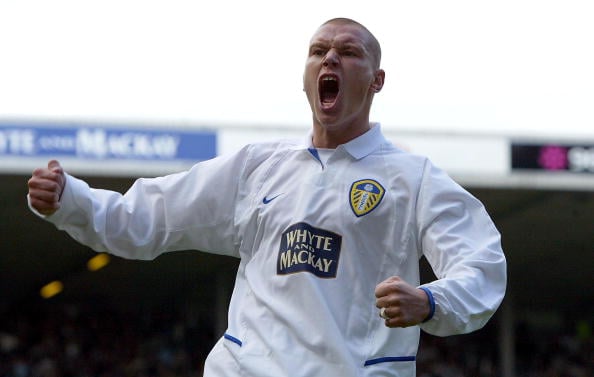
There is an urban legend that when Leeds United signed Seth Johnson in 2001, the midfielder was earning just £5,000 a week at Derby County, and was hoping to receive an offer of around £13,000 a week at Leeds. Legend has it that Leeds United chairman Peter Ridsdale’s first offer to Johnson was £30,000 a week, and when the room fell silent, due to Johnson and his agent being stunned by the offer he had made, Ridsdale voluntarily increased his offer to £37,000 a week, thinking that they had been unimpressed with his initial proposal. Sadly, that urban legend is just that. Seth Johnson has since revealed that he wasn’t even present for his contract negotiations, meanwhile Ridsdale claims that Leeds were paying Johnson “at least” £10,000 a week less than most reports claimed.
Nonetheless, whilst that story might have been a bit fanciful, it was believable precisely because of the way in which Leeds United were mismanaged during the early 2000s, and even if Johnson was only on £20,000 a week, with the word ‘only’ in inverted commas there, he was still a hugely damaging piece of business by Leeds United.
Following two seasons at Derby, where Johnson had played almost every minute and won his first cap for England, Leeds paid £7 million to acquire his services, with the potential to rise to £9 million, in addition to handing him a hefty five-year deal. Leeds had spent beyond their means for a few seasons, and when the club missed out on the Champions League in 2002, and the extra revenue that comes with it, a sharp and painful decline ensued. Within two years, Leeds had been relegated to the Championship, and two years after that, they dropped down into League One and entered administration. It would take 16 years before Leeds returned to the Premier League.
The signing of Seth Johnson was by no means the sole cause of Leeds United’s decline. The likes of Darren Huckerby, Michael Bridges, Michael Duberry, Robbie Keane, Robbie Fowler, and Nick Barmby also proved to be very expensive mistakes by Leeds in the transfer market, meanwhile Danny Mills’ wages were as damaging as just about anything else, but Johnson arrived for a big fee, on big wages, he was almost permanently injured, playing barely 50 games in four seasons, and he left for nothing. Ken Bates once claimed that Johnson had cost Leeds £230,000 a game, which about sums it up for a club that ended up starting a League One season on minus 15 points after entering administration.
6. Leandro Damião to Santos

You couldn’t go too far wrong if you signed Leandro Damião on Football Manager 2012, whatever the price tag, as the Brazilian wonderkid inevitably turned into one of the best strikers in the world and scored between 40-50 goals a season. Unfortunately for Santos, they signed Damião in 2014, not 2012, and in real life, rather than Football Manager – two absolutely crucial differences that really cost them in the long run.
There was a reason why Damião was so highly rated on FM12, and in real life at the time, given that he scored 38 goals in 51 games in the 2011 season, which he began as a 21-year-old. Damião was also the top scorer at the 2012 Summer Olympics in the United Kingdom, where he scored six goals in five games en route to the final, being nicknamed ‘the new Ronaldo’ and heavily linked with moves to both Tottenham and Napoli.
Damião ended up sticking it out with Internacional until the end of the 2013 season, in which he only managed to score 13 goals, but Santos were still willing to fork out 41 million Brazilian real on him, which worked out as about £12 million at the time. That made Damião the second most expensive signing in the history of the Campeonato Brasileiro at the time, behind only Carlos Tevez, and only two or three players have since arrived in the league for more.
Damião only played a single season of football for Santos, in which he scored 11 goals in 44 games and was heavily criticised for his lack of pace, being wasteful in front of goal, and for being dramatically outshone by young team mate Gabriel Barbosa. Damião ended up going out on-loan three times before taking Santos to court over unpaid image rights, in a legal battle that repeatedly thwarted Damião’s attempts to leave Santos and cost the club a fortune. In the near decade since, Santos have been unable to spend even half of what they spent on Damião on a signing, drowning in debt, a lot of which is owed to Damião’s signing, and they still haven’t won the Brasileirao since 2004.
5. Jack Rodwell to Sunderland

When a team really collapses as Sunderland have done in recent years, there tends to be a whole heap of terrible signings, and that was certainly the case at the Stadium of Light. Ricky Alvarez, it could be argued, was an even more disastrous signing than Jack Rodwell, given the fact that Sunderland didn’t even want to sign him when they were forced to pay €10.5 million due to a clause in his loan deal, and their failed legal attempts to get out of the deal ended up costing the club more than £20 million, meanwhile Alvarez didn’t play a single minute of football after he was signed on a permanent basis.
Jack Rodwell did at least play for Sunderland after signing for them, but not very well, and he became just about the unluckiest charm in the entire history of the Premier League. Rodwell was tipped to become a future mainstay in the England team when he first broke through at Everton, and he had already won a couple of caps when Manchester City signed him in 2012. Having struggled for gametime at the Etihad after two seasons, Sunderland signed Rodwell for £10 million, in what looked to be a really solid signing for a bottom half Premier League team.
Rodwell’s debut campaign in the North East was unremarkable, if not outright underwhelming at that stage, but things got really bad – particularly under Sam Allardyce – the following season. It took until February 2017 for Rodwell to end a run of 1,370 days, so almost four years, without a Premier League win, during which time Rodwell played 39 times – so more than a full season’s worth of fixtures. Rodwell was reported to have turned down repeated offers from other clubs due to inferior wages being offered, in addition to turning down Sunderland’s own requests for him to drop down to lesser terms.
Rodwell only played two games as Sunderland were relegated for a second successive season, this time from the Championship, becoming by far the highest paid League One player of all time on a supposed £70,000 a week. Rodwell’s wages hung like an albatross around Sunderland’s neck for years as they dropped through the divisions, all whilst Rodwell barely played, before his contract was finally terminated in June 2018.
4. Nabil Bentaleb to Schalke

Just a few years ago, in the 2017-18 season, Schalke finished as Bundesliga runners-up, ahead of Hoffenheim and Borussia Dortmund, and trailing only Bayern Munich. The following season, 2018-19, they made it through to the knockout stage of the Champions League. And yet, in the 2020-21 season – that is to say, last season – Schalke finished bottom of the Bundesliga, miles behind anyone else, and were relegated from the top flight of German football for the first time since the 1980s. If you want to know more about Schalke’s quite incredible demise, I have made a video all about it, which naturally I would recommend, but one factor was certainly the club’s three most expensive signings, all signed between 2016 and 2018, being wholly unsuccessful.
Sebastian Rudy and Breel Embolo both proved to be extremely costly mistakes on Schalke’s part, but Nabil Bentaleb was in a league of his own when it came to damage caused. Undeniably talented, Bentaleb began his career at Tottenham, where he played 66 games in three seasons before Mauricio Pochettino decided to sell him. Poch tended not to sell players without good reason during his early years in North London, typically because he wasn’t convinced that they had the necessary attitude and application to buy into the way in which he wanted Tottenham to play.
Following an impressive season on-loan, Schalke paid €19 million to sign Bentaleb on a permanent basis, only for the French-born Algerian international to become a real problem player at the Veltins-Arena. Ill-disciplined and often at loggerheads with those around him, Bentaleb was allegedly the highest paid player at the club, on close to €100,000 a week. Schalke offloaded those wages when Bentaleb went on-loan to Newcastle for six months in 2020, as the COVID-19 pandemic exacerbated his parent club’s financial trouble, after the midfielder had been dropped into Schalke’s reserve team for disciplinary reasons.
Upon his return to German football, Bentaleb played only ten games as Schalke were relegated, and he did absolutely nothing to aid them in their plight. Schalke made several reckless financial decisions en route to relegation and amassing €200 million, but signing Nabil Bentaleb on massive wages, for €19 million, only for him to cause more problems than he fixed before departing on a free, has to be right up there.
3. Tore André Flo to Rangers

Best known, certainly here in England, for his three-and-a-half years at Chelsea, Tore André Flo was a towering Norwegian centre-forward who combined size, strength, and technique. In 163 appearances for Chelsea, he scored 50 goals, and he was Chelsea’s top scorer in the 1999-2000 season. Unlike most players in this seven, Flo wasn’t actually that bad for the club he significantly damaged, averaging a goal every other game for Rangers, where he won two trophies in two seasons. Had he cost Rangers around 3-4 million at the turn of the millennium, he would have been a perfectly decent signing – but he didn’t cost £3-4 million, he cost £12 million, which quite incredibly still remains the highest fee that a Scottish club has ever paid for a player more than 20 years on.
That was an absolutely enormous fee, which seemed unnecessary at the time, with Rangers chief David Murray accused of signing Flo to satisfy his own ego, with little consideration for the financial repercussions. For context, Celtic signed another big centre-forward from Chelsea that very same season, namely Chris Sutton, who cost half as much as Flo and enjoyed far more success at Celtic Park. Flo departed after just two seasons at Ibrox, signed by Sunderland for roughly half the amount that Rangers had paid for him, with his staggering supposed £38,000 a week wages at Rangers, which made him the highest paid player in the league ahead of Henrik Larsson, financially crippling the club.
It took until February 2012 for Rangers to officially enter administration, and then liquidation in October 2012, as a new corporate entity had to be created and Rangers were forced to start out again in the fourth tier of Scottish football. Signings like Michael Ball and Tore André Flo did not immediately cripple Rangers as other signings in this seven did, but ultimately their impact would be even more severe, resulting in the collapse of the club and endless and tedious debates about whether the post-liquidation Rangers should be considered a continuation of the pre-liquidation era club.
2. Rodriguinho to Cruzeiro

I have included two Campeonato Brasileiro signings in this seven, but in reality, I could quite comfortably have filled all seven spots with calamitous signings made by Brazilian clubs, who seem to operate in the transfer market with a near suicidal zeal. Few signings have been as damaging, and few declines have been as severe, as Rodriguinho and Cruzeiro. With a nickname like Rodriguinho, you should probably be one of the best players in the world, like some kind of combination of Rodri and Ronaldinho, and Rodriguinho was one of the outstanding players in the Brazilian game for a couple of years at Corinthians.
His fine form saw him called up to the Brazilian national team, with whom he won two caps in 2017. In 2018, Rodriguinho left Corinthians in a move to Egyptian outfit Pyramids FC, who spent an absolute fortune that summer under their short-lived Saudi ownership. That regime came crashing down so quickly that Rodriguinho only ever played eight games in Egypt before Cruzeiro brought him back to Brazil in a deal worth 30 Brazilian real, or roughly £4.5 million, in January 2019. When club legend Ronaldo Nazario acquired a controlling interest in Cruzeiro in December 2021, they still owed 30 million real to Pyramids FC.
That is despite the fact that Rodriguinho himself was already long gone. Plagued by injuries during his 13 months at the club, Rodriguinho only played five games in the 2019 Campeonato Brasileiro campaign as Cruzeiro were relegated from the top flight of Brazilian football for the first time in the entire history of the club. That relegation sent shockwaves through Brazilian football, but it had been coming for a long time, and for a comprehensive breakdown of how one of Brazilian football’s biggest clubs suffered such a sudden and dramatic decline, I have also made a video all about that. My output really is outstanding.
Cruzeiro are now looking to get back into the top flight of Brazilian football, with the help of a $70 million investment following Ronaldo’s return, meanwhile Rodriguinho plays for Bahia, where he was relegated for a second successive season during his debut campaign.
1. Benito Carbone to Bradford City

One of a number of very talented Italians to arrive in the Premier League from Serie A during the second half of the 1990s, following a sharp decline in the value of the Italian lira, Carbone is best known in England for the three seasons that he spent at Sheffield Wednesday. It was in the summer of 2000, following a single season at Aston Villa, that Carbone joined Bradford City on a free transfer. That might have seemed like a bargain at the time, but perhaps some suspicions ought to have been aroused by the fact that Bradford, who had only narrowly survived in the Premier League the previous season, had reportedly offered Carbone better terms than the offers that he received from Fiorentina, Napoli, and Everton.
Much like Flo at Rangers, Carbone wasn’t actually a bad player for Bradford, he scored ten goals in 42 games, but his £40,000 a week wages made him almost the highest paid player in the entire division. What’s more, Bradford were relegated during Carbone’s first season at the club, finishing bottom of the Premier League, and he was sent out on-loan to Derby and Middlesbrough the following season, as Bradford sought to get their biggest earners off the books.
At the end of their first season back in the second division, Bradford entered administration. The Bantams were in £13 million of debt, and in serious danger of going out of business. Carbone still had two years left on his deal at Valley Parade, but with his £40,000 a week wages functioning practically as a noose around Bradford’s neck, he agreed to take a £1 million pay off, which was roughly a quarter of what he was owed in total, in order to rip up his contract, stating that he didn’t want to be known as the man who was responsible for Bradford folding.
Carbone’s gesture may have saved Bradford from extinction, but they were still relegated the following season, and a year later they found themselves back in administration. Within the space of just seven seasons, Bradford went from the Premier League to the basement division of English football, and they are still stuck there now. When Bradford sacked manager Derek Adams last month, Benito Carbone – who is currently the assistant manager of Azerbaijan’s national team – sent in his application, but he was overlooked in favour of former Premier League boss Mark Hughes.
Receive exclusive football transfer news and updates twice a week to your mailbox