
Transfers have existed ever since the introduction of player registrations by the FA, the world’s oldest football governing body, way back in 1885. For more than a century transfers have been an integral part of the game, as teams clamoured to bring the best players to their club in an effort to improve their teams.
That aspect has never changed, but the finances, the obsession and the media circus which surrounds transfers seems to have been ramped up year on year for the last few decades. I must admit that I haven’t done a great deal of transfer videos, since I don’t cover rumours and news, but today I’m going to take a look at some of the most significant transfers in the sports history.
These aren’t the seven best or the seven most expensive, these are the seven that I feel had the greatest impact, and I’ll try to explain why with each entrance. I should point out that there is no Jean-Marc Bosman, since whilst his attempted transfer to Dunkerque was extremely significant, the deal never actually happened, so it wouldn’t really be accurate to include it.
Here are 7 transfers that changed football forever:
7. David Beckham to Real Madrid
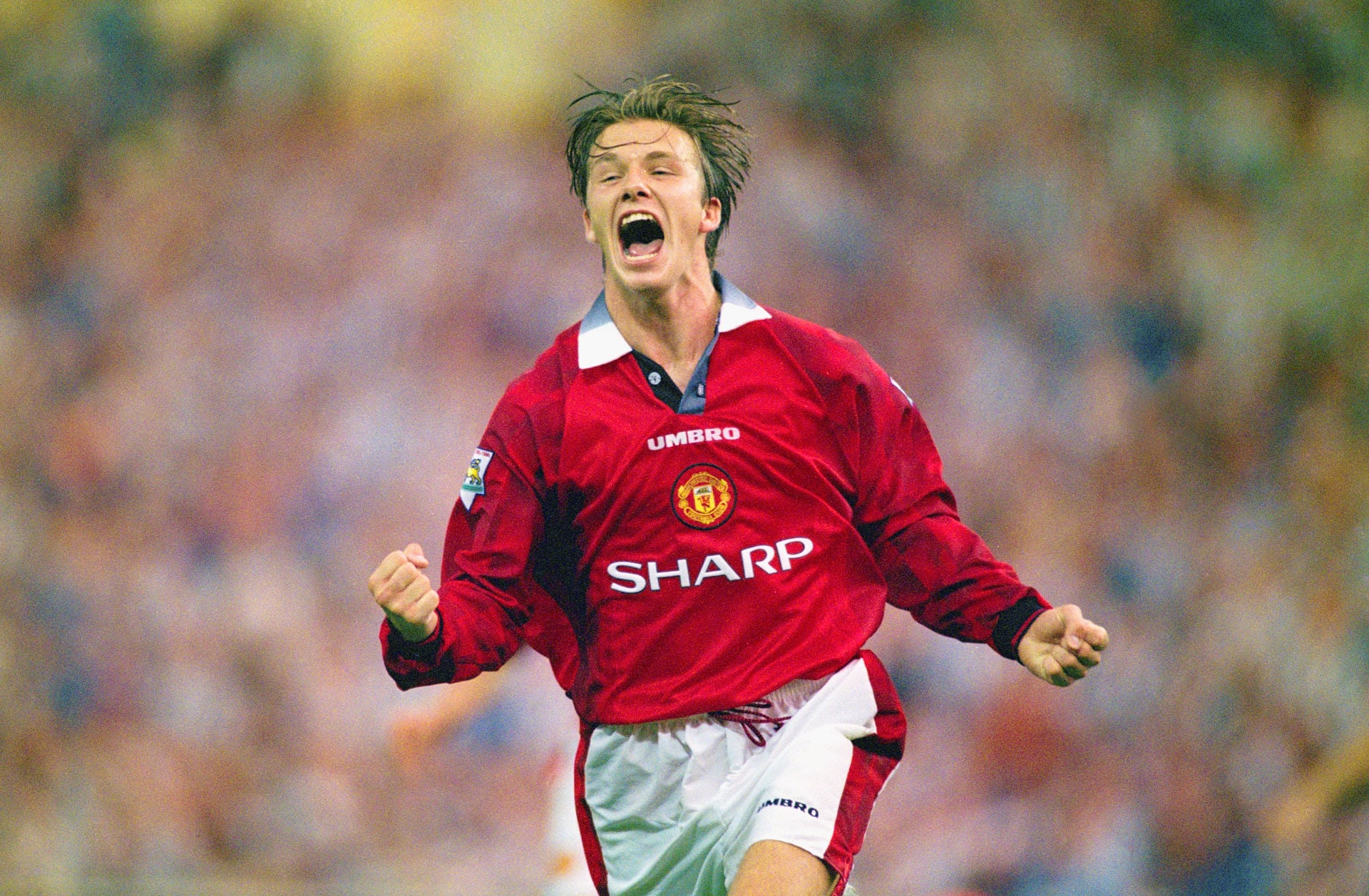
Who better to get us started than maybe the most iconic and famous footballer to have ever lived. David Beckham was a football, fashion and all-round cultural icon, and brand Beckham is still going strong now, six years on from when Becks retired from the sport. Beckham had two significant transfers, one from Manchester United to Real Madrid, and another from Real Madrid to LA Galaxy. The latter was significant primarily because of the interest and exposure it brought to football in the United States, but it is the former that makes this seven.
Beckham’s move to Real Madrid was the catalyst in a much larger transfer merry-go-round, and it is the moves that followed that ensure this deal has to feature. Following a breakdown in his relationship with Sir Alex Ferguson, Manchester United and Barcelona announced that they had agreed a deal for Beckham in the summer of 2003. Real Madrid swooped in at the eleventh hour though, and Becks became the latest of Real’s Galacticos.
Having missed out on Beckham, Barcelona looked for a new marquee signing, and quickly turned their attention to an electrifying young Brazilian named Ronaldinho at PSG. Barca signed Ronaldinho, which came as a bitter blow to Manchester United, who had been hoping he would fill the void vacated by Beckham. Instead, Alex Ferguson decided to take a risk on a Portuguese teenager with fewer than 30 league games under his belt. Both Ronaldinho and Cristiano Ronaldo turned out to be pretty decent pieces of business by Barca and Man Utd, and they ensure that this transfer makes my top seven.
6. Roy Keane to Manchester United
 Nottingham Forest manager head coach Martin ONeill and Nottingham Forest assistant manager Roy Keane during the Sky Bet Championship fixture between Sheffield United and Nottingham…
From a player departing Old Trafford to one arriving, the signing of Roy Keane is undoubtedly the most significant transfer in British football during the Premier League era. Fittingly then, it did require a British record transfer fee of £3.75 million to take the Irishman from Nottingham Forest, as well as plenty of sweet talking from Alex Ferguson to stop him going to Blackburn.
Keane joined a United team that had just won the first Premier League title, but that was their first top flight league title since 1967, and Fergie was about to ring the changes. The likes of Paul Ince and Mark Hughes were soon sold, whilst a raft of young players were promoted into the first team. Those younger heads would need some guidance, and for the next 12 years Roy Keane set the standard at Old Trafford.
He took over the captaincy in 1997 and retained it up until his departure in 2006. A born winner and leader, Keane led by example. He treated every training session like a cup final and he could backup his lofty demands of those around him due to his own performances on the pitch. Manchester United had lots of quality during this era, as they became the dominant force in the English game, but no single player who was more important than Roy Keane.
5. Eusebio to Benfica
So many of these transfers feel like ‘what-if’ moments, and that is certainly true of Eusebio’s move to Benfica. Born in Mozambique, or Portuguese Mozambique as it was named at the time, Eusebio played for Sporting de Lourenco Marques in Mozambique from the age of 15 to 19, scoring 77 goals in 42 games. As you may have gathered from their name, Sporting de Lourenco Marques were a feeder club for Sporting Clube de Portugal, and Eusebio was expected to join Sporting when he moved to Portugal.
Bizarrely, despite that goal scoring record, Sporting offered him a junior contract with no salary, whilst Benfica sensed an opportunity and swooped in. At the time of the transfer in 1961, Sporting and Benfica were tied on 10 league titles each. Eusebio spent the next 14 seasons with Benfica, during which time they won the Primeira Liga title 10 times. Benfica are now the most successful team in Portugal by some distance, having won 37 league titles, whilst Sporting come in third with 18.
Eusebio didn’t just cause a dramatic power shift in Portugal though, he also scored 5 goals in 6 games, including one in the final, as Benfica won a second consecutive European Cup. In total, Eusebio won 29 trophies at Benfica, scoring 473 goals in 440 games. How different things could have been if Sporting had coughed up the €2,000 over three years that Eusebio wanted.
4. Billy Meredith to Manchester United
 Billy Meredith of Manchester United in action during the first ever FA Charity Shield match against Queens Park Rangers. Following a 1-1 draw, United won 4-0 in the replay.
Manchester United are one of the biggest football clubs on Earth, but it’s very possible that that would never have been the case were it not for Billy Meredith. The finest player of his generation, neither Manchester City nor Manchester United had won a major trophy before the arrival of Billy Meredith. It was at Maine Road that Meredith made his name as a magnificent dribbler and crosser of the ball from wide areas, captaining the club to an FA Cup title in 1904.
Meredith scored the only goal of the game as Man City overcame Bolton, but 12 months later he would be at the centre of a scandal which rocked the British game. He was accused of trying to bribe an Aston Villa player with £10 to throw a game, and despite pleading his innocence, he was suspended by the FA for 12 months. Man City transfer listed him, and he – along with three of Man City’s other star players – joined Manchester United in 1906.
In Meredith’s first full season with United the club won their first major trophy, and it was a First Division title. The next season, they had their first FA Cup, and two years later they’d won a second league title. Meanwhile Man City didn’t win their first top flight title and didn’t add another FA Cup until the 1930’s. The next century of the two clubs histories might have looked very different if Billy Meredith had never left Maine Road.
3. Neymar to PSG
I know what some of you will be thinking. PSG would have won the Ligue 1 title in the two seasons Neymar has spent in France without him, they could have been dumped out of the Champions League just as easily without him and there are no guarantees that Barcelona would have done any better in Europe with him at their disposal… and all that is true, but that’s not why Neymar makes this seven.
As I mentioned in the introduction, transfer fees have been going up and up for a long time now, but never has a single transfer transformed the entire market quite like this one. The £198 million PSG spent to sign Neymar from Barcelona wasn’t just a world record fee, it was well in excess of double the previous record. To put that in context, it would be the equivalent of a player being transferred for £440 million now. That’s how much Neymar smashed the record.
As a result, the whole market seemed to shift up a gear. Suddenly £50 million players were £90 million player, £25 million players were being valued up to £60 million, right the way down the divisions and down the footballing pyramid. Since the Neymar deal, we’ve seen two teenagers transfer for in excess of £100 million, centre-backs costing £65-75 million and a 33-year-old – albeit a rather special one – who cost £88 million. And that’s just at the top end of the market. There’s good reason to believe none of that would have happened, at least not yet, were it not for Neymar’s earth-shattering move to PSG.
2. Johan Cruyff to Barcelona
Runner-up in this seven, Johan Cruyff is the most influential footballer of the last half-century at least, so the inclusion of his most important transfer should come as little surprise. Following nine incredible years at Ajax, where Cruyff had just won the last of the club’s three consecutive European Cups, he became the most expensive footballer of all time. Barcelona were the new suitors, paying a little shy of £1 million for the Dutch maestro.
Barca were without a La Liga title since 1960, but with Cruyff in their side, they won the league in 1973-74, Cruyff’s first season at the Camp Nou. He would only add a Copa del Rey to his trophy cabinet in Catalonia beyond that, but his impact at the football club extended far beyond silverware. Former Barca president Joan Laporta was quoted as saying, ‘As a player, he turned football into an art form. Johan came along and revolutionised everything. The modern-day Barça started with him, he is the expression of our identity, he brought us a style of football we love.’
In both his role as a player and later as a manager, Cruyff was the man who refined the Barcelona style and footballing philosophy with his influence still very much permeating that club today.
0. Honourable Mentions
There are of course lots of great football transfers like Marco van Basten to AC Milan, Cristiano Ronaldo to Real Madrid and Diego Maradona to Napoli which were significant simply because of how much better they made the team in question. There are too many examples of that ilk to mention them all, but I’ll surmise them as every great player to have joined a team and inspired them to greatness.
In terms of those more similar to our seven, I should certainly mention the signing of Eric Cantona by Manchester United from Leeds United. Cantona had been at Leeds when the Yorkshire outfit won the league title in the last First Division season, and Alex Ferguson has often said Cantona was the key factor in United winning that first title in 92-93.
A lot of people view the signing of Robinho by Man City as a statement of intent as a significant one, which it was, along with the addition of David Silva and Yaya Toure a year later for more footballing reasons. The key one for me though was Sergio Aguero. He was being chased by the likes of Real and Barca, and the fact that he chose Man City was an indication of a power-shift that was occurring towards the Etihad. Of course, you can then throw in that ‘Aguerooooo’ moment and the fact he has gone on to become Man City’s all time record goal scorer as evidence of just how big a transfer that was.
Lastly, there are a few groundbreaking footballers who we ought to mention whose transfers paved the way for others, such as Domingo Ferraris’ move to Torino, John Charles’ transfer to and success at Juventus, and Neil Franklin’s ill-fated move to Independiente Santa Fe, the last of which came at the expense of Franklin’s own career but to the benefit of those who followed.
That’s it for your honourable mentions, but here is your surely irrefutable top spot:
1. Alfredo di Stefano to Real Madrid
 Alfredo Di Stefano of Real Madrid poses with European Cup trophies.
When I make a top seven, unless it’s something that is purely factual like the seven most expensive or the last 7 award winners, I draw up a big shortlist, put asterisks next to the ones that I decide have to make the final seven and then draw up the numbers alongside them once I’ve decided upon an order. When I was making this video, Alfredo Di Stefano was the first thing I wrote, and I immediately chalked up a little number ‘1’ beside his name.
Both Real Madrid and Barcelona were clamouring to sign Di Stefano in 1952, after he wowed spectators in a tour of Spain with Millonarios. The El Dorado era of Colombian football was coming to an end, and Di Stefano’s situation was messy. Barcelona reached an agreement with River Plate, Di Stefano’s former club in Argentina, flying him over to Spain and even playing him in a preseason game. But when Spanish authorities intervened with the claim that Millonarios held some of Di Stefano’s rights as well, Real struck up a separate deal with the Colombians.
An arbitration incredibly came to the conclusion that Di Stefano could sign a four year deal alternating between the two clubs, first season at Real, second season at Barca, etc. Outraged, Barcelona tore up the contract, and Di Stefano joined Real. He spent the next ten years in Madrid as the beating heart of a team that won eight La Liga titles and five European Cups, scoring 308 goals in 396 games, as Barcelona won just two league titles and no European Cups during the same decade.
Since then, it has been claimed Spain’s dictator General Franco, who fervently supported Real and despised Barcelona, may have stepped in to stop Di Stefano joining Barca, since it seems unusual that FIFA would sign off on the deal but the Spanish FA block it. There are also accusations that Real had double-agents working on the deal on the Barca side of negotiations trying to put a spanner in the works. Whatever the truth, this transfer transformed Real Madrid, Spanish football and the entire European game in a moment.
Receive exclusive football transfer news and updates twice a week to your mailbox