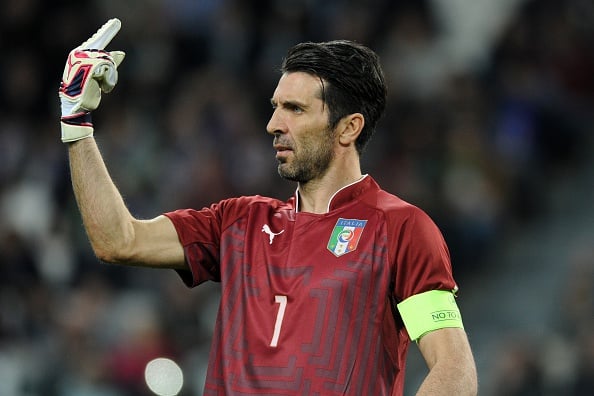

When a player becomes a hero for his club it becomes impossible to imagine life without him, but sometimes the parting is surprisingly pain free.
There are some footballers who seem irreplaceable upon their departure or retirement, and they really are. Tottenham spent more than £100 million attempting to replace Gareth Bale, and ended up with a forward line containing Roberto Soldado, Erik Lamela, and Nacer Chadli. When Luis Suarez left Liverpool in a mega deal to join Barcelona, the Reds forked out more than £130 million to offset the damage, but the likes of Mario Balotelli and Rickie Lambert could not prevent Brendan Rodgers’ side slipping from 2nd to 6th without their talismanic Uruguayan frontman. And over in Spain, Barcelona are currently finding that it is about as difficult to replace Lionel Messi as one would expect, even with perhaps the most talented cohort of young players at any club in the world.
However, every now and then, there are players who seem irreplaceable but aren’t. Just take Djalma Santos, Brazil’s 1958 and 1962 World Cup winning right-back, and one of only three men to make the Team of the Tournament at three separate World Cup finals. Santos played his final game for Brazil at the age of 39, but during that very same year, a 23-year-old Carlos Alberto Torres played 18 times for Brazil, rapidly cementing his status as the best right-back in the world, and suddenly supporters of the Seleção didn’t seem to have quite so much to fear.
There are occasions in which a player might seem irreplaceable, such as Philippe Coutinho at Liverpool, but isn’t, not because of someone directly replacing him, but just because of a system change or a collective improvement making up for their absence – but I am interested specifically in football legends and their unlikely heirs.
Without further ado then, here are 7 footballers who seemed irreplaceable but weren’t:
7. Gianluigi Buffon

I didn’t want any players where there was a big gap between the seemingly irreplaceable great and their eventual replacement, such as the three years between Oliver Kahn and Manuel Neuer at both club and international level, but nor did I want there to be considerable overlap, such as in the case of Franco Baresi and Paolo Maldini, who played together for 13 years at AC Milan and six years with the Italian national team. That’s because, in that instance and in those like it, everyone was well-aware of Paolo Maldini’s many talents and his leadership skills before Franco Baresi hung up his boots, which meant that Baresi didn’t seem quite so irreplaceable by 1997 as he would have done had he retired in 1987.
Similarly, there are some successors to great players, such as Messi arguably replacing Ronaldinho at Barcelona or more recently Phil Foden filling the mantle that was vacated by David Silva at Manchester City, where the overlap might not have been that long, but the replacement was already so highly regarded and known to be so talented that the departee or retiree once again didn’t seem totally irreplaceable when they left. There are also some successors such as Cristiano Ronaldo following Luis Figo or Cesc Fabregas succeeding Patrick Vieira, where the heir may be comparable to their predecessor in terms of talent and/or contribution, but not so much in terms of their style or role. All of the examples that I have just mentioned explain why certain seemingly irreplaceable players and their eventual successors have been left out, but they also explain why Gianluigi Buffon and Gianluigi Donnarumma are such outstanding candidates to get us started.
Buffon and Donnarumma not only share the traits of being world class Italian goalkeepers, they are also both named Gianluigi. It is almost as though Donnarumma was given to the Italians like a gift from on high. In theory, Buffon and Donnarumma’s careers should never really have overlapped. Buffon was born in 1978 and Donnarumma in 1999. That is a 21 year age gap. Buffon won his first caps for Italy two years before Donnarumma was born, but such was Gigi’s longevity, still playing now at the grand old age of 44, along with Donnarumma’s teenage stardom, breaking through at the age of only 16, the duo actually managed to spend two years as team mates within the Italian national team.
Buffon is, without a doubt, one of the greatest goalkeepers of all time, and I don’t just say that because we are very close friends. His handling and reflexes were among the best in the business for the best part of two decades, along with his finest attribute, which has always been his positioning, awareness, and anticipation, that have prolonged his career for so long. It is worth mentioning that Buffon was a successor himself in many respects, for both Italy and Juventus, replacing Angelo Peruzzi for the Azzurri after the 1998 World Cup, and eventually for Juventus in 2001, following Edwin van der Sar’s brief stint at the club.
Donnarumma perhaps accelerated Buffon’s retirement from international football, breaking the 2006 World Cup winners record as Italy’s youngest goalkeeper of the post-war era, and cementing his status as international number one after Buffon stepped aside in 2018. Though he grew up supporting AC Milan, Donnarumma unsurprisingly idolised Buffon as a child, and he has received plenty of praise from his former hero. Having only recently turned 23, Donnarumma has already won 40 caps for Italy and has played almost 300 games for AC Milan and PSG – which makes him a statistical freak, and he has all the tools to become one of the greatest goalkeepers of all time, just like the man who preceded him.
6. Philipp Lahm

German football often seems to have a permanent conveyor belt of talent, so perhaps no replacement should surprise us. However, there are some players who still seem impossible to replace. Miroslav Klose is one of them, given his importance in terms of scoring goals for Germany when it mattered most, and going further back, so too was someone like Fritz Walter in terms of his aura and leadership. You could certainly be forgiven for thinking that Philipp Lahm might fit neatly into that category, as not just one of the greatest full-backs to have ever lived, but someone who was so consistent and so faultless that he raised the standards of all those around him.
You would be wrong for thinking that, however, since Joshua Kimmich has stepped into those literally rather small but figuratively extremely large boots better than almost anyone could have anticipated. Kimmich and Lahm’s international careers never overlapped. Lahm retired from international football after playing a pivotal role in Germany’s 2014 World Cup win, aged only 30 at the time, meanwhile Kimmich didn’t make his international debut until 2016, aged 21. They did share a dressing room for two years at Bayern Munich though, between Kimmich’s arrival from RB Leipzig in 2015 and Lahm’s full retirement in 2017. Kimmich has described Lahm, along with Spaniards Pep Guardiola and Xabi Alonso, as having influenced his game more so than anyone else – and perhaps that is unsurprising, given that he now shares a position with all three.
Lahm spent more than half his career playing as a full-back, initially at left-back actually at Bayern Munich due to his versatility, where he earnt the nickname the ‘Magic Dwarf’. In his latter years, Lahm transitioned beautifully into holding midfield, a role that he found very easy given his tactical intelligence and technical prowess. Joshua Kimmich has made the same move, though he made it much earlier than Lahm, and he has arguably been the most complete and the most consistent number six in world football for the past three years. It is pretty remarkable to think that if Kimmich were to retire from international football at the same age as Lahm, he would retire in only three years time – but one doubts he will follow in the footsteps of his predecessor at least in that regard.
5. Roberto Carlos

Sticking with world class full-backs for now, I gave the example of Carlos Alberto Torres stepping into the void vacated by Djalma Santos in the introduction, and as you reel off the names, it is really quite remarkable the number of outstanding full-backs the Brazilian game has produced. Though his most recent appearance may have come for English non-league side Bull In The Barne United of the humble Shrewsbury & District Sunday League, Roberto Carlos is certainly among them. A left-back in name only, Carlos was among the most attack-minded full-backs of the 1990s and 2000s, and probably the most entertaining to watch.
Short, stocky, and incredibly explosive, Carlos was gifted, industrious, and renowned for the power that he possessed in his left foot, occasionally utilising that force to devastating effect, most notably with his swerving free kick against France in 1997. A year later, he was playing France again in a World Cup final, and four years after that, he got his hands on the trophy. At club level, Carlos is best associated with Real Madrid, where he spent eleven years, and it was only in the last of those eleven years that he spent any time playing alongside Marcelo.
A graduate of the Fluminense youth ranks, Marcelo joined Real Madrid in January 2007, six months before Roberto Carlos departed for Fenerbahce. What’s more, Carlos played his last game for Brazil at the 2006 World Cup, and within two months, Marcelo had made his international debut. In terms of direct successors, the timescale couldn’t line up much better than that.
I must admit, I long doubted Marcelo’s ability to reach anything like the heights attained by Roberto Carlos at his peak, but I am all too happy to hold my hands up and admit that I am wrong, and by about 2015, it was clear that was the case. Marcelo was, for at least three years in my view, the best left-back in the world, and Roberto Carlos could probably make a pretty similar claim. Like Carlos, Marcelo was never particularly interested in defending, but technically and physically he was outstanding. Sadly, that is no longer the case, and he has been a shell of the player that he once was at the Santiago Bernabeu for the last couple of years. Unlike Carlos, who left Los Blancos whilst still being able to make a real contribution, Marcelo is now a liability – but that ought not diminish how good he once was, or what a fine and long doubted successor to Roberto Carlos he has been.
4. Fernando Torres

I asked for some of your suggestions on Twitter before writing this piece, and among the most frequent suggestions that I saw was Fernando Torres’ departure from Liverpool, and how capably he was replaced by Luis Suarez. Now, I cannot claim to have foreseen just how well Luis Suarez would perform at Anfield when he arrived at Liverpool from Ajax, but it seemed pretty obvious that he was a talent, and it seemed equally apparent that Torres – even if you were being especially generous – was no longer at his absolute best. Of course, players have purple patches and not-so-purple patches of form, and there was a lot of speculation around Torres at the time, and few expected him to struggle like he did at Stamford Bridge. However, personally, and I can only state how I felt at the time, I didn’t think he struck fear into the heart of the opposition anymore, he didn’t feel obviously irreplaceable to me, and I wasn’t that surprised that Liverpool managed to cope alright without him.
That doesn’t mean that Torres doesn’t feature in this seven, however, since I don’t think anyone could have expected him to have been replaced quite so expertly as he was by Atletico Madrid. Torres left Atletico for Liverpool in the summer of 2007, meanwhile, a young Argentine named Sergio Aguero had joined the club in the summer of 2006. Torres was Atletico’s talisman at the time, and Spain’s number nine, whereas Aguero was just 18, and could only manage seven goals in his debut campaign. It was no secret that Aguero was very good, he had scored goal prolifically for Independiente and had won it all as a star man for Argentina at youth level, it just didn’t seem as though he was quite ready, still in his teens, to plug the gap that had been created by Torres’ departure.
Indeed, Atletico Madrid clearly weren’t entirely convinced that he was ready to carry that burden, so over the summer, they signed Diego Forlan from Villarreal, who had outscored Torres the previous season. Forlan would prove to be a great signing by Atletico, but it was Aguero who was the real star. Off the back of scoring seven goals in his debut campaign, he scored 27 goals in his second, which is more than Torres ever scored for the club. Not only did Aguero replace Torres, he was better than Torres, and he scored more goals, before departing for an even bigger fee in a move to Manchester City.
It should be said that Atletico Madrid’s record of replacing forwards, whether that be Vieri, then Hasselbaink, then Ballesta, Torres, Aguero, Falcao, Costa, Griezmann, all the way up to Luis Suarez – well, it is quite some record, with plenty of candidates for a seven of this ilk.
3. Romario

Romario is, I think, one of the five finest footballers of my lifetime, and among the greatest of all time. For context, I am 26 years old, and only Lionel Messi and Cristiano Ronaldo could I definitively say were superior to him, and even then, only Messi in terms of raw talent and ability. My admiration for Romario, and my feeling that he doesn’t get the credit he deserves outside of South America is such, that a while back I even devoted an entire video to him, though I suspect it hasn’t done a great deal to enhance his reputation if I’m honest.
Romario was just a natural. Everything seemed to come easy to him. Quick, diminutive, and endlessly inventive, his decision making in front of goal is the most interesting and spontaneous of any striker I have ever seen, and that’s why there are few players – if any – who I find it more enjoyable to go back and watch from time to time. At his best, which was probably during the mid-1990s, Romario was essentially unplayable, though during the 2000 season, in which he scored 66 goals in 71 games, aged 34, was pretty special as well. Though his last game and goal for Brazil came in a celebratory game against Guatemala in 2005, Romario’s tournament career at international level ended at the 1997 Confederations Cup, and you could be forgiven for thinking that his contribution would be impossible to replace, even for Brazil.
At the 1997 Confederations Cup, however, Romario starred alongside a forward who was ten years younger than him – Ronaldo Luiz Nazário de Lima. Together they formed a frightening combination nicknamed Ro-Ro, each scoring a hat-trick as Brazil battered Australia 6-0 in the tournament’s final. Sadly, the world would never see them play at a tournament together again, but like Romario, Ronaldo went on to spearhead Brazil to a World Cup title, becoming one of the finest footballers and goal scorers the game has ever seen.
2. Kevin Keegan

Talking of all too often overlooked or slightly diminished legends of the beautiful game, Kevin Keegan is rarely talked about when it comes to discussions around the greatest footballers that the British or English game has produced. That is despite the fact that Keegan is the only British and therefore the only English player to have won the Ballon d’Or more than once, putting him level in terms of Ballon d’Or titles with the Brazilian Ronaldo. Keegan won those two Ballon d’Ors, back-to-back, in 1978 and 1979, immediately after leaving Liverpool in a move to Hamburg.
Keegan spent six years at Anfield, where he won three First Division titles and a European Cup as Bob Paisley’s star man. When he departed in 1977, just after inspiring Liverpool to the double, Liverpool fans certainly felt as though he were irreplaceable, and were understandably distraught.
The man tasked with replacing Keegan on Merseyside was Kenny Dalglish. Bought by Bob Paisley and Liverpool from Celtic, Dalglish was already a very established player at club and international level, but replicating
Keegan’s impact would nonetheless be a big ask. Dalglish did that and then some, going on to play more than 500 games for Liverpool across 13 years at the club, during which time, he cemented his status as the greatest player to have ever played for one of the biggest clubs in world football. Dalglish won the European Cup three times at Anfield, and though he never won a Ballon d’Or like Keegan, finishing second to Michel Platini in 1983, his impact and legacy at Liverpool was even greater than his predecessors.
1. Garrincha

In some respects, Garrincha really was irreplaceable. If you have ever chanted olé at a football ground, you have Garrincha to thank, for it was the way in which he taunted and teased opponents before beating them at the last second that inspired the bull fighting chant to be incorporated by the Brazilian public into the world of football. Garrincha was a tragic character in many respects, who allegedly lost his virginity to a goat and struggled with addiction all his life – a life which ended in obscurity in 1983, when Garrincha was only 49 years of age.
Garrincha’s performances on a football pitch, however, could not have been in any more of a contrast to his troubled personal life. Known simply as the Joy of the People in Brazil, Garrincha didn’t take football too seriously. To him, simply beating an opponent or scoring a goal was too simple, he was born to entertain. Arguably the greatest dribbler of a ball to have ever played the game, Garrincha had the spirit of a child and the talent of a god, and Brazil never lost a game in which both he and Pelé played.
At the 1962 World Cup, after Pelé was injured during the group stage, Garrincha stepped up to the mantle, becoming the Selecao’s main man and winning his second successive World Cup. Garrincha was 29 at the time, and by far the best player at the tournament, and in the world, besides from Pelé, but it would mark the end of his career at the highest level. He played at the 1966 World Cup, recalled to the Brazil squad in 1965 after a three year absence, and he even scored at the finals in England, but off field problems meant he was no longer the player he once was.
Garrincha’s final game for Botafogo, where he spent twelve years, came in 1965, and for his last three years at the club, he played alongside an exciting, afro-donning wide man named Jairzinho. Jairzinho was a right winger, just like him, but Garrincha’s presence forced him to play out wide on the right. Once Garrincha left, Jairzinho made the right flank his own for both Botafogo and Brazil, and at the 1970 World Cup, he scored in every single game for Brazil, developing the nickname ‘The Hurricane’.
As I started by saying, Garrincha was, in some respects, truly irreplaceable, but in replacing one of the greatest players of all time with, at the very least, one of the finest of the 1960s and 70s, Botafogo and Brazil didn’t do too badly with Jairzinho as Garrincha’s heir apparent.
That is it for my seven, but there were a great many examples that just missed out, whether that be David de Gea replacing Edwin van der Sar, Alessandro Del Piero replacing Roberto Baggio, Thibaut Courtois replacing Petr Cech, and actually also Jan Oblak replacing Thibaut Courtois. There are many others of course, you need only look at the replies to my tweet to find some, but I hope you enjoyed the seven that I picked out.
Receive exclusive football transfer news and updates twice a week to your mailbox